

Introduction
Islandness is a crucial dimension and variable in island studies, serving as a core conceptual framework for understanding islands (Baldacchino, 2006). Initially proposed to emphasize the distinctiveness of islands from other geographical types—particularly their differences from continental landmasses—this concept formed the central thesis that early island studies sought to demonstrate (Foley et al., 2023). Scholarly perceptions of islandness first stem from its physical geographical attributes, where features such as remoteness, smallness, and isolation constitute its foundational connotations. As Conkling (2007) argues, islandness is a metaphysical feeling arising from intense experiences tied to the physical seclusion of island life. Indeed, islands’ natural characteristics readily evoke impressions of confinement, limited scale, and peripherality—exemplified by Japanese academic discourse on the national character “shima kuni kon jou” (island-nation mentality). This term, applied by Japanese scholars as a label for their national identity, posits that island attributes foster “narrow-mindedness, exclusivity, conformity, and ritualistic revelry” (Kizaki, 1938).
Such perceptions of islands also influenced early anthropologists, who treated Pacific islands as “laboratories” for contrastive analysis with Western culture. For instance, Mead (1928) studied Samoan adolescence to compare it with Western youth, seeking to answer whether the turbulence of American adolescence stemmed from Western civilization or represented a universal human phenomenon. Yet such ethnographic works often portrayed island communities as “people without history” (Wolf, 1982). Motivated by the recognition that islandness is often reduced to mere geographical attributes, Selwyn (1980) questioned its validity as a social science category. He noted that characteristics like economic dependency, resource constraints, and skills shortages—frequently associated with islands—also exist in small, remote mainland nations. Consequently, the concept of islandness may lack explanatory power, and Selwyn advocated replacing geographic determinism with more nuanced historical-political frameworks.
With the development of island studies, the conceptualization of islandness has gradually moved beyond geographical attributes to acquire broader significance. Researchers now regard it as “the emergent distinctiveness or essence of islands” (Baldacchino, 2018, p. xxv), transforming it into a potent analytical concept for examining the political economy and culture of island societies. Scholars have come to recognize the inherent tensions within the notion of islandness (Baldacchino, 2004), moving beyond earlier conceptions of islandness as a static, inherent quality toward understanding its dialectical nature. For instance, while islandness embodies isolation, it simultaneously expresses connectivity. Paradoxically, this very isolation has historically fostered interconnected networks among islands (Constantakopoulou, 2007). Some Oceania islands, though seemingly small in land area, encompass vast seascapes. Anthropologist Hau’ofa (2008) reminds us that while most observers focus solely on terrestrial dimensions, Oceanic peoples’ myths, legends, and oral traditions vividly reflect their expansive cosmological worldview. Beyond these attributes, islandness encompasses additional seemingly contradictory dyads: resilience and vulnerability (Kelman, 2020; Lazrus, 2012), cooperation and competition (Wang S., 1966). Different analytical perspectives may reveal contrasting insular characteristics, which are further mediated by cultural and temporal contexts (Grydehøj, 2020, p. 2). Investigating these concrete dimensions of islandness enables a richer understanding of island societies’ multifaceted realities and advances fundamental comprehension of what constitutes an island.
As Hay (2006) reminds us, when engaging with a specific island, we must reject homogenizing metaphors and return to lived island experiences. This grounded perspective proves essential for both island development and meaningful island studies. Similarly, Hong’s (2017) research on Zhuhai, an island city in China, underscores the need to move beyond viewing islands as mere functional symbols and instead engage with the actual “socio-geographic realities” that shape relations among islands, oceans, and mainlands. Islandness is not a neutral analytical concept; it is mediated through history, culture, and power dynamics, including Western researchers’ romanticized perceptions of islands (Grydehøj et al., 2025). Indeed, while islands worldwide can be classified through diverse criteria and exhibit significant variations across categories, they all share the fundamental designation of “island.” In different maritime regions, the distance between an island and the mainland may influence socio-cultural traits, just as the size of an island helps determine its inherent attributes.
How, then, can we concretely analyze and understand the characteristics of islands? Following the “relational turn” in island studies, scholars have shifted toward situating islands within specific regional contexts rather than examining them in isolation, enabling a more comprehensive understanding of their economic, political, and cultural features. Stratford et al. (2011) argue against treating islands as isolated units of analysis, contending that existing research has overlooked the socio-cultural relations between islands. Instead, they advocate studying islands within the broader network of an archipelago. Responding to this archipelagic focus, Hayward (2012) notes that such an approach still evades discussion of the “terrestrial-marine spaces” which are integral components of archipelagos (p. 2). Hayward further expands the perspective of archipelago studies—shifting from inter-island relations to viewing island groups and their surrounding waters as dynamic “assemblages.” To analyze archipelagos within this wider spatial framework, he proposes the concept of the “aquapelago” to replace “archipelago,” emphasizing the significance of regions where land and sea are interwoven and interact (ibid., p. 5). Hayward’s concepts of the “land-oceanic continuum” and “aquapelagic society” perceive islands from a regional holistic perspective, particularly underscoring the importance of marine spaces and resources. By contextualizing islands within their regional setting and rethinking their relationship with the ocean, this perspective breaks with binary theoretical frameworks and helps us better grasp the fluidity and complexity of island societies.
However, although Hayward advocates for greater attention to the “land-oceanic continuum,” his framework remains fundamentally oriented toward marine perspectives, focusing predominantly on sea-island relationships while offering limited discussion of terrestrial dimensions. This oceanic emphasis is closely tied to the theoretical foundations and primary regional applications of his work, which concentrate on archipelagic nations and territories—such as Indonesia and Japan—situated far from continental landmasses. It is crucial to recognize that in many near-shore island contexts, the surrounding region encompasses not only marine spaces but also integral parts of the mainland. A holistic examination of an island’s socio-cultural characteristics must therefore incorporate critical reflection on mainland-island relations. This study seeks to address this scholarly gap through ethnographic research on islands close to the mainland—specifically, fringing islands—by examining their distinct islandness and treating the island together with its adjacent waters and terrestrial surroundings as an integrated complex. The analysis focuses particularly on how land has shaped social transformation in an island society.
This approach does not represent a regression to early island studies that advocated “mainland-centrism” or “mainland-dependency.” Rather, building on the relational turn in island studies and with full awareness of island subjectivity, it re-examines the tripartite relations among islands, their surrounding terrestrial environments, and the sea. If we genuinely adopt the standpoint of island subjectivity, we cannot entirely avoid the relationship between islands and the mainland—particularly in East Asian societies. Taking the Ryukyu Islands as an example, although they are currently part of Japan’s archipelago, the historical Ryukyu Kingdom maintained close political and economic ties with the Chinese mainland through the tributary system, while simultaneously engaging in commercial relations with Japan (Ge, 2021). Re-examining the relationship between islands and the mainland should not be approached from a continental perspective, but rather through the historical development of island societies themselves. This requires integrating both maritime and terrestrial dimensions into the analytical framework when examining the factors that shape islandness.
This study builds upon fieldwork conducted on an island named Tao Island, delineating processes of socio-cultural transformation and livelihood transitions over time. Through this investigation, it becomes evident that beyond the critical influence of the ocean, land has played a vital role in shaping the island’s societal history. Land represents the agrarian culture from the mainland, while maritime attributes remain equally essential to this island society. Here, islandness manifests as a “Land-Sea Amphibiousness”—simultaneously terrestrial and oceanic.
Through an ethnographic study of a coastal island society in Eastern China, this paper not only investigates the inherent tensions and multidimensional aspects of islandness—seeking to deconstruct homogenizing imaginaries of islands and provide a case study for islandness research in non-Western contexts—but also aims to reintegrate the mainland into the analytical framework of island studies. It comprehensively examines the characteristics of fringing islands from a relational perspective. The current under-representation of East Asia, Southeast Asia, South America, and Africa (including China) in island studies underscores the need to engage with island diversity, which would significantly enrich our understanding of islandness (Grydehøj, 2017; Qu et al., 2023). Such work facilitates comparative engagement with western island scholarship, challenges western-centric perspectives, and expands the theoretical frameworks of global island studies (Z. Wang & Bennett, 2020).
Before examining this specific case in detail, we first contextualize it within China’s island classification system, define the fundamental attributes of Tao Island, and outline the research methodology employed in this study.
Types of Chinese Islands and “Fringing Islands”
Influenced by mainland-centrism, China’s humanities and social sciences long neglected maritime and island studies, failing to conduct fieldwork on islands (G. Yang, 1996). Conversely, foreign anthropologists—then unable to access mainland China—pursued fieldwork in near-shore areas like Taiwan, Hong Kong, and Macau (Wang J. et al., 1998). However, this does not imply an absence of island cognition in traditional Chinese culture. On the contrary, China has ancient traditions of island sacralization, with classical texts extensively documenting islands (Luo & Grydehøj, 2017).
As China shifted toward ocean-oriented development, scholarly attention turned to island societies and economies (Ma, 2020). Notable ethnographic studies emerged (Fan, 2009; L. Liu, 2014; Ou & Ma, 2017; L. Wang, 2015), examining island-specific social structures and relations, livelihood practices, ritual systems, social change processes, and so on. These works reveal how island societies differ from mainland communities. Island studies in China is now an interdisciplinary field attracting diverse scholarly engagement (Grydehøj et al., 2017). Recently, scholars have proposed a conceptual shift from “islands of China” to “Island China,” rejecting the islands’ subordinate status to the mainland and calling for a dismantling of the land-island and center-periphery dichotomies to center island subjectivity in understanding their contributions to Chinese civilization (Ou et al., 2024).
To truly understand “Island China,” one must move beyond a generalized overview and examine specific islands, delving into their typologies and contrasting the characteristics of different categories. Along China’s extensive eastern and southern coastlines lie over 10,000 islands, of which 452 are inhabited (Ministry of Natural Resources, PRC, 2018). Multiple classification systems exist for these islands. By size, islands under 1 km² are termed Yu (islets), while those spanning hundreds of square kilometers are called Dao (islands). Genetically, islands are classified into continental, volcanic, coral, and alluvial types. A further classification based on proximity to the mainland distinguishes between land-tied islands, fringing islands, nearshore islands, and offshore islands. Fringing islands, located within 10 kilometers of the mainland and accounting for 66% of the national total, are predominantly concentrated in Zhejiang and Fujian provinces. Additional classifications based on morphology include archipelagos and island chains, while size-based categories (e.g., large, medium, small) further highlight that small islands dominate numerically, representing 98% of China’s total (For a detailed breakdown of China’s island classification, see the table below).
China’s island classification reveals that most are continental islands, predominantly fringing islands or near-shore islands situated close to the mainland. These islands possess clearly defined geographical boundaries, where the surrounding seawater forms a natural barrier, consistent with the standard geographical definition of an island. However, early Western academic conceptions of islandness have primarily emphasized remoteness, peripherality, and small scale (Foley et al., 2023), characteristics that diverge significantly from the attributes of fringing and continental islands. There is a relative scarcity of Western scholarship focused specifically on fringing islands. For instance, Hayward’s (2012) concept of the “aquapelago” primarily addresses archipelagic nations and regions like Indonesia; Hau’ofa’s (2008) work is grounded largely in observations of Oceanic islands, which are relatively distant from continents and feature frequent inter-island mobility; and Pugh’s (2016) study of the “landship” in Barbados also seeks to emphasize the complex, inseparable relationships between islands, the sea, and vessels. Western scholarship has thus predominantly focused on islands isolated in open oceans, paying limited attention to islands situated near mainlands. This paper aims to address this gap by examining the social transformations of a fringing island society to explore its islandness and to reconsider the relationships between islands, the sea, and the mainland.
Research Methodology: An Ethnographic Study Based on Interviews and Participant Observation
This investigation builds upon research conducted for my doctoral dissertation, which enabled an extended period of fieldwork and the accumulation of rich ethnographic data. From March 16, 2023, to January 24, 2024, and again from February 21 to April 3, 2024, I conducted nearly twelve months of fieldwork on Tao Island off the eastern coast of China. Through semi-structured interviews and participant observation, I gathered firsthand accounts of local socio-historical development and livelihood transitions, documenting the daily lives and perspectives of island residents.
The ethnographic approach was chosen precisely for its capacity to capture the nuanced details of social change within a localized island context. Through these historical and everyday particulars, we can clearly discern how island societies and their inhabitants are shaped by both mainland and marine influences, ultimately forming the livelihood strategies and cultural characteristics indicative of “land-sea amphibiousness.” Such details, often concealed within historical and contemporary daily practices, are difficult to access through quantitative methods. Qualitative research enhanced by ethnographic “thick description” offers a more concrete representation of social realities on islands, thereby facilitating further discussion of islandness. Furthermore, participant observation allowed me to immerse myself in the everyday life of Tao Islanders, enabling a subjective, empathetic understanding of the distinctive features and attributes of China’s fringing islands.
Due to the substantial duration of the research, the fieldwork was divided into three distinct phases, each with specific methodological emphases and thematic priorities. For each phase, I developed detailed observation and interview protocols. During informal conversations with villagers, I endeavored to guide discussions around relevant themes while maintaining a natural flow. That said, daily fieldwork rarely unfolded strictly according to plan; unexpected encounters and events frequently arose. In such situations, I adapted my approach based on the immediate context, selecting methods of observation and dialogue that felt appropriate and comfortable for the villagers involved.
The primary objective of the first phase was to establish trust with villagers. Having already developed a preliminary rapport with members of the village committee during pre-fieldwork, I began formal investigations by accessing their kinship networks to connect with residents. Concurrently, I engaged in informal encounters—often through leisurely walks around the village—where I initiated conversations with villagers, particularly women. Shared gender identity naturally facilitated openness and dialogue. A critical task during this stage was learning the local dialect. Prior to arriving in Tao Village, I had already begun studying the local dialect using online audiovisual resources. After two to three months, I could comprehend everyday conversations; within four to five months, I was able to communicate in the dialect. This linguistic capability proved invaluable, enabling me to conduct in-depth interviews with villagers over 60 years old regarding historical migration patterns and the island’s social history.
The second phase prioritized participant observation, focusing on engagement in villagers’ daily lives and ritual activities. I took part in numerous ceremonies and festivals of varying scales within the community. During these events, I contributed in modest yet meaningful ways—such as assisting with food preparation or cleaning—to foster mutual acceptance. Additionally, during the mariculture harvest season, I engaged comprehensively in the entire workflow of local aquaculture farmers. This hands-on involvement in production and daily life provided embodied insights into Tao Island’s predominant livelihood practices. It also illuminated how both marine and terrestrial influences concretely shape the socioeconomic dynamics of a fringing island, where the imprint of land-sea amphibiousness remains vividly embedded within contemporary subsistence strategies. While such observational data may not yield direct verbal accounts like interviews, it fostered a deeply felt, contextual understanding of what islandness signifies within the local milieu.
During the third phase, I concentrated on systematic household interviews. Having gained acceptance from most villagers and acquired proficiency in the local dialect, I possessed the necessary conditions for conducting effective interviews. Although I prepared an interview protocol in advance, I primarily employed semi-structured interviews to allow villagers to express their perspectives more naturally, documenting our conversations through detailed note-taking. To ensure representativeness, I stratified the sample by surname, natural village, and gender, striving for a balanced distribution across these key demographic dimensions. While this phase focused predominantly on formal interviews, I continued to supplement this data with ongoing participant observation and informal conversations in daily settings. This methodological triangulation allowed for cross-verification and enriched the overall depth and reliability of the ethnographic data.
Throughout this fieldwork, I conducted 190 formal and informal interviews. My daily field notes captured the full range of interactions with these participants—from extended conversations to brief exchanges—as well as observed events and detailed accounts of activities I participated in. After concluding the fieldwork, I systematically categorized these materials by theme. This organization served two crucial purposes: it deepened my understanding of Tao Island’s social structures and operational dynamics, and it provided a robust foundation for subsequent analysis and discussion in my research.
In addition to interviews and fieldwork, I consulted archival materials related to Tao Island at the county archives, including documents retained by the village committee and genealogical records preserved by local families. These materials provided critical historical context and, when cross-referenced with oral accounts, enabled triangulation to verify the authenticity and reliability of the information.
Through this extended ethnographic engagement, I have reconstructed the historical processes underlying the formation and development of Tao Island’s society. The rich body of ethnographic data collected enables a nuanced analysis of a Chinese fringing island society, offering substantive material for further academic investigation.
Case Study: Historical Development and Social Change on Tao Island
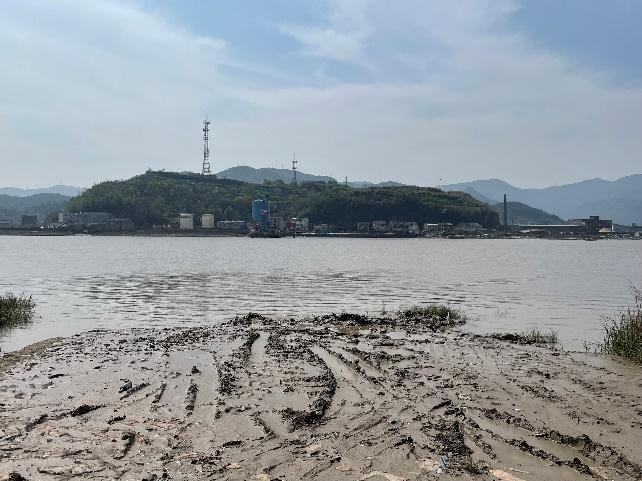
Sanmen Bay (28°57’–29°22’ N, 121°25’–121°58’ E), where Tao Island is situated, is the second largest bay in Zhejiang Province. Located in the middle section of China’s eastern coastline, it falls within the subtropical monsoon climate zone, characterized by distinct seasons and a temperate climate. The terrain of the Sanmen Bay area descends from west to east: the western part is dominated by low mountains and hills, while the eastern coastal zone consists of fertile coastal plains and tidal flats formed by alluvial deposits from rivers and silt transported by ocean currents. The bay contains numerous islands—approximately 130 in total—most of which are small islets. Tao Island was originally one of these (Figure 1 shows its general geographic location in China).

Tao Island currently comprises one administrative village, Tao Village, which governs two natural villages: Tao Yi Village and Tao Er Village. Demographically, Tao Village has a population of 1,767 residents across 662 households, with 903 males and 864 females. Specifically, Tao Yi Village has 1,217 inhabitants, while Tao Er Village has 550. Economically, 70% of households in Tao Village currently depend on mariculture for their livelihood, typically practicing polyculture of mud crabs (Scylla paramamosain), blood clams (Tegillarca granosa), and white shrimp (Penaeus vannamei). Another 10% of villagers work in mariculture-related sectors such as aquatic product sales and temporary labor in pond maintenance. The remaining residents are employed in local factories, restaurants, and other establishments near the village.
As a settlement established on an island, Tao Village has undergone more than a century of development—from initial formation to gradual expansion—reflecting dynamic interactions among islanders, the surrounding sea, and terrestrial environments. This developmental trajectory aptly illustrates the distinctive islandness characteristic of China’s fringing islands.
The Emergence of Tao Island Society and Land Reclamation
Influenced by the Ming (1371–1566) and Qing (1655–1683) maritime prohibition policies, the coastal areas and islands of Sanmen Bay, including what would become Tao Island, remained under strict closure for an extended period. Local villagers were forbidden from traveling freely to offshore islands until the ban was lifted in 1683 (Xie, 2020). According to the Genealogy of the Huang Clan in Tao Village (1991), which records the earliest settlement widely acknowledged by villagers, “During the Kangxi reign of the Qing dynasty (1622–1722), our founding ancestor Xuelu journeyed to develop Tao Village, bringing his family to settle here. He constructed seawalls and reclaimed land, establishing our ancestral legacy.” Given that the maritime ban was not lifted until 1683, the recorded arrival of the Huang family likely took place between 1683 and 1722. Furthermore, Tao Island’s formal documentation emerged considerably later, with its first appearance in the Ninghai County Gazetteer (1902). It can thus be inferred that the earliest settlers arrived on Tao Island around the early 18th century. Migration continued intermittently throughout the 18th and 19th centuries, and by the early 20th century, a stable village community had taken shape.
Where did these early settlers originate, and what motivated their migration to Tao Island? In interviews with elderly villagers, I gathered several accounts, which can be broadly categorized into two narratives: the “Refugee Narrative” and the “Livelihood Narrative.”
Back then, you wouldn’t get in trouble for killing someone. So after our ancestors got into a fight and killed a person, they fled all the way here. Actually, the ‘Tao’ in Tao Island used to be the character for ‘flee’ (逃). (Y.L. Lei, male, aged 55)
When our ancestors first moved here, they just grew some sweet potatoes on the hills and caught some fish and crabs down by the shore. Later, rich people from town showed up, built seawalls, and rented the land out to others. But we Tao villagers were poor–no money. We just kept living the same way we always had. Things didn’t change until Land Reform, when the Communist Party gave the land to us. (Y.G. Lei, male, aged 69)
Critical analysis suggests the “Refugee Narrative” holds limited plausibility. While islands could serve as refuges, maritime migration posed formidable barriers compared to nearby hills, a more viable sanctuary. This narrative appears largely shaped by later generations’ imaginations—a form of utopian idealization of islands frequently observed in both Chinese literary works and Western narratives (Hong, 2022; Su et al., 2022). Nonetheless, it reflects contemporary villagers’ spatial imagination of their homeland.
In contrast, this study leans toward the livelihood narrative: ancestors migrated when survival became untenable in their villages. What resources drew them to islands? Genealogical records and oral accounts indicate migrants originated from villages within 10 km of Tao Island, coastal communities practicing sedentary agriculture, rather than boat-dwelling populations transitioning to land. Thus, the earliest settlers were farmers seeking tidal flats exposed at low tide for land reclamation.
In Fei Xiaotong’s analysis of rural Chinese society, he observed that when a piece of land becomes saturated after sustaining several generations of population growth, the excess population would consequently migrate to seek new territories (Fei, 1999). Accordingly, it is reasonable to infer that migrants moved to Tao Village specifically to cultivate new land, resolving pressures of population density and land scarcity. This practice was not uncommon in inland China, where lands reclaimed from lakes—such as the polder fields (圩田) around Taihu Lake—were enclosed by dykes to prevent waterlogging. These fertile soils consistently supported high crop yields (Jiang, 1996).
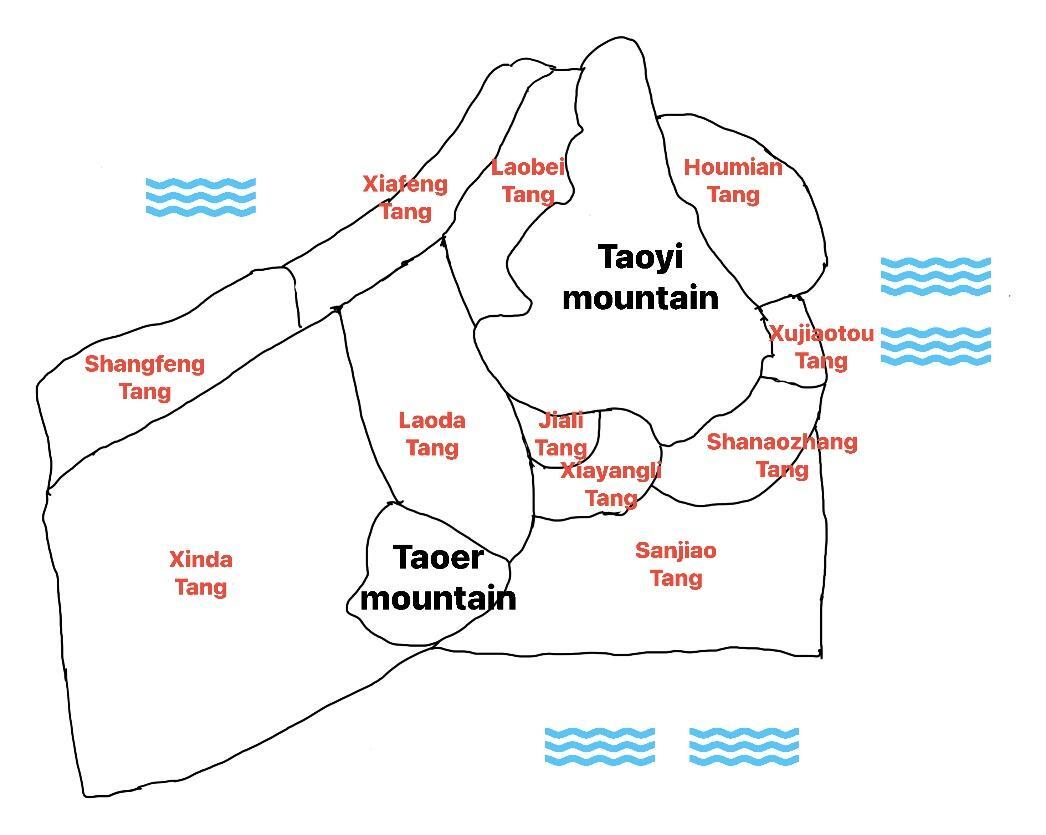
Tao Island consists of two hills—one larger, one smaller—and the area between them. These two hills were originally separate islets, with a straight-line distance of approximately 700 meters, and were later connected through human-led land reclamation to form a single island characterized by an extensive artificial coastline. The current settlement patterns of Tao Yi Village and Tao Er Village developed gradually, centered around these two hills. Like many islands along the East China Sea coast, Tao Island is fringed by expansive tidal flats formed over a broad continental shelf. During low tide, these flats become fully exposed. Starting from the original coastline, villagers gradually expanded the island’s land area by reclaiming land southward and eastward. A crucial step in this reclamation process was the construction of seawalls—known locally as Tangba (塘坝)—to hold back seawater. Each parcel of land reclaimed in this way was called a Tang (塘). Before 1949, villages near Tao Island organized clan members to reclaim land there. Each newly enclosed parcel was named after the village of its builders, a naming convention still preserved in many local place names today. According to villagers, Tao Island has a total of “Thirteen Tang,” evidence that people from different villages landed and reclaimed land on the island during different periods. The names of these Tang that villagers can still recall (for details, see Figure 2).

During the 1960s, propelled by the national policy of “Grain as the Key Link” (以粮为纲), the county government organized a large-scale reclamation project to expand arable land. Thirty-four production brigades (villages) from five communes across three administrative districts were mobilized to reclaim land on the western side of Tao Island. This project integrated three smaller islets into a single large island with a total area of approximately 8,000 mu (a traditional Chinese unit of area where 1 mu ≈ 666.67 square meters; hence 8,000 mu ≈ 5.333 square kilometers), which became known as Hua Island. Collective labor proved pivotal: villagers from participating brigades worked monthly during low tides to expand their communes’ arable land. In 2010, the local county government further reclaimed the tidal flats west of Hua Island, converting them into land and physically connecting Hua Island to the mainland. This ended the era of mandatory boat travel for island residents. Over the past century, Tao Island has progressively expanded—appearing to gradually “absorb” smaller offshore islets—only to ultimately be incorporated into the mainland itself.
Due to their proximity to the mainland, China’s islands experience intensive human development. Most islanders descend not from ancient maritime communities but from Han Chinese agricultural migrants who settled there to reclaim land. As an agrarian-based civilization, the Han initially transformed islands through coastal land reclamation—desalinating tracts for crop cultivation (Yang G., 2019, pp. 168–180). The formation of Tao Island society demonstrates that while seawater demarcates islands—imparting essential islandness—land remains indispensable. Particularly in rural China, land reclamation constituted the primary impetus for island settlement while forging the very collective identity of island societies.
Land-Based Connections and Solidarity on Tao Island
Fei Xiaotong (1949) used the title “Earthbound China” to characterize three villages in Yunnan, highlighting how land constrains and restricts rural Chinese society. It’s also an observation that accurately captures the reality of most rural Chinese communities, a pattern that extends even to China’s fringing islands. As evidenced above, fringing island societies in China emerged precisely through the quest for and reclamation of land. Here, land became the nucleus that united villagers from disparate villages and multi-surname groups into a singular community of practice. This community coalesced not through traditional kinship bonds but via shared land development and maintenance efforts. Simultaneously, land functioned as the essential tie fostering mutual aid networks between islanders and mainland communities.
Prior to 1997, the primary livelihood on Tao Island was crop cultivation, and protecting farmland from seawater intrusion was an annual priority for the entire village. Before the government funded the construction of standardized sea dykes in 2000, Tao Island relied exclusively on earthen seawalls built from yellow clay dug from nearby tidal flats. Transporting clay slabs over considerable distances necessitated specialized tools: cutting bows (割弓), slide boards (溜板), and pushing poles (溜棍), which enabled integrated extraction-to-transport workflows. Each construction phase required tightly coordinated teams of 10–13 individuals. As informant C.Y. Lin (male, 66) recounted.
When we were working with the yellow clay, you had to pair up with someone who was pretty strong. If the person in front of you had good strength, it made things easier for those behind. But if the guy up front wasn’t so skilled, the clay would “die”—it just stopped moving. You couldn’t let the clay stop, because we relied on momentum. The clay was sliding over water—if you didn’t handle it right, it would get stuck on the sliding board. Then you’d have to “restart” it, and that was really hard work. Even though we were all working as one production team, you could still choose your partner.
Malinowski (2001) distinguished between organized labor and communal labor in his study of canoe-building in indigenous communities. He defined organized labor as technically specialized cooperation among diverse socio-economic units, while communal labor involved collective effort toward a shared goal. Both forms prove essential to island societies: organized labor enables specialization, while communal labor fosters collective cohesion. Tao Island’s seawalls construction embodied this duality—simultaneously an exercise in organized labor through its technical divisions (cutting, transport, assembly) and communal labor through pooled manpower. This inherently collective endeavor required integrated group effort, rendering individual execution impossible. Moreover, completed seawalls demanded annual reinforcement against tidal erosion and typhoon damage, typically undertaken after the early rice harvest (seventh lunar month) through the twelfth lunar month. Villagers strategically utilized “minor tide periods”—10-day windows with predictably low water levels exposing maximal tidal flats—to maximize work efficiency.
These seawalls functioned as vital barriers protecting cropland and livelihoods; any breach threatened catastrophic losses. Consequently, seawall maintenance constituted a non-negotiable collective imperative. Despite the arduous workload, villagers universally accepted assignments from village committees, persisting even after production teams (生产队) disbanded in 1981. The months-long collaborative labor—with its intricate coordination—ultimately forged Tao Islanders into a community of shared destiny.
Beyond fostering internal cohesion, land also forged solidarity between Tao Island and the surrounding mainland villages. After Tao Island’s settlement patterns stabilized, expansive peripheral tidal flats—legally owned by the village collective—remained available for reclamation. However, constrained by limited labor and existing maintenance burdens during the collectivization era, islanders focused exclusively on cultivated lands, lacking the capacity for new reclamation. Meanwhile, hinterland villages in mountainous areas faced acute land scarcity. Their interest in reclaiming Tao Island’s peripheral flats met unexpected receptiveness. Tao villagers permitted free reclamation, effectively gifting land. Given Tao’s relative abundance, this extraordinary generosity appeared anomalous until an illuminating dialogue with former village secretary H. M. Zhang (male, 74):
We actually really wanted folks from other villages to come reclaim land here. If they built seawalls further out, then we wouldn’t need to reinforce our inner sections—saved us a lot of effort that way.
Allowing neighboring villages to reclaim peripheral tidal flats by constructing outer seawalls effectively “encapsulated” the village. This strategic configuration shielded its original seawalls from direct wave impact, eliminating annual maintenance needs while reducing breach risks—yielding significant labor savings. Behind this apparent defiance of economic rationality lay Tao Islanders’ calculated assessment. The Friendship Tang (友谊塘) southeast of Tao Village exemplifies this logic. Constructed collectively by Tao, Sun, and Xi villages in the 1970s (hence its name), it granted Sun and Xi villages land rights. In reciprocity, they gifted timber to Tao Village. When Tao needed wood for an assembly hall in the early 1980s, Sun and Xi villages freely supplied materials. Through land-mediated exchanges, Tao forged reciprocal alliances with surrounding villages, termed guanxi villages (关系村). These relationships facilitated not only resource exchange (timber/land) but also marital ties, embodying Lévi-Strauss’ (1971) “exchange of women.”
While contemporary perspectives might lament Tao’s “lost” resources, collective-era realities prioritized survival: constrained by population and technology, maximizing existing land security outweighed expansion. Permitting neighbor reclamation aligned with Scott’s (1977) subsistence ethic—“meeting minimal human needs in a stable and reliable manner.” Ultimately, land anchored Tao Island’s translocal solidarity, binding island and mainland through mutual dependence.
Land Use and Livelihood Transformation on Tao Island
Land profoundly shaped Tao Island’s physical and social formation, equally determining its livelihood systems. This became pivotal when typhoon disasters forced existential reconsiderations of land dependency. 1997 marked a decisive turning point: a typhoon ravaging Sanmen Bay collapsed Tao’s seawalls, flooding the island. Seawater swept away thatched houses and residents, submerging over 3000 mu of land. The low-lying terrain retained floodwaters for weeks, causing severe salinization that temporarily destroyed soil fertility—triggering a livelihood crisis.
July 16, 1997 (lunar calendar) remains etched in Tao Island’s collective memory. Around 7 PM, village cadres monitoring the seawalls set off firecrackers to alert residents of breaches, while others led evacuations to higher-elevation homes. Informant P.F. Fang (male, 34) recounts:
That night, I didn’t sleep a wink. The whole village was flooded. I just sat on the stairs of a house up on the hill—sat there the whole night. When morning came and I looked outside… everything was just a mess. For days after, we didn’t even have food. That whole scene… it’s still vivid in my mind, like it happened yesterday.
The day after the typhoon, the island lay in devastation. Village cadres immediately mobilized residents to repair the breached seawalls while convening meetings to strategize how to help the community restart their livelihoods and rebuild their lives. With salinized lands requiring years to regain fertility, the collapse of crop-based livelihoods threatened catastrophe. During discussions between cadres and villager representatives, then–village head Huang Minghua proposed a transformative idea: since the fields were already saturated with seawater, why not intentionally channel seawater into the polders? He suggested converting the rice paddies into aquaculture ponds, shifting the primary livelihood from agriculture to mariculture. By utilizing tidal flows to periodically refresh the water, they could farm shrimp, crabs, and other marine species.
Facing extensive land damage, village cadres proposed converting agriculture to aquaculture. Would villagers entrenched in farming accept collective land consolidation for this new livelihood? As cadre Zhang Houguan (male, 72) explained:
For the folks who didn’t want to switch, we gave them fields closer to the foothills. There’s freshwater there, so it’s better for growing crops. With farming—take rice, for instance—it takes half a year to get a harvest. But with aquaculture, the cycle’s a lot shorter.
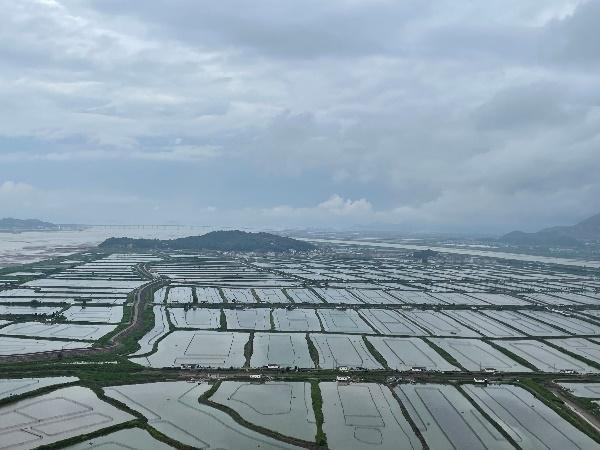
To address potential resistance, they implemented a dual-track system: villagers reluctant to convert their lands received proportional plots near foothill freshwater sources suitable for conventional farming, while those accepting the shift surrendered household-contracted lands (包产到户) for collective conversion to mariculture ponds. All allocations followed the collective-era grain ration formula, ensuring equity. Land recipients continued cultivation; those ceding land received pond rental dividends as compensation. Alternatively, villagers could lease ponds for independent aquaculture. After consultations, 352 of 387 households (90.8%) endorsed conversion. Within one production cycle, even the initial 35 holdouts requested inclusion—demonstrating the model’s viability. Since January 1998, Tao Island has transformed nearly 100 aquaculture ponds (Figure 3). Aquaculture rapidly surpassed farming incomes, becoming the village’s economic cornerstone.

A key reason why most villagers agreed so readily to return their household-allocated land to the collective was the growing inequity in land distribution that had developed over time. Over the 15 years since the implementation of the Household Responsibility System in 1983—up until the typhoon—the original land allocations had never been adjusted, despite significant demographic changes within the community. This static allocation system created considerable disparities in per capita landholding across different village teams. Compounding this issue was the local practice of family division, which required allocating land use rights to sons upon their marriage. Consequently, teams with more sons saw household landholdings progressively fragmented into smaller, often economically unviable, plots.
Our Team 1 kept growing ever since we started farming as individual households back then. Lots of sons were born, they married and brought in wives—our numbers just swelled. Land became scarce for so many people. But Team 5 had very few members, so they had plenty of land to go around. Honestly, we were more than ready for the collective to take the land back and redistribute it all over again. (L. S. Chen, Female, aged 62)
Villagers’ strong commitment to egalitarian principles in land distribution contributed significantly to their rapid agreement to shift livelihood practices. The reallocation would ensure more equitable land-use rights among Tao Island’s households—even as those rights were now converted into shares within the new livelihood.
Following the 1997 typhoon disaster, Tao Village redesigned its infrastructure by constructing sluice gates and main canals, deliberately reintegrating seawater with the land. The very seawater that villagers had once labored to keep outside the dykes was now channeled into the village through gates, becoming the essential means of production for a new livelihood. Walking along the paths between aquaculture ponds, one can see vegetables growing on nearly every pond embankment. In this integrated system, marine products thrive below the water’s surface while familiar crops grow on the earthen dykes—a tangible combination of agriculture and fishing within the new livelihood model. These aquaculture ponds serve as a powerful metaphor for Tao Island’s islandness, where terrestrial and marine influences coexist and manifest vividly. The interplay of these dual forces permeates virtually every facet of Tao Island society.
Over the past century, land has remained pivotal in Tao Island’s social transformations along China’s eastern coast—a legacy profoundly shaped by mainland agrarian traditions. The initial migrants arriving a century ago were coastal mainlanders who, upon settling, labored to segregate tidal flats from the sea through systematic land reclamation in order to obtain more land area. This process forged internal and external social cohesion as islanders collectively maintained lands and engaged in reciprocal land exchanges, cementing collective identity. This solidarity was most evident when Tao Island was struck by typhoon disasters. Confronted with the devastation, village cadres and residents united their efforts to actively rebuild their community through their own means. They even fundamentally transformed their established livelihood model, reintegrating land and sea by converting croplands into aquaculture ponds, thereby successfully transitioning to a new mode of subsistence. While this case study of Tao Island has focused primarily on land-society dynamics, it does not seek to obscure or deny the island’s maritime attributes. Indeed, the very processes of land acquisition and subsequent social transformation simultaneously reflect Tao Island’s embeddedness within marine environments. The early mainland settlers who reclaimed tidal flats to create farmland relied on knowledge of oceanic tides and rhythms to separate new land from the sea. Generations of islanders have accumulated rich local knowledge of marine climates, hazards, and species through sustained interaction with surrounding waters—knowledge that fundamentally shapes daily life. Even during predominantly agricultural periods, villagers fished tidal flats and nearshore waters during seasonal lulls in farming. Before 2010, when the island was physically connected to the mainland, the entire village depended on ferry transport from Tao Island Pier—for travel, goods, and children’s school commutes—embedding maritime awareness deeply into residents’ sense of place and belonging. Such evidence confirms that Tao Island, like many islands, is profoundly influenced by maritime forces. Nevertheless, this study argues that examining historical transitions reveals equally significant mainland characteristics in fringing island societies like Tao Island. These terrestrial influences—visible in social formation, relational patterns, and livelihood adaptations—have often been overlooked in island studies. Thus, this paper argues that fringing islands exemplify a land-sea amphibiousness, which can thus help us reexamine the concept of islandness.

Land-Sea Amphibiousness: Characteristics of Fringing Island Societies
Reconceptualizing islandness demands re-examining relationships among humans, islands, the sea, and the mainland. As Tao Island illustrates, many Chinese islands occupy transitional zones between land and sea, exhibiting dual mainland and marine attributes—here termed the “land-sea amphibiousness.” Among all social domains, livelihood practices most vividly express this land-sea amphibiousness. In Tao Island’s predominantly agricultural phase, villagers supplemented their income by fishing in nearby waters during slack seasons. After shifting to mariculture, they continued growing vegetables on pond dykes. Similarly, residents of other Chinese fringing islands often engage in fishing only during peak seasons, returning to land-based work afterward—a pattern of semi-agrarian, semi-maritime subsistence (Bai, 2012). Such communities skillfully navigate both tidal rhythms and crop cycles. Beyond Tao Island, Zhoushan Archipelago’s island agriculture reveals marine-environment influences: farmers’ time house construction and poultry hatching to high tides (Liu H., 2006), and fertilizing fields with fish waste (Jiang, 2005).
Beyond livelihood practices, land-sea amphibiousness manifests distinctly in geographical space. The sea dykes partition the island into two distinct realms: inside the dykes lies a terrestrial, dry, and fixed domain, while outside exists a marine, wet, and fluid one—separated yet connected by the intertidal zone, a transitional space where tidal flats can be converted into land. Villagers routinely move across this boundary, conducting activities on both sides. They reclaim tidal flats by enclosing them within dykes, yet also deliberately restore reclaimed areas to wetlands for ecological conservation. Thus, the boundary between land and sea on fringing islands is not fixed but dynamic and malleable, with terrestrial and marine spaces continually transforming into one another. A similar perspective can be found in the work of Christian Fleury and Philip Hayward (2021), whose diachronic analysis of islands and island-like formations—such as river islands and artificial islands—in the lower Richmond River of Eastern Australia highlights the inherent multiplicity, fluidity, and processuality of islands. They emphasize that islands form and transform through the continuous interaction between natural processes and human activities. Unlike their case study, however, this article remains within the context of marine islands in examining the dynamics of islandness.
The characteristics of “land-sea amphibiousness” summarized from empirical materials in this study resonate with recent theoretical developments in amphibious anthropology. Ten Bos, elaborating on philosopher Sloterdijk’s “amphibious anthropology,” argues that Sloterdijk revised traditional Western philosophy’s reliance on the “earth” element by focusing on the role of “water” in human existence, noting that humans can transition between multiple elements (2009). Building on this philosophical foundation, some scholars have used “amphibiousness” based on ethnographic fieldwork to interpret relationships between “worlds that relate and partly intermingle, yet are not reducible to one another” (Pauwelussen, 2017, p. 2)—such as land and sea—treating them as distinct ontological existences.
While this article’s discussion of “land-sea amphibiousness” in Chinese fringing islands shares common ground with amphibious anthropology in their focus on localized experiences at land-water interfaces, yet diverges significantly in their fundamental research questions and points of departure. Existing Western scholarship on amphibious anthropology predominantly adopts a hydro-centric approach, seeking to address the fluidity, ambiguity, and complexity long overlooked in academia. While acknowledging amphibious dynamics, its theoretical framework remains anchored in water, which dominates the conceptualization process, whereas land appears in “more general and abstract forms” (Gagné & Rasmussen, 2016, p. 136) rather than as a concrete theoretical entity. For instance, in Franz Krause’s proposed dimensions for a deltaic amphibious anthropology—social hydrology, variability, wetness, and rhythmicity (2017)—two elements directly relate to water, highlighting the discipline’s aquatic perspective.
In contrast, this study adopts an integrated regional perspective encompassing islands and their surrounding territories. Examining Chinese fringing island societies reveals characteristics of land-sea amphibiousness through a post-relational-turn lens that emphasizes the interconnectedness between land, islands, and sea. Unlike established amphibious anthropology that treats land and sea as distinct ontologies, this article positions islands, mainland, and ocean on the same plane to analyze their dynamic relationships. Consequently, this framework treats both sea and land—the dual components of amphibiousness—as substantive entities and active agents shaping island societies, rather than as abstract ontological metaphors. Since both maritime and terrestrial forces exert distinct influences on fringing island societies, this approach requires a concrete, holistic perspective to examine varied manifestations of islandness.
Reflecting on Tao Island’s century-long trajectory, the land-sea amphibiousness fundamentally shaped its strong collective cohesion. Facing volatile land-sea convertibility—where salinization could rapidly undo reclamation—villagers united to build and maintain seawalls, transforming environmental vulnerability into social resilience. This solidarity manifested during typhoons through mutual rescue operations and collective rebuilding strategies, culminating in the village committee’s leadership of the livelihood transition to mariculture.
Thus, the characteristic of land-sea amphibiousness demonstrates historical continuity, persisting across all stages of development: from initial settlement through collectivization to the mariculture era. Tao Island’s landscapes evolved with societal changes, yet villagers consistently navigated endogenous development pathways between terrestrial and marine cultures. Land and sea remain the enduring foundation of islanders’ subsistence. Even after Tao Island became physically connected to the mainland, it has maintained mariculture as a core livelihood—a practice that embodies the synthesis of agricultural and fishing traditions.
Consequently, in rethinking islandness, we must recognize not only the internal typological diversity among islands but also ground our analysis within specific island contexts. This necessitates an integrated regional perspective that systematically considers how surrounding territories shape and influence islands. Islands are neither vacuum-sealed laboratories nor ahistorical entities; each possesses unique historical trajectories. When confronting similar external structures, islands activate distinct “structures of the conjuncture”—culturally specific historical practices that reshape macro-forces through local logics (Sahlins, 1985). It is within these histories that islandness manifests most vividly. In defining anthropology’s object of study, Geertz (1973) notably stated that “The locus of study is not the object of study. Anthropologists don’t study villages; they study in villages” (p. 22). This epistemological distinction has significantly influenced island studies, where scholars often conduct research on islands without making islands their primary object of study, resulting in the marginalization of islands as mere backdrops for anthropological inquiry. Ronström (2012) rejects approaches that treat islands merely as backdrops or reduce them to abstract metaphors and cultural symbols, arguing instead for sustained attention to local voices and lived experiences to reveal how islands are continually reconstituted through practice and discourse. This article seeks to articulate precisely such grounded experiences of Chinese islands, while proposing the concept of “land-sea amphibiousness” as a theoretical contribution to global scholarship on fringing islands and their distinctive manifestations of islandness.
Conclusion: Seeing Islands as Concrete Realities
What insights does the Tao Island ethnography offer for rethinking islandness? This study, grounded in fieldwork on China’s eastern coastal Tao Island, argues that islandness should be understood as a concrete rather than abstract insular attribute. It is essential to contextualize islands within their regional settings and examine islandness from a holistic perspective—one that recognizes it as emerging from the synthesis and refinement of local social practices. Spatially, islands exhibit significant typological diversity across regions. A comprehensive understanding of islandness cannot be solely derived from Pacific islands—which have received disproportionate scholarly attention in Western academia—but must incorporate archipelagic contexts like China with its numerous islands. Integrating these diverse typologies enables a more complete theoretical framework for conceptualizing islandness. Temporally, islands possess distinct historical trajectories. Examining islandness through historical contexts reveals its remarkable stability and continuity throughout societal transformations. Crucially, islandness persists even after physical connection to the mainland, enduring through transitional phases while retaining residual characteristics that maintain its fundamental nature.
The Tao Island ethnography reveals that migrants sought these sea-locked islands primarily to acquire land for livelihoods. Through collective effort, they expanded arable areas for subsistence and cash crops, gradually enlarging the island itself. Throughout this process, maritime attributes remained integral: boats were essential for transportation; seawalls construction and land maintenance required knowledge of tidal cycles; after the 1997 shift to mariculture, villagers had to master marine physics, chemistry, and organism behavior. In fringing islands like Tao, both marine and terrestrial influences are pronounced. This study terms this duality the “land-sea amphibiousness”—a fundamental feature of over two-thirds of China’s island societies. Moreover, such island societies are characterized by a strong collectivity—a prominent feature encompassing both the lineage-based collectives that initially reclaimed Tao Island and the village collectives established after the founding of the People’s Republic of China. This collectivity has empowered island societies to develop adaptive capacities for thriving in the dynamic ecotones between land and sea. While seemingly straightforward, this conclusion emerges from rigorous fieldwork and ethnographic analysis, grounded in island subjectivity.
This study contends that rejecting mainland-centrism should not entail neglecting the mainland’s profound significance for islands. Historically, especially in Chinese humanities and social sciences, islands were often treated as appendages or extensions of the mainland, rarely centered as primary subjects to examine their relationships with oceans, mainlands, and other islands (Qu et al., 2023). However, when conducting island-centered research, we must not deliberately evade the mainland’s role or relevant historical facts.
Situated within the relational turn in island studies, this article conceptualizes islands as integrated complexes intrinsically connected to their surrounding regions. Departing from established research that predominantly emphasizes island-sea or inter-island relations, it challenges the dichotomous framing of mainland versus ocean. Instead, the study highlights their simultaneous influence on island societies—a dynamic termed “land-sea amphibiousness.” While derived from empirical findings on Chinese fringing islands, this perspective offers theoretical implications for understanding island societies globally. Even islands geographically distant from continents maintain spatiotemporal connections and influences—whether through archipelagic linkages or maritime routes—albeit less directly or visibly than fringing islands.
Consequently, investigating any island necessitates attention to its amphibious character—understood not as an abstract metaphor but as a concrete reality. This approach privileges neither element nor treats the land-sea boundary as fixed. Rather, it calls for examining how both marine and terrestrial entities have substantively shaped islandness through socio-historical processes.
Acknowledgments
We would like to extend our sincere gratitude to the editor and the three anonymous reviewers for their constructive feedback and professional suggestions, which have significantly improved the quality of this paper. We also appreciate the editorial team’s efficient and dedicated work throughout the publication process. Our heartfelt thanks go to the villagers of Tao village for their kindness, patience, and invaluable support during fieldwork. Without their generous participation, this study would not have been possible.
Funding
This work was supported by National Social Science Fund of China under Grant 23BMZ069.