
1. Introduction
Resilience is the ability to prepare for, respond to, and recover from shocks and disruptions (Meerow et al., 2016). In a broader sense, resilience encompasses not only environmental and ecological dimensions but also social, economic, and cultural aspects. Resilience reflects regions’, cities’, and communities’ capacity to adapt to and recover from various challenges (Carpenter et al., 2001; López-Morales & Vargas, 2021; Righi & Sánchez, 2022).
Island geographies often produce distinctive challenges related to isolation, limited resources, and vulnerability to disasters such as storms, tsunamis, coastal erosion, and rising sea levels. Island resilience encompasses the capacity to respond to these challenges in ways that protect both the physical environment and the well-being of the population. Studies have shown that resilient islands invest in disaster preparedness and resource management to protect ecosystems (Adger et al., 2005). Also, they facilitate social cohesion, economic diversification, and cultural continuity to ensure the long-term prospects of their residents (Adger et al., 2005; Berkes et al., 2003). By integrating sustainability into emergency logistics planning, islands should create pathways toward a more secure and resilient future. This approach strengthens their ability to withstand challenges, as well as supports living environment stability. Incorporating resilience into island development ensures a harmonious relationship between human activity and the natural environment (Nunn, 2013; Pelling, 2011).
Scholars define island resilience as the ability of island communities to anticipate, absorb, and recover from both short-term and long-term stressors, including disasters, climate change, and economic shifts (Adger et al., 2005; Pelling, 2011). Adaptive governance and resource management are needed to protect both natural and built environments. Social resilience is often framed in terms of community networks, local knowledge, and institutional capacity for risk management and recovery (Cutter et al., 2003). It is argued that strengthening governance, increasing public awareness, and promoting inclusive decision-making are key to building resilience (Cochran et al., 2013). Economic resilience is commonly discussed in relation to diversifying island economies, particularly those heavily dependent on tourism, which is vulnerable to both market fluctuations and environmental disruptions (Hall & McCullough, 2005). While much of the research focuses on immediate disaster response, there is growing attention to sustainable development approaches that integrate environmental, social, and economic resilience (Smit & Wandel, 2006). This is crucial for building adaptive communities capable of thriving amid uncertainty and change. Because the discourses of disaster and risk can essentialize island characteristics and limit island opportunities (Grydehøj et al., 2025), it is important that policy approaches take their point of departure in specific islands’ needs and realities.
Although emergencies faced by islands all exert pressure on logistics systems, there are significant differences in terms of demand structure, response time efficiency, and material priority. The specific characteristics are shown in Table 1, and the subsequent emergency logistics design in this study will be carried out based on these differences.
Island emergency logistics involve meeting the demand, processing orders, sorting, and delivering goods during emergencies to minimize the loss of human, financial, and material resources (National Academies of Sciences et al., 2020; Tian & Mei, 2023; Xu et al., 2024). Emergencies on islands can arise from disasters, public health crises, or peak tourist seasons. During these times, increased demand for essentials and heightened public stress can occur. Thus, emergency logistics on islands relate to both a sustainable marine environment and human safety (Azmi et al., 2023). Creating a stable island human settlement is of great significance to the harmonious coexistence of humans and nature (B. Liu, 2023).
The present study argues that island emergency logistics should pay increased attention to micro-retail infrastructure (i.e., local shops) and how they affect integration of local resources, assessments of island resilience, and determinations of appropriate emergency responses. This leads to the central research question: In China’s small islands, how can local shops be embedded into emergency logistics systems through institutional design, resource integration, and capacity building? What is the specific path by which this embedding enhances island resilience? Using communities in the Zhoushan archipelago as a case study, we explore the embedding of local shops into the islands’ emergency logistics system, with focus on islanders’ wellbeing and the resilience of the island living environment.
Local shops have a crucial role to play in small island resilience, not least in the event of emergencies. Although small size limits the amounts of materials that can be stored in a single local shop at any one time, this can be compensated for by collaboration among multiple stores. In this study, ‘local shops’ refers specifically to independently operated micro-retail outlets: independently operated stores have more flexible operational decision-making, while chain supermarkets must follow headquarters’ procedures, resulting in lower response efficiency during emergencies. Local shops support logistics in meeting residents’ essential needs, particularly during emergencies (Araldi & Fusco, 2019; Clarke & Banga, 2010; C. Liu et al., 2012). Strategically located local shops ensure equitable access to goods, reduce transportation challenges, and support local economies (Araldi & Fusco, 2019). Micro-retailers strengthen island logistics by serving as primary distribution points for daily necessities (Sheffi, 2012). Their allocation relates to elements such as population density, transportation access, and vulnerability to disasters. Especially on islands, small shops or stores help optimize supply flexibility as well as reduce response time in emergencies. With the financial cover of the government, retail infrastructure allocation should ensure they can adapt to changing circumstances.
Small and coastal islands rely more heavily on local shops than do inland areas due to geographic isolation, limited transportation, and low populations (Connell, 2013; Erdiwansyah et al., 2021). Large supermarkets often cannot operate efficiently on islands. As a result, micro-retail outlets play an important role for local livelihoods. On some remote islands, micro-retail outlets are the only source of goods. They supply the population during both daily life and emergencies. Because such micro-retail infrastructure helps islanders access basic necessities during crises, strategically planning their distribution is a basic task for local government, planners, and stakeholders. Integrating local shops into emergency logistics systems could mitigate the impact of unexpected incidents (Kovács & Falagara Sigala, 2021).
2. Geographical and institutional context
For many Chinese islands, population and economic improvement, especially the tourism boom of the past decades, present both challenges to and opportunities for fostering resilience. This study focuses on small and medium-sized inhabited coastal islands in China, specifically referring to rural or suburban islands with populations of 2,000 to 5,000 residents, where fisheries or rural tourism constitute the primary economic activities. These islands are geographically separated from the mainland. They rely on ferry services or short-haul shipping and lack large commercial infrastructure, as exemplified by the Shengsi Archipelago of Zhoushan, China.
Due to low population density and limited transportation links, large supermarkets, typically requiring over 500 m² of space and a daily footfall of at least 500 customers, struggle to achieve profitability on such islands. Consequently, micro-retail infrastructure serves as the core infrastructure for both daily and emergency supplies. In contrast, the operational feasibility and emergency roles of large supermarkets on islands with large land areas or population sizes (e.g., Hainan, Manhattan, Singapore) warrant separate discussion.
This study’s approach to island emergency logistics planning is based on China’s institutional background. China’s Emergency Response Law and Rural Revitalization Strategy Plan clearly stipulate that local governments shall take the lead in the layout of grassroots emergency infrastructure. However, some islands around the world, such as remote non-sovereign islands and islands relying on spontaneous market regulation, lack such a planning system. Therefore, the lessons of this study are mainly applicable to small and medium-sized settled islands that possess basic de facto or de jure planning capabilities.
Effective emergency logistics are essential for reducing the impact of shocks and ensuring rapid recovery in island communities (Zhao et al., 2019; Li et al., 2020). Given the geographic constraints and limited infrastructure on many islands, logistics strategies must be adaptable and scalable to quickly mobilize supplies during emergencies (Cai et al., 2017). Micro-retail infrastructure, such as convenience stores and small supermarkets, could support island logistics by providing essential necessities during crises (Xu & Zhang, 2021; Yang et al., 2022). Thus, island emergency logistics should integrate daily functions with emergency responses to optimize resource distribution and address fluctuating demand (J. Liu et al., 2020). Key strategies include improving the resilience of transportation networks, enhancing inventory management, and using technology to improve coordination and communication (Xu & Zhang, 2021). A well-coordinated emergency logistics system is vital for enhancing island resilience to a range of disruptions, from disasters to public health emergencies.
Daily goods consumption patterns have changed significantly in China over recent years. With the rise of online shopping and delivery, local shops have become an important component of the retail industry (Krajka & Nordlund, n.d.; Ligthelm, 2005; Sahu & Arrawatia, 2024). According to the Chinese Convenience Store Development Report (2024) by the China Chain Store Association, the number of convenience stores has grown steadily at 8% annually since 2020, even as overall retail sales declined due to the COVID-19 pandemic. This growth outpaces other retail formats, such as department stores and hypermarkets. In 2019, the Ministry of Commerce of China issued the Guidance on Promoting the Accelerated Development of Branded Chain Convenience Stores. Through this guidance, local shops are officially supported on account of their role in improving livelihoods and boosting consumption. Local shops meet the demands of changing consumption habits and offer flexible and efficient ways to fulfill daily requirements (Dewanthi, 2023; Lu et al., 2024).
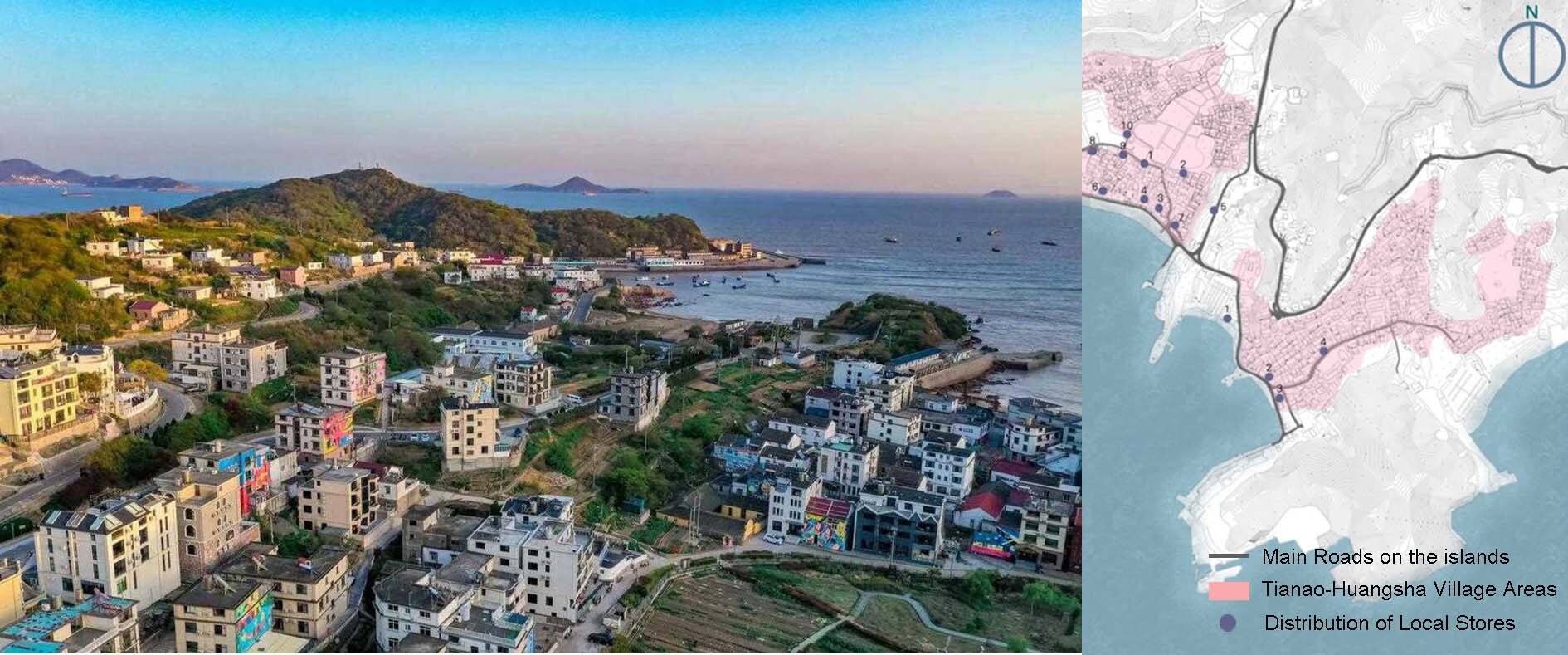
The present study uses Tianao and Huangsha, both villages in the Shengsi Islands of Zhoushan City, as research cases. Shengsi is part of the wider Zhoushan archipelago and is located east of Hangzhou Bay and southeast of the Yangtze River Estuary. The islands are known for their rich fishery resources. These two villages in Shengsi are geographically very close and represent an island-type suburb contiguous area (Figure 1). Tianao and Huangsha are connected within the archipelago, covering a total area of about 2.8 km², with 869 households and 2,147 residents (Shengsi County People’s Government, 2024).

Local shops significantly enhance the efficient distribution of goods in Shengsi. The advantage of local shops in improving material distribution efficiency lies in their location rather than their size. Although the stores in Tianao-Huangsha are only 10-20 m², most are located within a 5-minute walk of residents, meaning that residents do not need to travel long distances during emergencies.
The overall infrastructure of the Tianao-Huangsha rural settlement area is relatively advanced as this area is among the earliest regions in China to develop fishing homestay tourism projects. The Shengsi archipelago already possesses an emergency logistics distribution system, yet the means of acquiring emergency supplies are fragmented. Residents can either purchase supplies from markets or receive them from storage depots, municipal emergency infrastructure, and shelters.
Careful planning remains necessary for building resilience in Tianao-Huangsha. There are four aspects to the current principles of emergency material allocation with respect to these Shengsi communities. First, rationally plan and integrate resources to establish a disaster relief system at the county level. Second, determine the reserve varieties, and purchase disaster relief materials based on the expected demand for major disasters each year. Third, combine physical reserves with capacity reserves, establish a supply list when necessary, and sign an agreement. Fourth, ensure that emergency guarantees are effective, improve the allocation and transportation system, and allocate reserves from nearby towns as needed.
In this study, ‘island emergency logistics system’ refers to a system led by the government with the participation of multiple entities, covering links such as material reserves, transportation and dispatching, terminal distribution, and information coordination. Island emergency logistics systems function differently in some other national contexts, for example by featuring nongovernmental leadership or policy coordination. In the present case, however, the core component of the island emergency logistics system includes county-level emergency reserve warehouses, interisland transportation networks, terminal distribution nodes, and information platforms. In the event of emergencies, this system enables the rapid delivery of materials to residents and the efficient utilization of resources.
The necessity of researching micro-retail infrastructure on small islands with respect to disasters and emergencies lies in such islands’ tendency to grapple with problems concerning distant central reserve warehouses and fragile transportation links. For instance, Tianao-Huangsha Community is approximately 30 km from the reserve point in Caiyuan Town, and ferries are prone to suspension during typhoon days. However, local shops such as convenience stores and small supermarkets have the advantage of wide distribution, proximity to residents, and flexible operation. ‘Integration’ and ‘embedding’ here refer to incorporating local shops into the terminal distribution node system of the emergency logistics system. Under normal conditions, these stores perform their retail functions; in emergency situations, through pre-agreements with the government, such as pre-storing emergency materials and accepting unified dispatching, these local shops are transformed into temporary distribution points for emergency materials, filling the spatial gap between central reserve warehouses and residents.
3. Methods
3.1. Stage One: Data Collection
The research framework consists of two stages for addressing the research question. The first stage was to conduct various methods of field study (Zhang et al., 2022). Observation and a questionnaire were used to examine the composition and organizational form of the emergency logistics system and individuals’ satisfaction with and needs concerning this system. Observation refers to a systematic way of collecting data by watching and recording behaviors and phenomena as they occur naturally (Baker, 2006), and the questionnaire involved asking respondents a series of questions in a written format to gather information (Roopa & Rani, 2012). Using these methods, the types, quantity, and specific distributions of local shops in the Tianao-Huangsha rural settlement area were mapped. This permitted analysis of the planning of local shop distribution with respect to micro-retail supply capacity during emergencies.
Tianao-Huangsha’s interisland transportation relies solely on passenger ferries, with three round trips daily under normal weather conditions leading to high logistics latency during emergencies. Villagers’ opinions were surveyed, with data collected from 285 valid questionnaires that were conducted from August to October 2024 to identify residents’ views on the current emergency logistics system. The sample size of 285 questionnaires was determined using Cochran’s formula, which allowed the research to calculate the necessary sample size based on a population of 869 households and 2,147 individuals. This approach ensured that the sample would provide statistically significant results while accommodating expected response variability. To ensure the representativeness of the studied population, a stratified random sampling method was employed. This involved dividing the population into distinct strata based on key demographic variables such as age, gender, and socioeconomic status. Participants were then randomly selected from each stratum in proportion to their representation in the overall population. A semi-structured questionnaire survey was applied, covering topics such as awareness of emergency logistics and store usage preferences.
In addition, between August and October 2024, on-site observations and interviews with shopkeepers were conducted targeting 14 local shops in Tianao-Huangsha. Through on-site observations, details such as the store area, commodity display, classification of daily/emergency supplies, and inventory space were recorded, and an assessment was made to determine whether the stores had independent warehouses. Through interviews with shopkeepers, operational data, including the number of orders processed (e.g., daily average/emergency period), order processing speed, and stock-out rate were collected via questionnaires. For example, questions were asked such as “How many orders can be processed on a normal day?” and “What is the stock-out situation like during typhoon days?” Meanwhile, the status of emergency material reserves was verified, such as whether bottled water, canned goods, and other supplies were stored. This method enhances the reliability of the findings and allows for a more comprehensive understanding of perspectives within the population. To ensure the reliability and validity of the questionnaire, a multifaceted approach was employed that included pre-testing and application of established measurement scales. The questionnaire was developed based on relevant literature and theoretical frameworks pertaining to emergency logistics and local shops. A pilot test was conducted with a small group representative of the target population to identify ambiguities and refine the questions before the main data collection. Additionally, the research used statistical methods to assess internal consistency, ensuring that the scales used in the questionnaire yielded reliable data. During data analysis, some significant patterns were observed, particularly a tendency for local resident respondents to express confidence in the effectiveness of local shop, which indicated potential biases shaped by their organizational roles and responsibilities. This divergence underscored the importance of considering diverse stakeholder perspectives in our analysis.
The Tianao-Huangsha rural settlement area was selected as the case study area due to its particular socioeconomic characteristics, geographical isolation, and distinct cultural practices, which provided a rich context for examining the research objectives. Moreover, the area features contiguous population clusters, relatively high density, the coexistence of local residents and tourists, and reliance on local resources—making its resilience challenges urgent. While the findings offer insights specific to Tianao-Huangsha, they are also generalizable to other island settings with similar ecological, social, and economic dynamics. The common challenges faced by rural communities on small islands—such as resource management, vulnerability to climate change, and the use of local shops for emergency logistics—suggest that the lessons learned from this case study can effectively inform strategies applicable to comparable island contexts, albeit with considerations for local variations.
3.2. Stage Two: Data Calculation and Analysis
The second stage of research involved calculating and analyzing the collected data from the field study. All collected data were sorted through the Analytic Hierarchical Process to obtain the weight score of the influencing factors of the emergency logistics system combined with micro-retail infrastructure. Analytic Hierarchical Process is a decision-making approach developed by Thomas L. Saaty (1979), which is used to solve complex decision problems by structuring them into a multilevel hierarchy and quantifying the relative importance of different elements involved. This is done through the rational assignment of weight rankings to each factor. It allows for the comparison of different alternatives, considering both qualitative and quantitative factors. This stage began by defining the problem of factors affecting the effectiveness of the emergency logistics system. Then the problem was broken down into a hierarchy of criteria. The first level represents the overall aspects of physical infrastructure and public satisfaction. The second level represents the sub-criteria. The third level contains the alternatives that should be evaluated with the aim of embedding local shops within the emergency logistics system.
Data calculation and analysis provided a foundation for assessing the island emergency logistics system. Key formula used to synthesize the decision are the pairwise comparison matrix and the eigenvalue method, which are applied to calculate the final scores for each alternative.
To validate the assigned weights in the AHP and ensure objectivity in the comparisons, the research conducted a series of pairwise comparison surveys across a diverse panel of local community members, to capture a broad range of perspectives on the importance of each factor. The consistency of these comparisons was assessed using the consistency ratio, ensuring that judgments remained coherent and reliable; only those matrices with a consistency ratio lower than 0.1 were accepted. Additionally, sensitivity analysis was used to examine how changes in priority weights might affect the overall rankings, thereby highlighting the robustness of the findings. Finally, the results were cross-validated through triangulation with qualitative data gathered from focus group discussions. This process further supported the quantitative assessments and enhanced the credibility of the prioritized factors.
Each element in the matrix compares two criteria or alternatives in terms of importance or preference. The scale typically ranges from 1 (equal importance) to 9 (extremely more important). The pairwise comparison matrix for a set of criteria or alternatives is a square matrix where each element is the relative importance of one compared to another. When comparing three criteria C1, C2, C3, the pairwise comparison matrix A is shown in Formula (1):
A=(1 a12 a131a12 1 a231a13 1a23 1)
Where:
a12 is the comparison value for C1 relative to C2,
a13 is the comparison value for C1 relative to C3,
a23 is the comparison value for C2 relative to C3,
The diagonal elements are always 1
To normalize the matrix, each element should be divided by the sum of its column. This results in a normalized matrix where each column adds up to 1. The normalized value for an element aij is calculated by Formula (2):
Normalized aij=aij∑nn=1aij
Where n is the number of criteria or alternatives.
To compute the priority vector (which represents the relative weights of the criteria or alternatives), the average of each row should be calculated in the normalized pairwise comparison matrix in Formula (3):
wi=1nn∑j=1Normalized aij
This gives the weight for each criterion or alternative, representing its relative importance.
For a set of alternatives, the weights of the criteria should be multiplied by the corresponding ratings of the alternatives for each criterion, and sum these products to get the final score for each alternative as in Formula (4):
Sk=n∑j=1wi⋅rik
Where:
Sk is the final score for alternative k,
wi is the weight of criterion i,
rik is the rating of alternative k for criterion i.
3.3. Focus Group Discussion Design
To triangulate quantitative questionnaire data and capture in-depth stakeholder perspectives, focus group discussions were conducted in September 2024 (during the non-peak tourism season, ensuring participants’ availability).
Focus group discussions adopted purposive sampling to cover key stakeholders involved in island emergency logistics, with three groups totaling 24 participants to ensure representativeness: Group 1 (five local shopkeepers, three community volunteers), Group 2 (four government staff, two village cadres, two resident representatives), and Group 3 (three tourism homestay owners, three elderly residents, two young residents). The groups were recommended or recruited by the Tianao-Huangsha Village Committee, the Shengsi County Emergency Management Bureau, and a community notice respectively. Each group held one session, with a duration of 90 minutes. All sessions were held in the Tianao Village Community Service Center, a familiar location for participants, and were audio-recorded with consent. A semi-structured discussion guide was used, focusing on three topics: challenges of current emergency materials access, willingness and barriers for micro-stores to participate in emergency logistics, and demand for government support. The moderator ensured equal speaking opportunities and avoided leading questions. Audio recordings were transcribed verbatim within 24 hours of each session. Focus group discussion results were used to validate and explain quantitative findings. For instance, quantitative data indicated low emergency stock in stores, and focus group discussions identified fear of financial loss from expired stock (Group 1 shopkeepers) as a key barrier, which guided the later proposal of government subsidy for emergency stock rotation.
3.4. Validity
The questionnaire’s sample is representative, and its size (285) is larger than that used in similar island studies, enhancing result generalizability to small Chinese islands. Within the focus group discussions, purposive sampling of 24 stakeholders shopkeepers, government representatives, residents, and people working in tourism ensured diverse perspectives, avoiding single-group bias.
Combining quantitative methods (questionnaires, AHP) with qualitative methods (observation, focus group discussions) addressed the limitations of single-method studies. For example, AHP quantified ‘store accessibility weight’, while focus group discussions explained why accessibility matters (e.g., ‘elderly residents can’t walk far during storms’; G3). Pre-testing of the questionnaire and use of the AHP consistency ratio ensured reliable weight calculation, meeting the standards of emergency logistics research. Focus group discussion results (e.g., shopkeepers’ demand for subsidies) were cross-checked with local government officials (G2), confirming that public-private cooperation gaps are real rather than theoretical assumptions.
4. Results
4.1. Micro-retail infrastructure in experimental areas
The field study showed that the Tianao-Huangsha rural settlement area has 14 local shops, each serving over 80 households on average. Most micro-retail infrastructure in Tianao-Huangsha are around 10 m² in size. Their goods consist mainly of limited varieties of snacks, beverages, and cigarettes. All stores are run by local villagers, and they have flexible opening hours, depending on fishing schedules, tourist seasons, and personal circumstances. Stores are primarily located in near roads and public squares. Ten of these stores are located at Tianao, mainly around the beach and the Fishermen’s Painting Square. This distribution of stores covers most of the village and even extends to nearby areas. Huangsha has only four micro-retail stores in total. They are all located along the single main road in the village, with the northeastern section of the village being underserved. Daily shopping is inconvenient for residents in that area. Lai Ke Supermarket, the largest local shop in Huangsha, is the only infrastructure with emergency material storage capacity.
Emergency supplies are essential for responding to public crises, such as disasters and accidents (Chen et al., 2024). They should cover basic material needs throughout the emergency response process. Island local shops typically provide emergency goods, such as food (e.g., bottled water, canned food, compressed food, vacuum-packed items), small necessities (e.g., masks, flashlights), and basic accommodation items (e.g., quilts).
The emergency supply reserves in Tianao-Huangsha’s micro-retail infrastructure are insufficient. As shown in Table 2, most stores lack warehouses or replenishment areas and can only offer a limited range of daily necessities. There is a need to integrate resources through coordinated planning to establish a unified logistics distribution network that can address both normal and emergency needs. The data concerning order processing number, order processing speed, and stock-out rate in Table 3 were derived from interviews with 14 local shopkeepers, where each shopkeeper was interviewed twice, and the average value was taken. The data for inventory capacity, inventory item types, and delivery and receiving capacity were obtained from on-site observations and confirmation with shopkeepers. For example, ‘N/A’ marked under inventory capacity indicates that the store has no independent warehouse, ‘Restocking’ means that the store can only meet demand through daily restocking, and ‘Storehouse’ means that the store has an independent emergency warehouse.
Few local shops in Tianao-Huangsha offer delivery services. Local villagers and tourists must visit the stores in person, selecting and paying for goods. Some shopkeepers provide delivery services for specific requests, which are typically carried out by the shopkeepers or their family members. Although some shops offer delivery, the service always takes a long time. For instance, Laike Supermarket has an average delivery time of 45 minutes and a stock-out rate of 8%. Lidao Fresh has an average delivery time of about 55 minutes and a stock-out rate of 12%. Overall, the order processing capacity is weak, and delivery is inefficient. It can be speculated that the situation will be even worse in an emergency.
4.2. Emergency effectiveness evaluation
The practicality of an island emergency logistics system relies on both the physical configuration of emergency infrastructure and the satisfaction of local residents. To assess the emergency logistics system, it is essential to consider both objective factors and subjective perceptions. These evaluation factors are categorized into two aspects: public satisfaction and physical infrastructure.
The evaluation criteria of public satisfaction include: 1) familiarity with the emergency logistics system, 2) expectations of safety regarding the capabilities of emergency logistics infrastructure, 3) satisfaction with the administrative system during emergencies, 4) satisfaction with the physical infrastructure of emergency logistics infrastructure, and 5) public trust in emergency support capabilities. The evaluation criteria of physical infrastructure include: 1) quantity and scale of local shops, 2) distribution of local shops as emergency logistics supplement, 3) accessibility of local shops as emergency logistics supplement, 4) capacity of reserve system for local shops as emergency logistics supplement, and 5) capacity of the current emergency logistics system. The criteria focus on the number, size, layout, configuration, and accessibility of the emergency logistics system, including local shops.
According to China’s emergency logistics warehousing infrastructure configuration, evaluation should cover both the order-processing system and the reserve system. The order-processing system could be evaluated based on order-processing capacity, speed, and stock-out rate. The reserve system is evaluated based on inventory capacity, delivery capacity, and inventory space.
To calculate the criteria weights related to emergency practicality, different types of indicators were evaluated using the AHP, as shown in Tables 3 and 4. Table 4 presents the examples for emergency practicality weighting. Due to space limitations, this paper selects responses from four categories of respondents and presents their answers as a sample. Each shade of gray represents a category of respondents, resulting in the preference distribution of respondents depicted in Table 3. By calculating the respondent opinions, the criteria weights for public satisfaction and physical infrastructure aspects are indicated in Table 4.
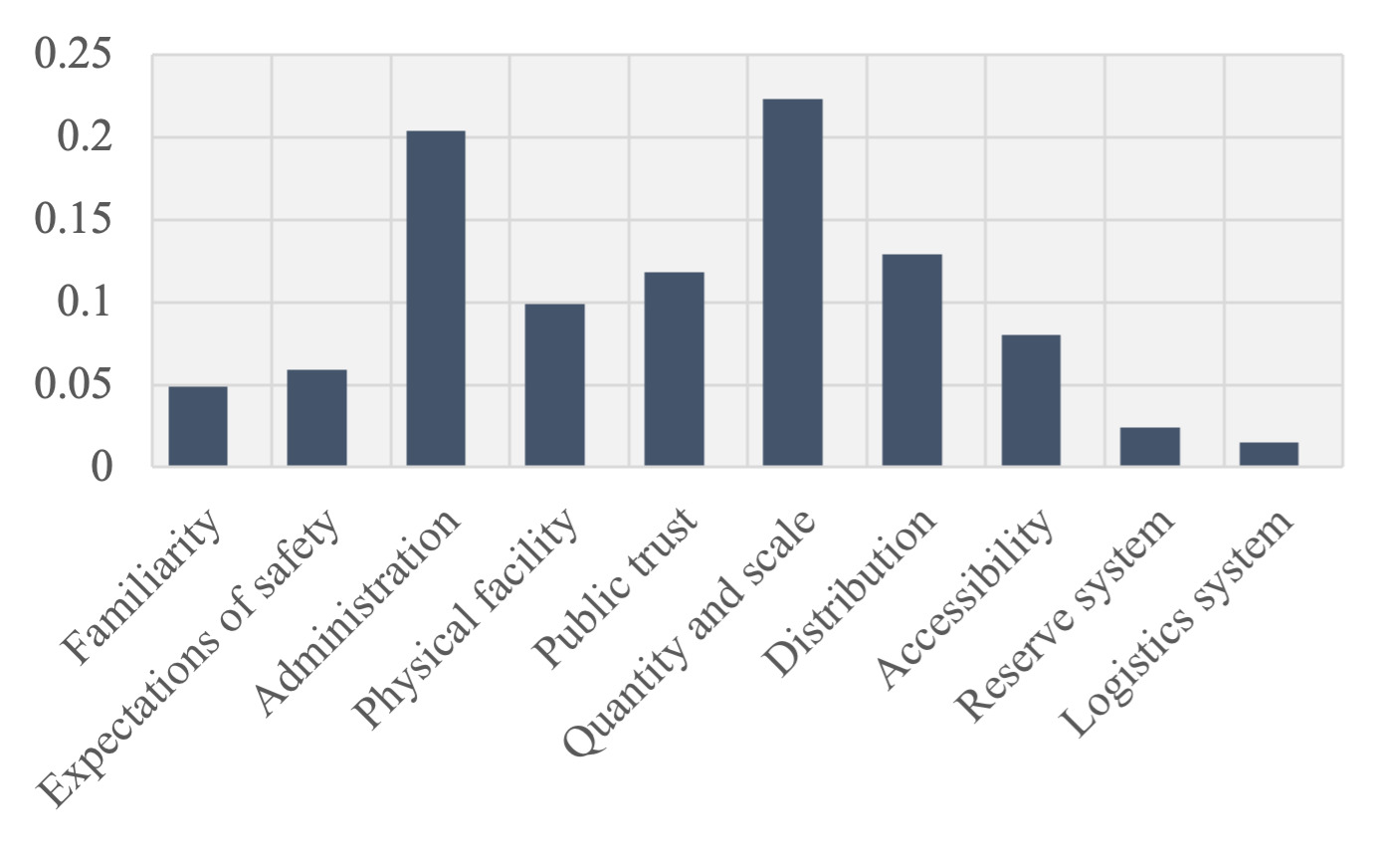
The above results show that the weight of the public satisfaction measurement (0.529) is slightly higher than the weight of the physical infrastructure measurement (0.471). The public’s perception of the combined use of local shops in emergency situations is considered more important than the emergency logistics system itself. In terms of public satisfaction, administration has the greatest weight (0.204), and people are most concerned about the management of emergency logistics systems. Public trust also occupies a relatively important position (0.118). Physical infrastructure is also valued by respondents, with a weight of 0.099. The last two are expectations of safety and familiarity. In terms of physical infrastructure, quantity and scale are important parts to ensure effective emergency logistics, accounting for 0.223. The second is distribution, accounting for 0.129. It means the practicality of the emergency logistics system is strongly related to the number, scale and distribution of infrastructure. Accessibility also occupies an important position, especially during emergencies. It also relates to the practicality of the emergency logistics system. The last two are reserve system and logistics system, with weights of 0.024 and 0.015 respectively.
Among all criteria, quantity and scale of emergency logistics system have the greatest weight (0.223). This reflects a strong concern for effective coordination during emergencies between the current logistics system and local shops. It can ensure that the public receives basic necessities in a short time, which helps the emergency logistics system function efficiently (Figure 2).

4.3. Public trust in emergency logistics system
Local residents are concerned about the island’s emergency logistics system. However, they still lack understanding of how to use local shops during emergency situations. Their perception of local shops is limited to the daily purchase of necessities.
The survey results show that relatively few residents (10%) fully trust the existing emergency logistics system. Most people think it is difficult to rely entirely on existing supplies during an emergency and that people need to get additional supplies from other islands. Only 8% of residents are completely satisfied with the administration of the existing system, while 9% are relatively satisfied, 38% are moderately satisfied, and 45% are dissatisfied.
About 33% of respondents are satisfied with the existing emergency logistics infrastructure. Especially in recent years, under the policy of rapid infrastructure development, island resilience infrastructure has improved considerably. The continual innovation of infrastructure has contributed to a greater sense of security. Nevertheless, 72% of residents lack confidence in the integration of local shops into the island emergency logistics system. Coordinating the relationship between private goods and public infrastructure is a huge challenge. The integration of micro-retail infrastructure with the island emergency logistics system can bring the benefit of increased flexibility. Local shops are distributed in residential concentration areas. For instance, stores in Tianao Village are located around beaches and squares, while those in Huangsha Village are along the main road. In emergency situations, such as traffic disruptions caused by typhoons, residents do not need to travel to the out-of-town central reserve warehouse but can instead collect supplies from nearby stores, reducing reliance on interisland transportation. Stores can flexibly adjust material distribution according to the needs of residents in their respective areas, for example by allocating more medicines to areas with large elderly populations and more bottled water to areas with high numbers of tourists. This use of local shops helps avoid supply-demand mismatches.
In addition, such integration alleviates pressure on government storage and reserves. The government no longer needs to stockpile a full range of emergency supplies in a single reserve warehouse. For example, instead of originally needing to reserve bottled water for 3,000 people, the government can pre-store part of the supplies through agreements with local shops and then combine this with backup supplies in the central reserve warehouse. The integration of decentralized storage and centralized allocation helps lower the space and capital costs of the central reserve warehouse. Taking Tianao-Huangsha as an example, if each of the 14 local shops pre-stored bottled water for 50 people, this could cover the needs of 700 people, accounting for 32% of the community’s total population, significantly easing the government’s reserve pressure. In actual implementation, further definition, limitation, and evaluation are needed.
4.4. Focus Group Discussion Results
Three core themes emerged from focus group discussions, which complement and explain the quantitative findings. These are low awareness of local shops’ emergency role, economic barriers to local shop participation, and the need for clear public-private cooperation mechanisms.
In terms of low awareness of local shops’ emergency role, key quotes from the focus groups include: “I only buy snacks and cigarettes from the store; I never knew they have emergency water—no one told us” (G3, 65-year-old resident) and “During the 2022 typhoon, I waited two days for government supplies. I didn’t think to go to the nearby store” (G3, young resident). These aligned with 72% of residents’ lack of confidence in store-emergency integration, confirming that information asymmetry is a critical bottleneck.
In terms of economic barriers to local shop participation, key quotes from the focus groups include: "If I stock 100 bottles of water for emergencies, they might expire in 6 months—who will compensate me?’ (G1, shopkeeper with 5 years of operation) and “Emergency supplies take up shelf space that could be used for profitable snacks. We can’t afford to lose income” (G1, small shopkeeper in Huangsha). Such statements explain why stores lack dedicated emergency stocks: The economic risks outweigh willingness to participate.
In terms of the need for clear public-private cooperation mechanisms, key quotes from the focus groups include: “We are willing to help, but we need the government to sign a contract: How much stock to keep, who pays for expiration, and how to distribute during emergencies” (G1, shopkeeper); “The government should train us; we don’t know how to count emergency supplies or guide residents to collect them” (G1, new shopkeeper); and “We need a quick way to contact the government when supplies run out. Current phone calls often go unanswered” (G2, village cadre). These support the need for policy and administrative integration, as quantitative data showed that only 8% of residents are satisfied with emergency administration.
5. Discussion
5.1. Embedding local shops into the emergency logistics system
Scientific and rational planning of emergency logistics systems is an important aspect of resilient island construction (Huang et al., 2023). Such a system enables rapid response during emergencies and helps ensure the stable supply of essential goods. Depending on the type and severity of the disaster, the basic necessities for the entire island population can be guaranteed for one day, three days, a week, or however long is necessary (Comerio, 2023). The government may be responsible for coordinating the site, management, purchasing, etc., and it also establishes dedicated emergency material storage points and emergency vehicle allocation command centers.
These principles support the overall necessary goods for emergency allocation and maximize benefits. However, there are challenges in context-specific implementation. When an emergency occurs, the allocation of necessary goods outside the island is vulnerable to delays. Moreover, once the interisland transportation is damaged, it is difficult for necessary goods to enter the emergency center. Local shops then become an important part of the emergency logistics system. For example, the necessary goods for emergency reserves of Tianao-Huangsha rural settlement are currently located in Caiyuan Town, which is located far away from Tianao-Huangsha and is accessible only by inconvenient transportation networks. This affects the effectiveness of goods distribution in emergencies. One remedy could be to include local shops in the emergency logistics system. Usually, these shops are used as retail infrastructure, but they can be changed to supply nodes for necessary goods during emergencies. This enhances the flexibility of the emergency logistics system.
Improving the island’s emergency logistics system is closely related to renewing and improving the island’s living environment and to supporting the resilient development of island urban and rural areas. Local shops play an important role in meeting islanders’ daily and emergency needs, helping to distribute supplies more efficiently and shorten distribution routes. This ensures a faster and more diverse distribution of emergency supplies and improves the overall quality of emergency response. Residents are already familiar with the locations of these infrastructures, allowing them to more quickly obtain necessities, reduce confusion, and minimize secondary risks in emergencies.
This research proposes a multifaceted approach to address the logistical and economic challenges associated with embedding local shops within emergency logistics by introducing a coordinated framework emphasizing collaboration among stakeholders, use of technology, and innovative economic incentives. For stock replenishment, the research advocates the establishment of strategic partnerships between local suppliers and local shops, enabling rapid turnaround times and adaptive inventory management tailored to emergency contexts. To overcome capacity limitations, the proposal suggests implementing modular micro-retail structures that can be scaled up or down based on demand, thereby optimizing space utilization and resource allocation. Creating economic incentives is also necessary, such as tax breaks or subsidies for participation in the emergency logistics ecosystem, which would encourage private local shop involvement while also facilitating a profit-sharing model based on performance metrics. This holistic strategy creates a sustainable system that enhances responsiveness in emergency situations while simultaneously benefiting the local economy.
To provide a framework for integrating local shops into existing emergency logistics systems, we propose a process that emphasizes the critical role of public-private partnerships throughout each phase. First, the research recommends conducting a comprehensive needs assessment involving local government agencies, private sector stakeholders, and community organizations to identify critical gaps in emergency logistics and potential sites for local shops. Second, stakeholders should collaboratively develop an inclusive strategy outlining shared goals and resource commitments, thereby establishing a clear governance structure that delineates roles and responsibilities. The third step involves co-designing the micro-retail infrastructure operations, including inventory management protocols, pricing strategies, and service delivery models that reflect community needs while ensuring sustainability. Implementation should then take place through joint training programs, where public and private entities equip employees with emergency response protocols and management skills specific to the micro-retail context. The research also advocates for a continuous feedback loop where data and lessons learned from real-life emergency scenarios inform future operational adjustments and strengthen the partnership’s resilience. This framework integrates local shops into existing emergency logistics to reinforce collaborative networks critical for effective crisis management.
5.2. Challenges facing emergency logistics systems in relation to island resilience
Emergency logistics systems are basic components of island resilience. To ensure the accessibility and rapid response of emergency services, local shops should be integrated into both the commercial and emergency service systems on the island. In critical situations, the effective supply of basic survival goods can be achieved through local shops. According to the calculation in a community with a population of 3,000 to 5,000, retail infrastructure with emergency functions are generally larger than 100 square meters. This standard refers to Construction Requirements for Community Emergency Service Stations (T/ZSX 0014-2025). The calculation logic is as follows: The total amount of materials is obtained by multiplying the per capita demand for emergency materials by the population size, and according to the density standard of storing materials for 50 people per 1 m², it is calculated that the required area is approximately 100 square meters. All 14 stores in Tianao-Huangsha Community are 10-20 m² in size, and none meet this standard. Therefore, it is necessary to explore a model of small-sized stores collaborating for emergency response. It could meet the requirement of a 5-minute walk. Retail shops or stores of 100 m² or more are not suitable for the local market in many small island contexts. Smaller-scale infrastructure can serve both daily use and emergency storage purposes, while also supporting the construction of a flexible and locally adapted supplementary emergency service network.
Local shops should play a complementary role in emergency services to better build island resilience. This process is complicated by the fact that local shops are typically private property, and the boundaries between public and private need to be clarified. In addition, most operators of micro-retail infrastructure are local fishermen. Their ability to organize services needs to be improved. The government should establish a collaborative mechanism and make agreements with local shopkeepers to guarantee the cooperation during emergencies. The resultant contracts should support local shops in providing emergency services, assume emergency service responsibilities, and receive corresponding compensation. The government should also strengthen training for emergency logistics services and should requisition private vehicles when necessary and provide corresponding funds. Through public-private partnerships, the flexible development of island emergency logistics systems can be achieved, and island resilience can be put into practice and truly benefit island residents.
The proposed system accounts for operational challenges by integrating redundancy and adaptability into its design. The decentralized local shops should be strategically located based on vulnerability assessments, ensuring that essential goods are accessible even when transportation routes are compromised. The system incorporates advanced inventory management technologies that utilize local data and community feedback to predict demand and optimize stock levels in real-time, enabling resilience against supply chain disruptions. To address communication challenges, the system advocates for the use of offline-capable applications that allow operators to manage inventory and customer needs without relying solely on internet connectivity. Furthermore, partnerships with local authorities and community organizations should co-work to enhance coordination and information sharing during crises, ensuring that local shops can respond swiftly and effectively to the needs of the population while minimizing the impacts of operational disruptions. This comprehensive approach enhances island resilience by ensuring that local shops remain functional and relevant during emergencies.
The findings of this research align with similar studies in other island contexts, which also highlight the significance of local shops as pivotal assets in enhancing resilience and supporting emergency logistics. This study makes a unique contribution to the broader literature by offering empirical evidence from Zhoushan, highlighting not only the operational benefits of local shops but also the critical role of local socioeconomic dynamics in shaping their effectiveness. Specifically, we have identified challenges related to supply chain disruptions and stakeholder collaboration that are exacerbated in island settings but that have not been extensively documented in existing literature. Moreover, the insights on public-private partnerships as a mechanism for leveraging local knowledge and resources provide a valuable framework for policymakers and practitioners aiming to enhance resilience in comparable island settings.
6. Conclusions
Both needs and challenges exist in the development of practical emergency logistics systems for islands. In particular, the lack of efficient distribution mechanisms for daily necessities leads to inefficient emergency response and reduced island resilience (Carvalho & Spataru, 2024). Using the Tianao-Huangsha rural settlement as a case study, this research proposes integrating local shops into emergency logistics models. Micro-retail infrastructure can play a dual role in supporting daily consumption and distributing emergency supplies, thereby improving emergency response capabilities.
Based on qualitative and quantitative analysis, data collection and analysis of sample areas were conducted to explore the mechanism for integrating local shops into island emergency logistics systems in order to enhance island resilience. It was determined that a cooperative mechanism between the government and private merchants should be established. Evaluations of physical infrastructure and public satisfaction with the emergency logistics system led to the proposal of strategies for safe emergency integration, adaptation to local conditions, and policy support. It is proved that strengthening the emergency role of local shops and building emergency material distribution networks can significantly improve island resilience. Integrating local shops into government-led emergency logistics systems enhances the systems’ flexibility and resilience. It is also crucial to evaluate local shops’ scales, operational capacities, and abilities to respond to emergency needs. Correctly assessing ability to respond to disasters can avoid problems such as delays or shortages in supply distribution.
Based on the findings, this study makes targeted recommendations for stakeholders to enhance island emergency logistics resilience. First, annual emergency store publicity campaigns should be launched to inform residents of which local shops have emergency supplies and how to collect them. This would address the awareness gap identified in focus group discussions. Prioritization should be given to locating stores near elderly communities and tourist hubs, such as Tianao’s beach area and the entrance to Huangsha’s main road, aligning with the accessibility weight identified in AHP. Also, the local government may establish a shop volunteer team to assist with distribution during emergencies addressing the labor shortages mentioned in focus group discussions.
This research has several limitations that affect the interpretation and generalizability of findings. The representativeness of the sample data is a key concern, as the study primarily focused on local shops within the Zhoushan archipelago, which may not reflect the diversity of conditions and operational challenges faced by similar infrastructure in other geographic locations or island contexts. Additionally, the survey sample was limited to a specific group of stakeholders, potentially introducing bias and narrowing the scope of stakeholder perspectives. The dynamic nature of disaster scenarios means that findings should be viewed as preliminary assessments rather than as definitive solutions, necessitating further research to verify and expand upon these conclusions.
The case study is limited to Tianao-Huangsha, a small coastal island with an industrial focus on fishing and tourism. Findings may not fully apply to other island types such remote islands and large urban islands. Future research should expand to multiple island regions both inside and outside China for cross-case comparison. The study focused on common disasters such as typhoons but did not explore rare and high-impact disasters, such as tsunamis and long-term pandemics. Future research should simulate different disaster scenarios to test the adaptability of the shop-embedded model. Also, future research should place greater emphasis on local shop spatial planning and layout. Resilience development should be prioritized as a key principle in the early stages of island planning. Various disaster scenarios should be simulated, and corresponding micro-retail infrastructure layout plans should be provided to improve island sustainability. Moving forward, a multifaceted approach should be adopted that includes developing a detailed framework for scenario-based simulations utilizing geographic information system (GIS) tools to model various disasters (e.g., earthquakes, typhoons, flooding). This framework will involve collecting historical disaster data and integrating it with real-time logistics and demographic data to create a robust simulation environment. Furthermore, optimization algorithms, such as linear programming and agent-based modeling, could work to evaluate and refine the layouts of local shops under different scenarios. This approach will help identify optimal locations and resource allocation strategies to enhance responsiveness and resilience, thereby providing specific, actionable recommendations for future planning efforts.