
1. Introduction
Food markets are both physical entities–organized marketplaces where people conduct economic activity through commercial exchange (Cetina, 2006)–and political and social structures that support embedded cultural practices and knowledge exchange (McKague et al., 2015). In this sense, food markets facilitate local economic diversification (e.g., Deller et al., 2020) and enhance the direct connection between small-scale producers and consumers (Trobe, 2001). This also informs short food supply chains that contribute to local sustainable food systems (Jarzębowski et al., 2020). Building on this work, we argue that the embedded nature of food markets reflects historical and contemporary processes that define societies (Fracarolli, 2021; Winter, 2003), which also include issues around economic agency, governance, adaptation to global crisis, and resilience (Grabs & Carodenuto, 2021; Thilmany et al., 2021).
On islands, these dynamics are intensified. In this sense, the spatial boundedness (e.g., Ronström, 2021) and the socio-political configurations characteristic of island geographies influence on how markets operate, who participates, and which forms of resilience emerge are intensified on islands (Baldacchino, 2015a; Guell et al., 2021). Islands also shape local identity (Larsen & Osterlund-Potzsch, 2015). While existing scholarship shows an interest on the role of food markets in local food systems on islands (Guell et al., 2021), which happen in the context of the geographies of food production (Langford, 2022) and consumption (Fusté-Forné, 2025), the relation of islandness and gendered labor in market spaces remains underexplored, despite evidence that women frequently act as key economic and social agents. Gaini and Nielsen (2020) affirm that when we are “explicitly co-considering gender with islandness as ‘an intervening variable’, the literature is limited” (p. 4). As women have central positions as vendors, producers, and decision-makers in markets on the Pacific Islands (Dewey, 2011), this paper examines how markets in island contexts operate as gendered spaces (Riley & Dodson, 2016). Women’s labor in markets constitutes a form of social reproduction and care, which shapes collective memory and cultural transmission, and contributes to place-based identities (Baldacchino, 2015b).
This paper focuses on Sakaemachi Market in Okinawa, Japan, a site that exemplifies the complex relationships of gendered labor, local knowledge, and island-specific socio-political conditions. Drawing on how women’s work structures market practices and contributes to resilience and sustainability, we respond to two main gaps in the literature: the lack of integrated studies linking gender, islandness, and market spaces, and the under-theorization of island resilience as enacted through everyday social and cultural practices. Therefore, the central research question is: How do gendered practices in Okinawa’s Sakaemachi Market function as everyday infrastructures of island resilience, continuity, and adaptation within socio-political, economic, and cultural transformations?
After the introduction, we introduce the case of the Sakaemachi Market and present a structured theoretical framework. Later, the method and the results are described, and the conclusions are presented.
2. The foundations and historical background of Sakaemachi Market
In Okinawa, amid the tides of tourism-driven development that have transformed the cityscape–epitomized by the increasingly commercialized Daiichi Makishi Public Market–Sakaemachi retains its character as a community-rooted, locally frequented marketplace. While relatively modest in scale, its historical and social context make it an essential site for understanding the relationships between memory, everyday life, and grassroots agency in contemporary Okinawa.
Built on the ruins of the former Okinawa First Girls’ High School–known for its tragic wartime association with the Himeyuri Student Corps–Sakaemachi embodies the layers of displacement, survival, and regeneration that followed World War II. The name itself, meaning ‘Prosperous Town’, was chosen through a local vote in 1955, reflecting collective aspirations for recovery. As the Sakaemachi Market Promotion Association notes, the market remains “virtually the same as when it was built,” functioning as a living archive of postwar life and community rebuilding.
During the day, Sakaemachi operates as a neighborhood market; at night, it transforms into an alley of bars, attracting a diverse range of people across generations. Through these dual functions, it resists homogenization and touristification, sustaining a form of localism grounded in social proximity, memory, and mutual care, as we explore in this paper.
Recent revitalization efforts–from youth-led community organizing and women’s safety initiatives to cultural events like the Yatai Festival–have reanimated the market as a space of intergenerational participation and grassroots creativity. As this study shows, Sakaemachi’s unique appeal lies in its nostalgic ambiance but also in its ongoing negotiation of place, identity, and urban belonging through shifting economic and cultural pressures. In this sense, this paper situates Sakaemachi within broader questions of postwar reconstruction, gendered labor, and the politics of everyday space in Okinawa.
Although Okinawa is officially one of Japan’s prefectures, its historical and cultural trajectory diverges significantly from that of mainland Japan. Formerly an independent kingdom known as the Ryukyus, Okinawa was forcibly annexed in 1879 through Japanese military colonization. The Ryukyus have developed distinct languages–collectively referred to as the Ryukyuan languages–as well as unique cultural practices, communal structures, and worldviews.
A key concept of this cultural distinctiveness is shima, a unit of community grounded in both geographic proximity and kinship ties (Sakima, 1925). Earlier work has argued that shima (shimá) is not simply a geographic term meaning “island”, but a culturally and politically concept through which Okinawans articulate islander identity, community belonging, and relational difference (Ginoza, 2021). Okinawans have historically used shima to refer to local communities–watta shimá (“our community”) or ta shimá (“other communities”)–a usage that reflects a localized sense of islanderhood shaped by the surrounding sea (Ginoza, 2016; Sakiyama, 2003a). From this perspective, Okinawa is best understood not as a singular, unified entity but as a hybrid constellation of multiple shimá, where difference is acknowledged alongside coexistence.
Shima also functions as a trope of consciousness: it marks distinctions among communities while resisting hierarchical forms of othering. Kina Ikue’s discussion of Okinawan relationality, drawing on Patrick D. Murphy’s theorization of heterarchy, highlights how island social worlds can be imagined beyond domination or center/periphery binaries (Kina, 2016; Murphy, 2000). Kina’s engagement with Sakiyama Tami’s stories, alongside comparative insights from Gloria Anzaldúa, shows the heterarchical potential of marginalized communities as spaces where “equally othered” peoples coexist and contest superior/inferior dichotomies (Kina, 2016).
Finally, shima has been connected to transnational and Indigenous frameworks through the description of Okinawa as a dynamic space where island communities confront shared problematics and connect beyond national borders (Kina, 2016). Yet, as Diaz and Kauanui caution, such mobility remains liberatory only insofar as “the native” is not lost altogether (Diaz & Kauanui, 2001). In this sense, shima foregrounds both movement and rootedness as central articulations of Indigenous survival and decolonial futures.
At the foundation of Okinawan society lies a deeply rooted, village-based communal structure centered on shima. This model of interdependence and collective life persists today and is materially embodied in traditional markets known as machigwa–a term combining machi (market) and gwa (a diminutive suffix meaning small or local). These markets, such as Sakaemachi Ichiba, offer more than commercial goods, as they provide a space for communication, congregation, and care that continues to animate and orchestrate Okinawan everyday life.
In this sense, Ryohei Doumae (2012) argues that Okinawa’s regional distinctiveness is best understood through the lens of social space. Drawing from David Ley’s theory, Doumae posits that social space reflects the collective dimensions of the lived world produced through the interplay of action and cognition within specific social groups (Ley, 1983). In sociological terms, such groups are defined by shared goals, mutual belonging, and sustained interaction over time. From this perspective, Okinawa, as a historically marginalized and culturally distinct region within Japan, constitutes a socially unique formation shaped by its colonial experience and localized communal dynamics.
One symbolic expression of this enduring communal ethos is the kyōdōten–community-run stores funded and operated by residents of a shima. These general stores, with all members serving as shareholders, traditionally provided a comprehensive array of daily necessities such as food, vegetables, household goods, and newspapers (Ginoza & Toriyama, 2024). Women, especially elderly women, often played–and continue to play–central roles in managing these stores and maintaining daily operations, preserving culinary knowledge and sustaining networks of care. Although the number of kyōdōten has declined in recent decades, their gendered labor dynamics and social functions–mutual support, interdependence, and local care–have been preserved in sites like the machigwa, particularly Sakaemachi Ichiba.
While differing in structure from the all-purpose kyōdōten, machigwa function as similarly vital communal spaces, especially for elders–many of them women–who continue to sustain their social networks through the sale of homemade dishes, seasonal produce, and traditional ingredients. In this sense, machigwa comprise clusters of small, specialized vendors offering distinct goods–fresh vegetables, meats, prepared foods, and everyday items. This congregation of stalls forms a machi, a living social space grounded in local solidarities, reciprocal care, and the daily labor of older women who act as cultural bearers and caretakers of Okinawan foodways.
Some scholars, including Mitachi, Kawamitsu, and Yamauchi (2019), argue that Sakaemachi Ichiba has increasingly transformed into a nightlife destination, shaped by the proliferation of senbero bars–establishments where patrons can drink for under 1,000 yen–lamenting what they view as the decline of its “good old community-based market.” However, despite these commercial shifts, Sakaemachi continues to demonstrate a remarkable resilience. Elders and long-time shopkeepers remain actively engaged in revitalization efforts, sustaining the market’s communal ethos and fostering intergenerational ties. The market has adapted by regenerating its social character and reaffirming its cultural significance through maintaining and strengthening the traditional communal support and structure of shima. Much of this continuity is upheld by older women who prepare, sell, and pass down traditional dishes and local knowledge, reinforcing Sakaemachi as a gendered space of memory, labor, and cultural transmission. This paper takes Sakaemachi Ichiba, a machigwa (traditional market) in Naha, as a case study to examine how such spaces accumulate layers of use over time and how these continuities contribute to their contemporary recognition as sites of resilience.
3. The politics of gender in island food markets and the role of market spaces in sustainable development
This section draws on previous research to understand how markets function as sites of economic, social, and cultural resilience. Islands’ bounded geographies and unique historical-political contexts shape local food systems, while women’s labor and intergenerational knowledge sustain both economic activity and community cohesion. Based on the integration of these perspectives, we position Sakaemachi Market as a site where gender, islandness, and everyday practices of care and memory intersect to produce resilient, place-based infrastructures.
3.1. Gendered economies and feminist island studies
In many island societies, women are highly engaged in informal economic activities, including agricultural production, food processing, and small-scale trade (McKinnon et al., 2016). Their role is central to household economies and community well-being (Altman & Lamontagne, 2004). Previous research shows that the organization of market spaces often reflects a deeply gendered division of labor where women assume responsibility for economic transactions and for sustaining familial and social ties through commerce (Dewey, 2011; Marchand & Runyan, 2010).
However, women face persistent structural barriers that have limited their autonomy and capacity to expand economic activities (Bradshaw et al., 2017; Lele, 1986). These include but are not limited to restricted access to land, finance, and market infrastructure, as well as policy environments that inadequately recognise or support women-led initiatives (Magri-Harsich et al., 2025). Island contexts accentuate this situation, which requires that local policies benefit female entrepreneurs and promote locally produced food to improve the sustainable planning and development of the food system (Rytkönen et al., 2023).
In addition, previous research also shows that women respond to these constraints with collective strategies that shape and reshape the meaning and organization of food markets (Magri-Harsich et al., 2025). Feminist island studies reveal that gendered economic participation is a form of resistance: women reshape market practices through cooperative strategies, care networks, and local knowledge systems, producing everyday resilience not captured by conventional economic models. For example, the planning and development of cooperative models or networks contribute to the sustainability of island economies (Karides, 2016). In this sense, the capacity of women to configure market systems through everyday practices challenges dominant development narratives and reasserts the values of local indigenous knowledge (i.e., care and reciprocity) in economic and social life (Bruckner & Paia, 2024; Elmhirst, 2011). The knowledge system shapes the cultural frameworks that inform how markets function and interact.
3.2. Markets as cultural, social, and memory infrastructures
Markets operate within a context of cultural values and social relations, where the economic activity cannot be isolated from the affective and moral ties that structure everyday interactions (Dowler et al., 2009; Kišjuhas, 2024). In particular, embeddedness theory helps explain the integration of economic life within social networks, where markets serve as embedded social infrastructures (Wigren-Kristoferson et al., 2022), integrating economic transactions with affective, cultural, and moral ties. In many island communities, markets are places for the performance of identity, memory, and belonging, not solely sites of commodity exchange (Fusté-Forné, 2023). These embedded meanings and relations (e.g., between producers and consumers, and among producers and among consumers) are visible in knowledge exchange as part of market activity (Ramirez-Santos et al., 2023). These factors are also visible in authority and resources distribution (Njuki et al., 2023; Zhang, 2022). Drawing on both economic and social interactions, they reinforce place-based economies and cultural resilience (Pratt, 2015).
The market facilitates cultural transmission and intergenerational learning (Crespi-Vallbona et al., 2019; Sgroi, 2023). Practices such as preparing seasonal foods, using traditional measurement tools or using local language (e.g., when referring to a product) are part of the rhythms of market life, which contribute to economic and social resilience (Fusté-Forné, 2025; Ratter, 2017). In a context of rapid socio-economic change, island markets that built on this local embeddedness provide a counterpoint to globalized food systems and highlight the importance of place-based economies rooted in cultural and ecological values (Nielsen, 2025). Local markets, therefore, function as mechanisms for sustaining island economies under conditions of continuity and change (Gaini & Nielsen, 2020), both historical and contemporary, as we explore in this paper.
3.3. Resilience and the politics of everyday adaptation
Resilience in island geographies includes cultural, social, and ecological dimensions (Kelman & Randall, 2018; Ratter, 2017). In this context, markets operate as nodes of continuity and resistance, sustaining local food economies under conditions of globalization, redevelopment, and militarization. In Sakaemachi, resilience has emerged through gendered labor, which, in turn, manifests through everyday adaptation to economic, environmental, and political change. This paper, therefore, examines everyday, socially embedded, and gendered forms of resilience that emerge within island food markets. Instead of focusing on infrastructural or environmental resilience, which are more commonly explored in island studies, the analysis draws attention to how women’s daily labor sustains the cultural, social, and economic fabric of Sakaemachi Market. These practices generate forms of cultural and social resilience (Berkes & Ross, 2013) that enable continuity, identity formation, and collective well-being amidst the pressures of redevelopment, tourism-driven change, and Okinawa’s militarized urban landscape. In this sense, we understand resilience as a relational, ongoing capacity (Fischer & McKee, 2017) cultivated through embedded market routines and their gendered networks of support, which construct ‘place’ through ‘space’ (Pugh, 2018).
Island markets are shaped by traditional indigenous knowledge (the cultural and ecological values mentioned above), and contribute to notions of food security (Georgeou et al., 2019; Thomas et al., 2018) and food sovereignty (Connell et al., 2020; Paddock & Smith, 2018). Drawing on support towards artisanal food products, markets can also foster local control over food systems, which is crucial for sustainable development in island contexts. Moreover, these market spaces facilitate the role of women–often the holders and transmitters of such knowledge (Wane, 2003)–towards more just, place-based food economies (Fusté-Forné & Berno, 2016).
In this sense, circular economy principles are increasingly visible in the everyday operations of island food markets (Schumann, 2020), which emerge as food hubs to connect urban and rural places, and producers to consumers through sustainable practices. This can include, for example, the reduction of packaging through reusable containers or the availability of ‘from farm to table’ dining experiences (Pehin Dato Musa & Chin, 2022) that contribute to a regenerative model of food entrepreneurship (Aquino et al., 2024). As stated above, this also relies on collaboration and community-driven models, such as food cooperatives and farmers’ markets that support market-based circular systems (e.g., with local knowledge about food preservation and seasonality) that contribute to cultural and environmental sustainability, and social equity (Riley & Dodson, 2016). Gendered labor, particularly women’s roles as knowledge holders, accentuates these processes and highlights the relation between gender, islandness, and resilience.
3.4. Urban studies, gender, and heritage debates
While island markets are often celebrated and studied for their social functions, they are also spaces shaped by broader political and economic forces. Critical urban studies highlight how processes of redevelopment, gentrification, and neoliberal urban policies transform local markets, reconfiguring who has access, whose labor is valued, and how cultural practices are preserved or commodified (Alkon & Cadji, 2020; Bourlessas et al., 2022; Everts et al., 2021; Sonnino & Coulson, 2021). In the Pacific Island of Okinawa, for example, these dynamics dialogue with postwar reconstruction and national integration, creating pressure on markets as spaces of community and cultural memory.
Economic, environmental, and tourism-related changes of market spaces (Crespi-Vallbona et al., 2019) present challenges that demand adaptation and resilience of food markets (Sgroi et al., 2023). However, previous studies have not analysed the tensions between (dis)continuity and change in the context of local food markets, from a gender perspective. In particular, the integration of gender and labor elements further shows how women’s work in markets produces forms of everyday resilience and sustains social cohesion (Elmhirst, 2011; Marchand & Runyan, 2010). At the same time, research on food heritage and memory shows how markets operate as sites of cultural transmission, embodying both continuity and adaptation in the face of rapid socio-political change (Fusté-Forné, 2020; Hall, 2015).
Despite previous literature on food markets in island economies, few studies integrate gender, islandness, and market practices to examine how resilience is manifested in practice. Building on these theoretical foundations, the current research positions the Okinawan case as a lens to examine how gendered labor, local knowledge, and cultural memory relate within broader urban, political, and economic forces. This framing emphasizes the novelty of our contribution to highlight how markets operate simultaneously as sites of care, resistance, and resilience.
Established during Okinawa’s postwar reconstruction, Sakaemachi Market in Naha has evolved into a culturally dynamic marketplace shaped by the historical and political specificities of Okinawan society, where community bonds are traditionally rooted in the shima (village) system. Women, particularly elderly vendors, have been central to the daily operations and social life of the market, engaging in intergenerational food preparation, exchange of seasonal knowledge, and emotional labor that underpins local networks of care. These practices ensure the circulation of goods and also sustain memory, identity, and social cohesion in the face of rapid urban redevelopment and militarized precarity. In contrast to formalized economic models, Sakaemachi demonstrates how place-based, gendered economies create resilient alternatives based on cultural transmission and ecological knowledge. As such, it provides a grounded and locally embedded site to understand the tensions of continuity and change, and the gendered politics of food systems in Okinawa.
4. Method
This study adopts a qualitative, ethnographically informed case study approach to examine Sakaemachi Market in Naha, Okinawa, to explore the role of local food markets in supporting island resilience and sustainable development from a gender perspective. The market was selected for its historical and cultural significance, its longevity, and its central role in local food systems, where women and intergenerational networks sustain economic, social, and cultural practices. This design allows for exploring island-specific economic and social dynamics, as well as the relationship between gendered labor, knowledge transmission, and resilience.
4.1. Data collection
Data was collected over six months of fieldwork, between November 2024 and May 2025, through multiple complementary methods. First, the research draws on both historic and contemporary sources, including hard-to-access secondary data published only in print and in Japanese, which provides the context and evolution of the socio-economic transformations of the market since World War II. Some of these Japanese-language sources were difficult to access because they are not digitized, are dispersed across local libraries or archives, and require contextualized knowledge of Japanese-language local publications. The compilation of these materials was complemented by direct field visits by both authors to the market, to have direct observation of everyday practices and gendered dynamics.
In this sense, direct observation was made of daily market operations, vendor-consumer interactions, and gendered labor practices. Special attention was paid to labor practices, including food preparation and selling. Field notes included descriptions of specific ingredients and culinary practices, such as seasonal preparations. Photographs and spatial maps of vendor stalls documented social and material organization. In addition, the first author carried out conversations with the women stakeholders about decision-making and autonomy in economic activity (economic agency), knowledge transmission and culinary practices (cultural labor), social networks and support practices (care and reciprocity), and responses to redevelopment and tourism (resistance).
4.2. Data analysis
The data collection was followed by a discourse analysis of the materials to provide a contextualized understanding of how the market informs sustainability and women’s roles in Okinawa’s local economic development as part of island resilience manifested in the market. Data was analyzed using thematic coding, combining deductive codes derived from theoretical frameworks (economic agency, cultural labor, resistance) with inductive codes emerging from field data. Observations, data from conversations, and visual materials were also analysed to identify patterns in gendered labor and intergenerational knowledge transfer, practices of care and reciprocity, and market responses to urban redevelopment, tourism, and socio-economic change, as described and illustrated in the next section.
5. Results
This section describes the results of the research based on different sections that discuss the historical and spatial foundations of the Sakaemachi Market, a gendered memory from the postwar reconstruction to community formation, its contemporary functions and social infrastructure, the role of intergenerational labor and cultural transmission, and the processes of revitalization and resistance to redevelopment.
5.1. Historical and spatial foundations
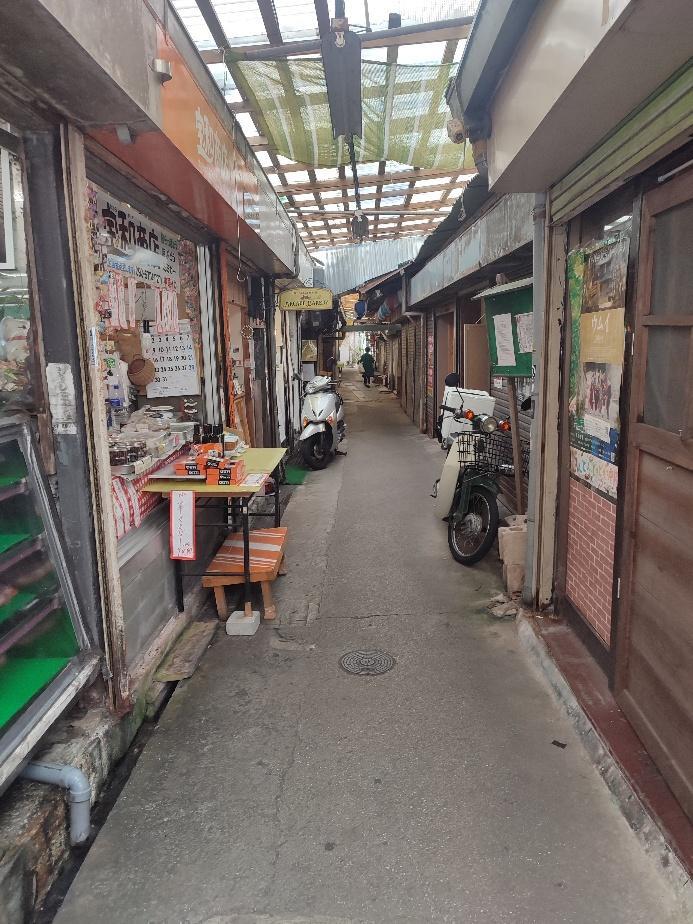
Sakaemachi Market, located in the Asato district of Naha City, Okinawa, is one of the few remaining traditional markets in the region (Figure 1). Historically, Naha, the capital of Okinawa Prefecture, boasted numerous markets; however, only two persist today: the Daiichi Makishi Public Market and Sakaemachi Market. While the former, situated along the heavily touristed Kokusai Street, increasingly caters to visitors and has become a tourist destination, Sakaemachi Market distinguishes itself with a predominantly local customer base and a much smaller, more intimate scale. This distinction demonstrates the market’s function as part of the everyday fabric of local life, rather than as a site of commodified culture within the tourism system.
.jpg)
Before World War II, the area now known as Sakaemachi was part of Mawashi Village and was home to the Okinawa Prefectural Girls’ High School and the Women’s Division of the Normal School. These institutions became well known due to the mobilization of their students as part of the Himeyuri Student Corps during the war. This legacy is still present in the form of the Himeyuri Alumni Association office located within the market premises today. The placename “Sakaemachi” itself was chosen through a community vote in 1955 and officially recognized by the then-mayor of Mawashi Village. The term “sakae” means “to prosper”, and “machi” refers to “market” or “town.”
It is also important to note that “Sakaemachi” is not an official address but a name that has come to represent a community and a history rooted in postwar reconstruction. The official website notes that the market is “the last one of the kind of market that is built in the rebuilding era of WWII” and that its physical form remains “virtually the same as when it was built,” making it a “lived witness of the recovery from the war” (Sakaemachi website).
5.2. From the postwar reconstruction to community formation on gendered memory
In the aftermath of the war, the site of the former schools was transformed. Residents of Mawashi Village were forcibly displaced during the conflict, and the area lay in ruins. In the immediate postwar period, a large influx of people–including those unable to reclaim former lands–settled in the area. As displaced residents began returning, informal economies emerged on the former school grounds. What began as a black market in this war-scarred space gradually developed into a formalized commercial zone. Sakaemachi Market was officially established in 1949 and, according to the Sakaemachi Market Shopping Street Promotion Association, was incorporated as a legal entity in 1985.
Described as a “postwar social hub of recovery,” the market developed adjacent to a local entertainment district. It grew as a “neighborhood-oriented shopping street densely packed with small stores in a relatively compact area of about 4,400 square meters” (Sakaemachi Market Shopping Street Promotion Association, see also Sakaemachi Ichiba Market Development Association, 2011, 2025). Today, the broader Sakaemachi Shopping Street area encompasses 13,800 square meters and continues to function as a community node.
Sakaemachi Market resists the homogenizing pressures of redevelopment by enhancing localized, intergenerational forms of knowledge and care. The invocation of the Himeyuri Student Corps–young women mobilized as wartime nurses during the Battle of Okinawa–anchors Sakaemachi Market in a deeply gendered and traumatic history. Before becoming a postwar commercial district, the site was home to the Okinawa Normal School for Women and the First High School for Girls, institutions that trained many of the students later conscripted into the Himeyuri Corps, whose members were mobilized as nurses during the Battle of Okinawa. Their experiences, which involved witnessing and enduring horrific violence under imperial mobilization, are central to Okinawa’s collective war memory. Grounding Sakaemachi Market in this history foregrounds the role of women as wartime subjects and postwar agents of survival, reconstruction, and community building, as we learn through the talks with the market coordinator, who explains examples of community initiatives such as the monthly Yatai Festival (which we explore below) they organize to strengthen the community support.
The war left the area in ruins, but in the aftermath, it was transformed into a commercial and social center through grassroots recovery efforts. This historical continuity reinforces the market’s significance as a living archive–a term that refers not only to memory preservation but also to the negotiation of identity, gender, and place (Yoneyama, 1999). The market, in this sense, resists the amnesia of redevelopment through the contributions and sacrifices of women, while simultaneously enabling new forms of intergenerational care work.
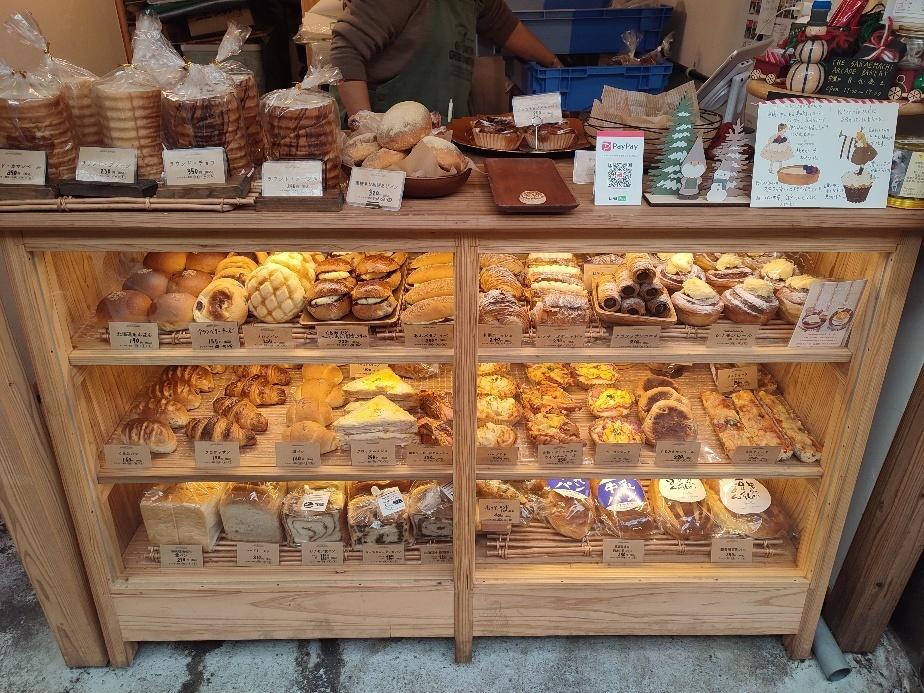
The invocation of the Himeyuri students anchors the market in a gendered and traumatic past. These women–mobilized under imperial structures–embody the transition from sites of militarized sacrifice to spaces of everyday survival and communal care. Situating the market within the legacy of the Himeyuri students also reveals how postwar Okinawan women have transformed spaces of loss into spaces of sustenance. In the aftermath of war and amid continued U.S. military presence, women have played central roles in shaping grassroots alternatives to violence and economic precarity, using the everyday labor of food preparation, storytelling, and caregiving as acts of resistance (Tanji, 2006). Many of the women-led shops in Sakaemachi embody this tradition, maintaining cultural continuity while adapting to contemporary realities, as we observe, for example, in the offer of a bakery shop (Figure 2).

These spaces can also be understood as gendered domains where care work and cultural knowledge are performed and transmitted under the weight of state and capitalist restructuring (Rogaski, 2004). The pressures of neoliberal redevelopment and military colonialism have drastically reshaped Okinawa’s urban and economic landscapes (McCormack & Norimatsu, 2012), yet markets like Sakaemachi remain as nodes of localized resistance, grounded in mutual aid, relational labor, and affective ties. The market operates through dense social relations that are manifested in long-standing vendor networks, and reciprocal (and intergenerational) exchanges of skills that reinforce a sense of shima (community belonging) particular to the Okinawan context. These gendered practices of care and collaboration create forms of cultural and social resilience.
5.3. Contemporary functions and social infrastructure
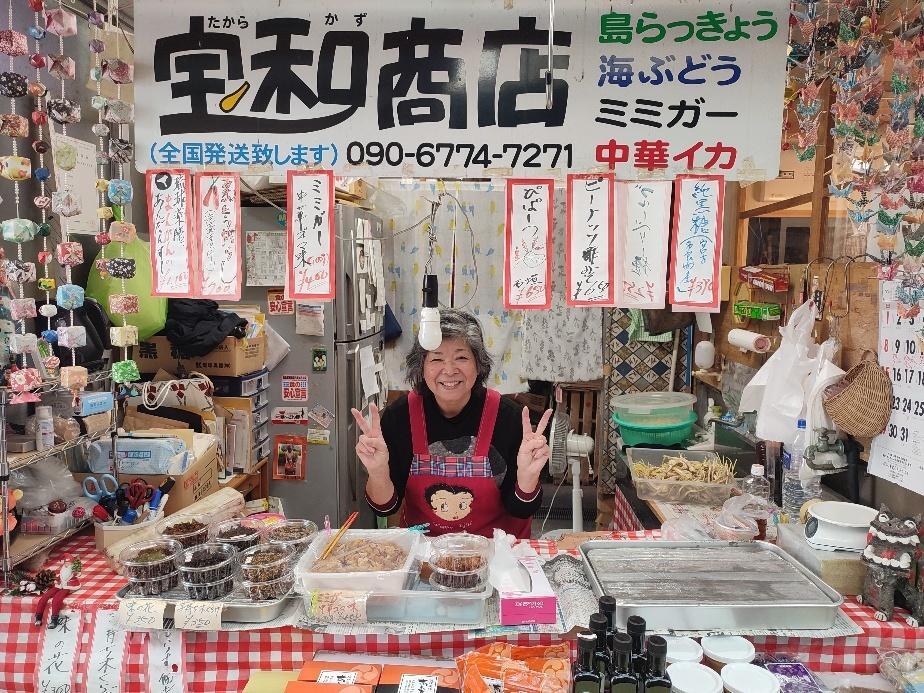
Through these relational infrastructures, the market resists top-down redevelopment logics, maintaining an alternative space where cultural continuity and women’s labor retain their value. During the day, Sakaemachi is a community-oriented market, offering groceries, prepared foods, and daily necessities, mostly governed by women (Figure 3). By night, however, it transforms into a lively alley of bars, izakaya, and eateries, attracting a diverse crowd ranging from young adults to elders. While this dual life reflects the market’s adaptability, its nostalgic charm, retro architecture, and locally rooted atmosphere have made it one of Naha’s organically popular gathering spots, distinct from tourist-centric areas like Kokusai Street.
.jpg)
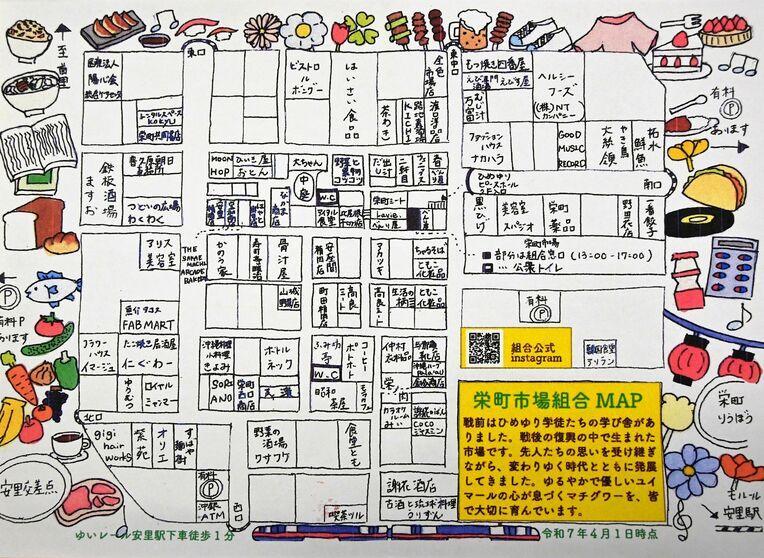
Therefore, far more than a space of economic exchange, Sakaemachi operates as a social infrastructure where everyday interactions sustain intergenerational ties and nurture a strong sense of belonging. This community-based ethos is also reflected in the digital and physical representations produced by the market’s own association. The Sakaemachi Market Association (Sakaemachi Ichiba Kumiai Jimukyoku) has published hand-drawn maps of the market–first in August 2024 and updated in April 2025–designed by local middle school students affiliated with the market, illustrating a multigenerational engagement with the space (Figure 4). The maps, which function as practical guides, are visual expressions of community memory and pride, adorned with illustrations of food, dishes, books, flowers, music, and cakes sold in the market. According to the association’s Secretary General, Sai Yamada, 93 shops are officially registered, and when surrounding businesses are included, the number rises to about 120 (Okinawa Times, 2025). These visualizations, created by and for community members, represent the businesses themselves, but also the relationships that sustain them.
.jpg)
In the yellow corner of the map, a handwritten note reflects the market’s historical and emotional significance:
“Before the war, this was a place of learning for the Himeyuri student corps. The market was born amidst postwar reconstruction. While carrying on the hopes and memories of those who came before us, it has developed alongside changing times. We are all working together to lovingly nurture this machigwa (local market town), where the gentle and caring spirit of yuimaaru (mutual aid and cooperation) lives on.”
The hand-drawn maps created by local children and the market association–rich with illustrations, historical annotations, and representations of everyday life–function as acts of counter-mapping that reassert localized feminist and indigenous geographies (Goeman, 2013). By embedding memory, care, and intergenerational knowledge in visual and material forms, these community-generated maps offer an alternative spatial narrative that challenges both capitalist erasure and state dominance through a practice of remembering rooted in place, grounded in everyday life. In particular, these maps reclaim spatial authority from state, military, and capitalist systems, and redirect it toward localized, relational forms of knowledge.
In this way, the market becomes a living, feminist and indigenous archive of survival and transformation – where the legacy of the Himeyuri students is carried forward in daily acts of making, feeding, and remembering.
5.4. Intergenerational labor and cultural transmission
The contemporary market continues this lineage of gendered labor, especially in food culture. The market’s website features photographs and short narratives from shop owners, offering a personal view into how traditional culinary knowledge is preserved and circulated. For instance, Chiisana Omise Souzaiya Toki-chan (“Little Delicatessen Toki-chan”) presents two women–one elder, one younger–sharing the tasks of preparing and selling home-cooked meals. The caption reads: “Packed with nostalgic flavors of Mom’s home cooking! You can taste the love and care in every handmade dish!” Their specialties include peanut tofu, sugarcane donuts, pork dishes, and miso condiments.
Another vendor, Hiyane Sengiri Shop, underscores Okinawan specificity. “Hiyane” is a local surname and “sengiri” refers to the traditional shredding of ingredients for ceremonial dishes. Their motto states: “We sell ingredients by weight, offering just the right amount you need for traditional Okinawan holidays such as Obon, New Year’s, and other ceremonial occasions.” These shops play a vital role in sustaining cultural foodways, especially as labor-intensive preparations for traditional meals have declined due to women’s increasing participation in full-time and part-time work. They enable households to continue practicing cultural traditions, while easing the time and labor burdens of domestic life (Rogaski, 2004; Tanji, 2006).
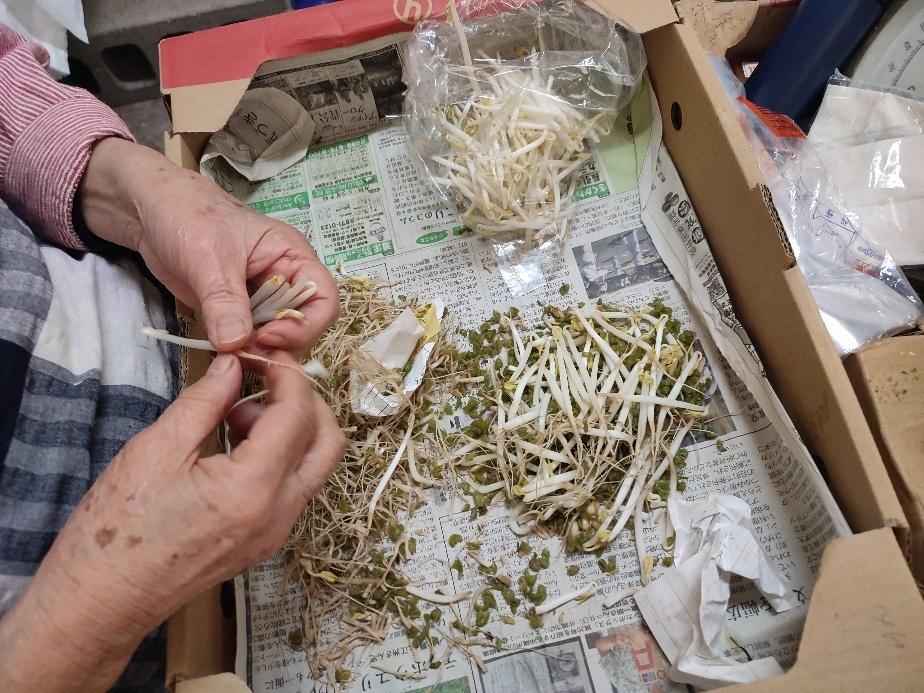
Similarly, Azama Butcher Shop features a young woman smiling while holding pig face skin, echoing the Okinawan saying, “We use every part of the pig, except its voice.” Their message reads: “Once you try our hand-prepared pork tripe–carefully cleaned of oil and odor–you’ll definitely come back for more.” These shops are intergenerational spaces where culinary knowledge, gendered labor, and everyday affect are transmitted, as we also observed in a shop where a woman is preparing Okinawan pickles (Figure 5) and other shops selling traditional Okinawan foods such as local bitter melon (goya) or sweet potatoes. As such, they contribute to the cultural sustainability of Okinawa amid both neoliberal redevelopment and military-imposed economic constraints (McCormack & Norimatsu, 2012).

5.5. Revitalization and resistance to redevelopment
Sakaemachi Market’s adaptability and rootedness are further evident in its recent revitalization efforts. In response to pressures from large supermarkets and urban redevelopment, the community, led by the Sakaemachi Market Promotion Association, has also initiated a range of events and projects. The Yatai Festival, held monthly from June to October, features performances, food stalls, and volunteer-driven cultural programming. A group of about ten younger members leads these activities, holding regular study sessions and addressing broader market issues.
Among the most prominent symbols of this revitalization is the Obaa Rappers, a trio of elder (Obaa) women shop owners who perform original rap songs about the market. Their cultural work has gained visibility through CDs and films, drawing new audiences and reanimating the market’s image. As Vice CEO Yamada explains:
“Though it began on a small scale, the formation of the Obaa Rappers, the release of a CD, and even the production of a film–all carried out strategically–have gradually drawn attention to the market’s charm. Continuation and sustainability is the most important.”
Other civic initiatives include the Women’s Fire Prevention Club, with 39 active members, and participation in redevelopment council meetings. The association’s goal, as articulated by Yamada, is clear:
“Under the theme of ‘lively by day, lively by night’, we aim to preserve the market’s atmosphere while differentiating it from others. We hope to create a market that attracts not only local customers and tourists but also more distinctive and loyal fans.”

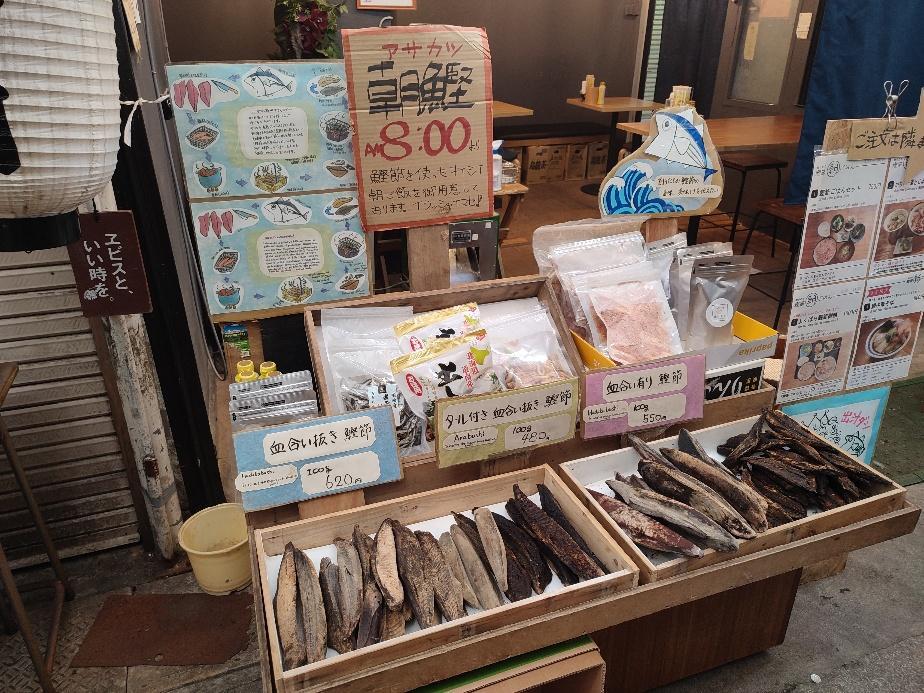
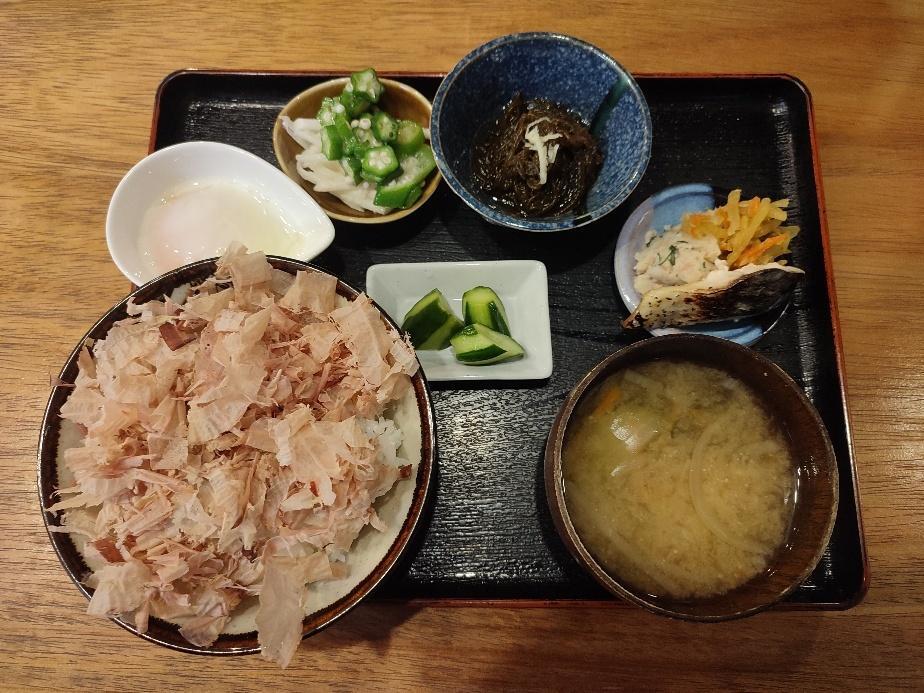
Through these efforts, Sakaemachi Market illustrates how everyday spaces can serve as powerful sites of resistance and renewal. Its layered history–from a war-torn educational site to a postwar market to a contemporary cultural hub–embodies the past, present, and future negotiation of identity, memory, and place in Okinawa. In this context, the act of selling, preparing, and allowing patrons to eat local food on site (Figure 6) becomes a practice through which this alternative geography is articulated. The preparation of traditional fish-based dishes (Figure 7) becomes a form of relational labor because it sustains the cultural, social, and emotional relationships that define the community (and its relation to the environment), as vendors prepare and cook food using knowledge passed through family and community. It is a work done with others, for others, and through others, making food a medium of belonging and a relationship-building practice.
.jpg)
What emerges is a model of urban resilience rooted in care, reciprocity, and community participation. As a space of resistance to the homogenizing effects of redevelopment and commercialized forms of tourism spaces, Sakaemachi offers an alternative geography – one grounded in feminist and Indigenous knowledge practices, and one that insists on the value of the everyday (Goeman, 2013) and one that sustains community ties.
6. Conclusion
This paper situates Sakaemachi Market within Okinawa’s specific socio-political and historical context, based on gendered labor as a mechanism of cultural continuity and resilience. Drawing on markets as social infrastructures that produce island-specific forms of sustainability, resistance, and place-based economic agency, the article contributes to existing debates that often overlook the specificity of Okinawan experiences in relation to mainland Japan. This research also foregrounds gendered and intergenerational labor as key components of the market’s functioning.
Sakaemachi Market exemplifies how a modest local marketplace can embody complex histories of displacement, survival, and cultural regeneration in postwar Okinawa. Far from being a static place or a simple commercial space, it functions as a dynamic cultural and social hub rooted in the traditional communal structure of shima, where kinship, locality, and collective care converge. The market’s persistence in the face of pressures from tourism-driven development and economic transformation demonstrates the resilience of Okinawan social spaces and their capacity to adapt without erasing foundational communal values.
The analysis contributes to debates on island resilience, which increasingly extend beyond climate vulnerability and disaster preparedness to include issues of cultural continuity or social cohesion as part of long-term sustainable development. Scholarship on island resilience (e.g., Baldacchino, 2015a, 2015b; Fusté-Forné, 2025; Quimby et al., 2023) highlights the importance of locally grounded practices and community autonomy as adaptive mechanisms. However, gender has remained an underdeveloped dimension. Based on women’s roles in sustaining the market as both an economic and social infrastructure, this paper has placed resilience within everyday gendered spaces, showing how embedded culinary knowledge (cultural labor), cooperative work (economic agency), and networks of care sustain island livelihoods and cultural identity over difficult times (resistance).
Central to this resilience is the generational knowledge embodied by elder women, whose everyday work sustains Okinawa’s culinary heritage and reinforces community and intergenerational bonds. Through their stewardship of traditional foodways and participation in revitalization efforts, these women anchor the market’s identity as a space that resists homogenization and fosters local belonging, which shapes continuity of traditional practices. As we show in the paper, Sakaemachi is a vital, social site that acknowledges grassroots agency, cultural memory, and urban belonging.
This study challenges dominant narratives of Okinawa’s postwar recovery as solely defined by militarization or economic modernization. Instead, it highlights the lasting significance of localized, gendered labor practices of community-making that negotiate place, identity, and history through everyday interactions. As Okinawa faces ongoing pressures of globalization and gentrification, spaces like Sakaemachi offer insights into how postcolonial island urban sites can maintain cultural knowledge and foster social resilience through the relations between memory, care, and tradition, and how this can contribute to enhance sustainable food systems.