
Climate change migration from low-lying islands?
As impacts from human-caused climate change are increasingly felt (IPCC, 2021–2022), many discussions regarding low-lying islands presume that forced migration is the expected and inevitable response. Yet, long-standing empirical and theoretical challenges to this narrative (Connell, 2016; Farbotko, 2010; Webb & Kench, 2010) continue to be corroborated (Duvat, 2019; Kench, 2025; Kench et al., 2023, 2024; Weatherill, 2023). For instance, geomorphological studies show that atolls can accrete due to measurable sea-level rise, while human geography studies show the reluctance of islanders to move, demonstrating that ideas of sinking, drowning, or disappearing islands are fundamentally misapprehensions.
Climate migration, or ‘climigration’, often conflates movement caused by climate change with migration for climate-related reasons irrespective of environmental shifts, typically being framed as either an adaptation measure or an adaptation failure (Caretta et al., 2023; Yamamoto & Esteban, 2017). This framing, however, fails to fully account for broader migration studies that could and should better inform island studies (e.g., Fiddian-Qasmiyeh, 2020; Fiddian-Qasmiyeh et al., 2016; Lee, 1966; Petersen, 1958).
To avoid assumptions about islanders and migration (which might or might not be linked to climate change) and to fully incorporate the available theoretical knowledge of islandness and migration, it would be helpful to know the views of islanders over time alongside how decision-makers or influencers of an island country’s society and policies view the issue.
The primary objective of this paper is to present how Maldivian experts over the last decade have shifted their views on climate outmigration. The highest natural point of Maldives is variously reported as being between 2.4 m and 5.1 m above sea level. Consequently, the country is frequently described as existentially threatened by sea-level rise from climate change, despite empirical evidence on geophysical changes to Maldivian islands that does not support this narrative (Kench et al., 2023). How do Maldivian leaders—people who influence the public, private, non-profit, and academic sectors—perceive the potential need to leave, even abandon, the country due to climate change impacts? Will evacuation be a necessary step for the whole society in the future? What key possibilities might they consider for adapting and staying? To connect all these topics, this paper reports on a longitudinal study conducted involving interviews with Maldivian leaders in 2013, 2017, and 2023.
The next section provides theoretical and empirical background to the narrative of islander migration as a form of climate change adaptation. Then, the method is provided, followed by a results and discussion section examining the respondents’ discussions of adaptation and migration. A final section places this material from Maldives in wider contexts.
Background
Migration has always been considered to be part of islander life and islandness (e.g., Joseph, 2021; King, 2009), including the historical, long, ocean voyages which were islander migrants seeking new islands to settle and which led to the founding of today’s cultures on low-lying Pacific Islands (e.g., Hau’ofa, 1993, 1998; Nunn, 2007). The importance of islander migration continues today for remittances (Williams, 2024) and livelihoods (Campbell, 2009). These statements do not deny, denigrate, or downplay human-caused climate change and its potential impacts on migration and on islanders (IPCC, 2021–2022). Instead, they accept that climate change from all causes, regional and global as well as natural and human-caused, has long been one influence among many on islander migration and will continue to influence these decisions and forced circumstances (Farbotko, 2010; Fiddian-Qasmiyeh, 2020; Nicholson & Mayer, 2023).
Within this discussion, one baseline from island studies is that islanders are not passive victims and should not be viewed as such, including concerning impacts from climate change and forced migration. It is not always clear how much policy and operational initiatives support this active perspective.
One example is the policy from Kiribati of “migration with dignity,” which is explicitly about I-Kiribati making their own migration choices on their own terms (Wyett, 2014). A change in political leaders has meant that the “migration with dignity” policy has faded away in recent years. In parallel, much is made about an agreement Kiribati reached to purchase land in Fiji, ostensibly to move part of the I-Kiribati population, yet an analysis by Hermann and Kempf (2017) indicated that the stated reason of climate change was more performative than the reality. Similarly, in 2023, Tuvalu and Australia signed a pact that entered into force in August 2024, and which was widely reported as being about climate migration. It explicitly states that it is about Australia offering Tuvalu opportunities to make their own decisions about continuing to live in Tuvalu while supporting some migration, which is not linked to climate change (Australia–Tuvalu Falepili Union, 2023).
None of this justifies the potential for human-caused climate change to influence forced migration from low-lying islands (Clark et al., 2016; Perry & Morgan, 2017) or forced immobility in low-lying islands (Farbotko & McMichael, 2019; Yee et al., 2022). Nor does it presume human-caused climate change as the only influence on forced migration and forced immobility. Instead, it raises questions of how human-caused climate change might influence human migration in the context of low-lying islands and what possible responses could be. It particularly seeks to emphasise islander perspectives, drawing on island studies and recognising the importance of decolonial approaches to determining islander interests and approaches, rather than assuming for them (e.g., Grydehøj et al., 2021; Nadarajah & Grydehøj, 2016).
A key discussion within science on this topic across disciplines is the framing of mobility (and migration) alongside immobility in response to climate change impacts. Just as “forced migration” and “voluntary migration” are not binaries, but a continuum, the term “climate (im)mobility” indicates the difficulties of identifying if and how climate change impacts people moving alongside those who choose or are forced to move or to stay in different ways for various reasons (Ayeb-Karlsson, 2020; Ayeb-Karlsson et al., 2025; Farbotko, 2010; Fiddian-Qasmiyeh, 2020; Nicholson & Mayer, 2023). Two examples are (a) determining how far someone must move in order to be termed a “migrant” and (b) how someone might be termed both mobile and immobile if they or some of their family moves for a short period and then returns home, perhaps continuing this back-and-forth for a while, perhaps living with two or more residences, or perhaps being termed a “circular migrant” (Brickenstein & Marvel Tabucanon, 2013).
The latter segues into the standard discussion of whether migration linked to impacts from climate change, whatever the balance between forced and voluntary migration, should be deemed an adaptation measure or a failure to adapt. Just as the previous paragraph indicates ambiguities and discussion regarding the definition of “migration” (see also Fiddian-Qasmiyeh, 2020; Fiddian-Qasmiyeh et al., 2016; Petersen, 1958), “adaptation” is contested. At its basis, many languages do not differentiate between “adaptation” and “adjustment”. In climate change lingo in English (IPCC, 2021–2022), “adaptation” is defined as “the process of adjustment to actual or expected climate and its effects”. Six different types of adaptation are then described, although it is a struggle to differentiate among many of them, especially when considering specific actions to implement.
One such potential action is population movement. Consequently, migration is seen by some to be a possible adaptation (e.g., McLeman & Smit, 2006) because people go to another place to adjust to the climate they are experiencing or its impacts, including the potential of taking advantage of a climate deemed to be better elsewhere. This phenomenon has long been seen when people move from higher latitudes to lower latitudes for retirement or for winters, such as from Ontario to Florida (Tucker et al., 1988) or from north China to Hainan (Chen, 2020). As local, regional, and global climates have changed throughout human history, people have found themselves in extreme situations where they felt compelled to migrate, and their decisions to migrate were based primarily on climate (e.g., Pei et al., 2018; Tacoli, 2009), which is essentially migration as adaptation.
Yet the closer that people feel compelled to move, the more it is because support systems and mechanisms were unavailable to help them make choices. Neither migration nor staying is inherently detrimental. Being forced to migrate or being forced to stay, or feeling that there is no choice, indicates a failure of society to help people have and exercise options. As such, many query forced migration as a failure to adapt rather than as adaptation (e.g., Zoomers, 2012). The debate continues: if people feel compelled to move, are they adapting, or is it because they have failed to adapt (Oppenheimer et al., 2019; Vinke et al., 2020; cf. Brody, 1969)?
As is typical, it is not necessarily one or the other, but rather a combination of both. Any given situation will have a different balance, with the skewing perhaps varying depending on who is aiming to identify the balance and why. For instance, if adaptation meant living in a smaller property or one with a worse view, then the feeling might be that migration was a failure to adapt. Conversely, if those moving had other impetuses, such as being reunited with family or education opportunities, then they might feel that migration is more of an adaptation measure.
Within such possible contexts and subjectivities, it is important to approach interview-based research without presumptions or preconceived answers. We do so in Maldives, aiming to listen to the respondents rather than presupposing any aspects of adaptation/failure to adapt, mobility/immobility, and forced / voluntary. This work was completed in the context of Maldivians, evidencing that they are not migrating from the islands due to climate change, but because of a combination of other factors, including livelihoods, economics, politics, education, health, and family (Maekawa et al., 2025; Sakamoto et al., 2022, 2025; Simonelli, 2016a, 2016b; Speelman et al., 2017). Environmental reasons for migrating from Maldives are mentioned mostly in the context of limited living space rather than climate change.
Methodology
In 2013, 2017, and 2023, we conducted longitudinal, semi-structured, in-depth interviews with the same respondents each time. When the same respondents were unavailable, then interviews covered respondents in the same or similar positions, within the same sector, and/or with similar expertise. Due to multiple interviews with the same people over time, the data comprise 38 interviews with 25 individual respondents who held 19 leadership positions: experts, policy-makers, decision-makers, and influential people in business, administration, academia, and non-profit sectors (Table 1).
Our respondents were selected based on their expertise through online searches and their professional positions, especially in decision-making roles. Others were selected based on respondents’ recommendations (snowball sampling). The sampling strategy involved identifying possible experts online, contacting them via email, conducting in-person interviews face-to-face on-site (hence, availability was important), and then asking them to recommend others (the snowballing component), particularly seeking diversity of positions and expertise.
The selection of respondents was tailored to the research topic. That is, it includes all significant positions in the field of environmental policy and science, political decision-making on climate change adaptation, and the implementation of appropriate strategies and measures, including their possible critical views. The selection of respondents also includes diversity among the key sectors of public administration, academia, private business, and the non-profit sector.
The respondent selection appeared to achieve high representation of decision-makers and experts who have a significant impact and influence on social decision-making. Our sample also seems to be representative in terms of the number of possible respondents, given the country’s small population, which limits the number of experts and decision-makers. In this regard, even though there have been changes in the given positions, we interviewed the people who replaced them, thus maintaining the monitoring of viewpoints important for decision-making.
Our efforts notwithstanding, representativeness is difficult to verify, but when experts start recommending each other, then either saturation is close, or the selection process is trapped within a specific clique or bubble. The key is that diversity was achieved across the parameters; that is, at the individual level, expertise in environmental science, climate change adaptation, economics and policy, population dynamics or social strategy, decision or influence maker roles in society, and at the sector level, sufficient representation of all of the parameters. For these reasons, the possible respondent cohort cannot be large within a country with a small population.
Interviews were conducted in English, as all experts were fluent in the language, and none indicated that some Maldivian leaders might not be comfortable giving professional interviews in the language. A potential limitation is that certain English-speaking circles might be closed, especially around the capital city, so the respondents would not realise, acknowledge, or respect that some of their compatriot leaders, especially outside the capital city, might not be fluent in English. No evidence from the respondents indicated this possibility.
Consequently, we are confident that our respondents represent a reasonable sample within the capital city and comparatively nearby islands of a small country, where the country’s decision-making powers and core expert portfolio are concentrated. For Maldives, for instance, Chia and Muiz (2021) had nine respondents, which was deemed sufficient for their analysis, while Shakeela and Becken (2015) used twelve respondents. Since we guaranteed respondent anonymity, basic respondent data can sometimes lead to respondent identification in a small community; therefore, no details are provided on specific respondents.
We next focus on the observed change in the migration narrative due to the impacts of climate change among experts and leaders in Maldivian society, and their suggestions for key adaptation strategies.
Adaptation or Migration?
Our analyses of these interviews suggest an important shift in perception over the time period of the interviews. One significant change in opinion is the initial expression of the view that future relocation of islanders outside their country is necessary unless there are radical changes in mitigation measures for global human-caused climate change. The President of Maldives held an underwater Cabinet meeting in 2009, which was still in the respondents’ minds, as it was intended to show the world the potential threats of future inundation to Maldives and other low-lying islands.
This view from the respondents changed later to a firm preference to stay and adapt to the current and impending impacts of climate change, such as sea-level rise, through building new artificial islands for new homes and livelihoods. Thus, another important change is the shift from the assertion that migration of the whole country is likely to be necessary in the future to the belief in successful local adaptation measures. Overall, there has been a change in mindset during this period, from expecting a future outside one’s own islands to a perception that staying and adapting is possible if certain measures are taken.
Initially, in 2013, all respondents (and so representatives from all sectors) did not rule out the future need to move as a whole country, primarily as a consequence of sea-level rise. For instance, a project manager from an environmental non-profit organization stated in 2013, “At one stage, we have to leave.” Similarly, a tourist manager from a private company admitted with respect to the assumption of not needing to migrate that “Maybe two or 3 or 5 years later, my opinion will change.”
India and/or Sri Lanka were mentioned as destinations by six out of 25 respondents. Two respondents, one of them with experience of living or studying in Australia, added it to the list of potential countries. The member of parliament in 2013 expressed the opinion, “Any government of Maldives should have a greater concentration on the process of moving Maldives to another place, either it’s Australia, India, or whatever. The bilateral talks have to be completed.”
Then, in 2017, one quarter of respondents from non-profit and academic sectors mentioned such options again. For instance, an expert on environmental management from academia noted, “But maybe in the future, when the local islands are experiencing erosion and other hazards more severely, then only the people will think about going out of the country.”
As a typical shift in the opinion, we noted this statement from a top manager and expert on meteorology and climatology from the public sector: “Well, sea-level rise is a great concern for us, but still we have hope that something will happen naturally, I don’t think people will be willing to move to another location (…) people will try to adapt to the conditions and of course, if there is no other solution or way, they will be forced to migrate (….) As I mentioned, it is a concern for us.” A project manager from a non-profit organization confirmed in 2017 that the thoughts of emigration to India and Sri Lanka still existed: “people with enough money, enough financial capacity, they just leave the country. They are most probably living in Sri Lanka or India, or half of my (wife’s?) family is actually living abroad.”
In 2023, influenced by the developments over the previous decade, this option was predominantly rejected by experts. For instance, a respondent from the academic sector does not view migration as an effective solution to climate change for Maldives. Similarly, a top manager in the business sector was sceptical, suggesting that “it might not be a feasible or practical solution for many reasons.”
All respondents indicated that the overwhelming majority of Maldivians reject the migration option altogether and favour local (in situ) adaptation strategies. One respondent from a non-profit organization added that the local population does not consider migration to be an effective solution to climate change impacts. She highlights that people want to adapt and stay in their homeland rather than migrating.
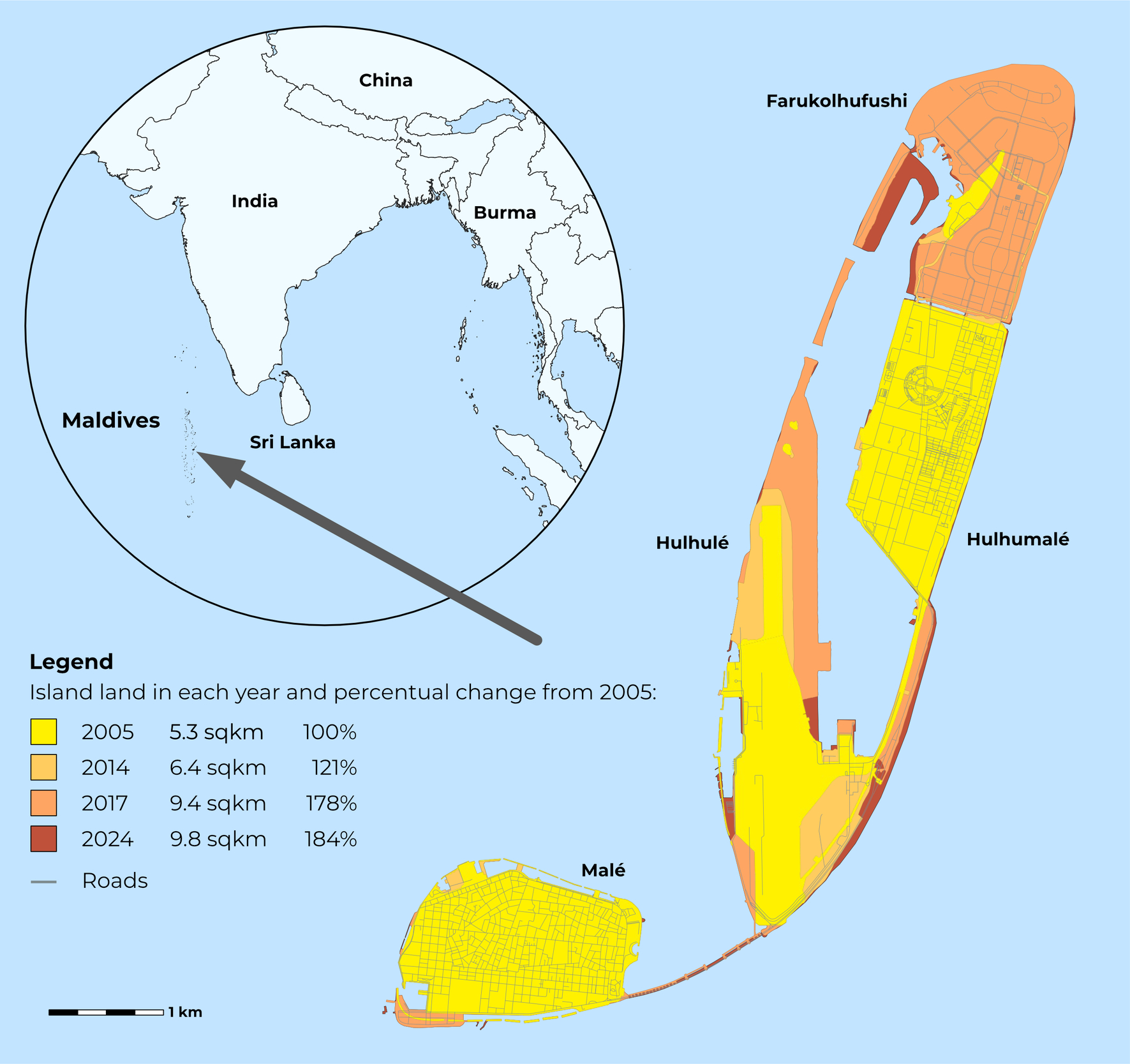
The primary adaptation strategy identified across all respondents was constructing new artificial islands (for details about the gradual construction of the islands, see Fig. 1). According to all respondents from 2023, Maldivian governments have adopted methods of artificial island construction as the main sea-level rise adaptation strategy, driven by a growing population and lack of housing opportunities, especially for younger people.
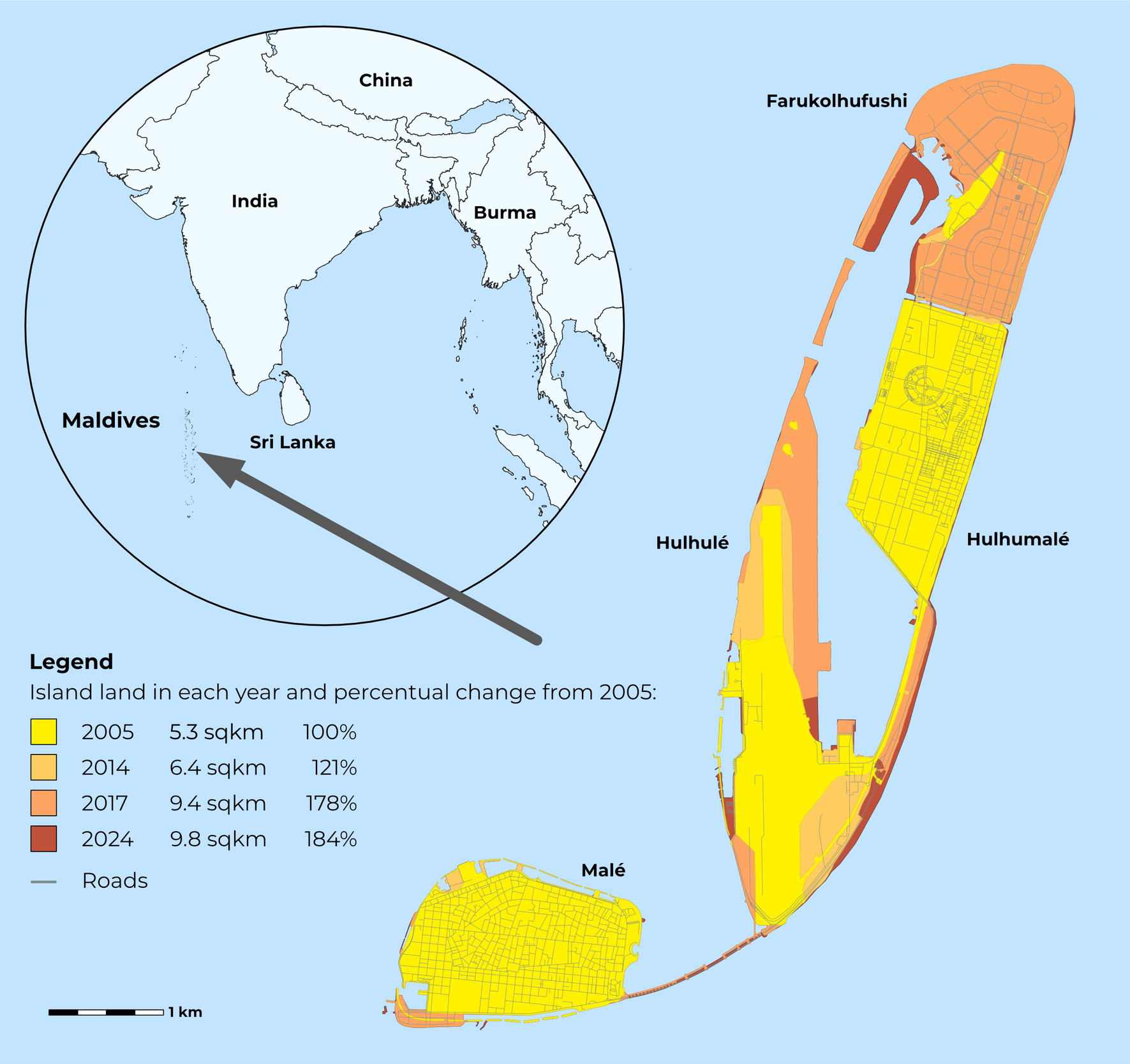
New artificial islands and extensions of natural islands for the period from 2005 to 2024 in the most populated area of Maldives: the capital Malé, Hulhulé, Hulhumalé, and Farukolhufushi (Kaafu Atoll). The year 2005 is taken as a baseline for further changes. Over the past two decades, the area of these key islands has increased from approximately 5.3 to approximately 9.8 square kilometres. (Diagram by the authors).
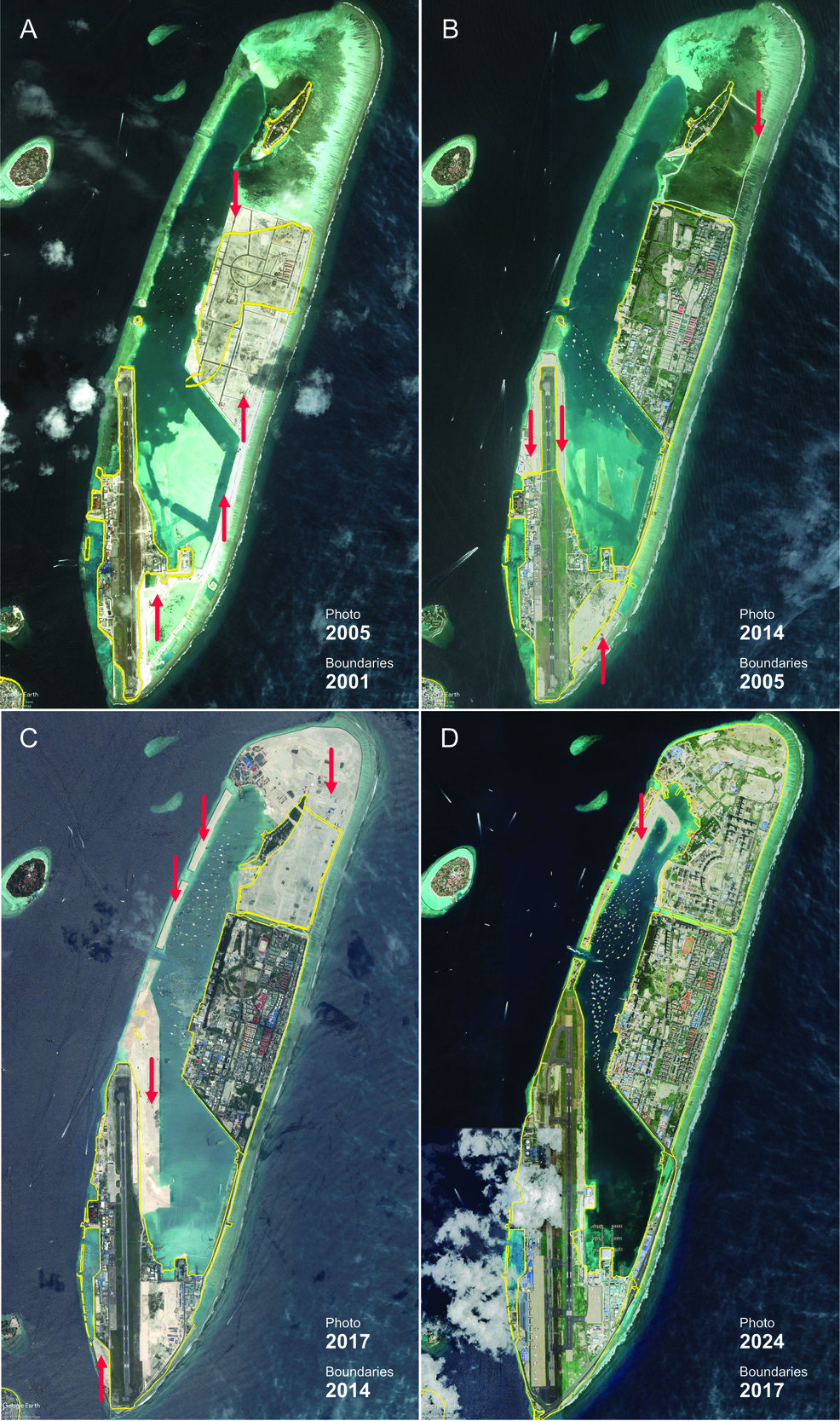
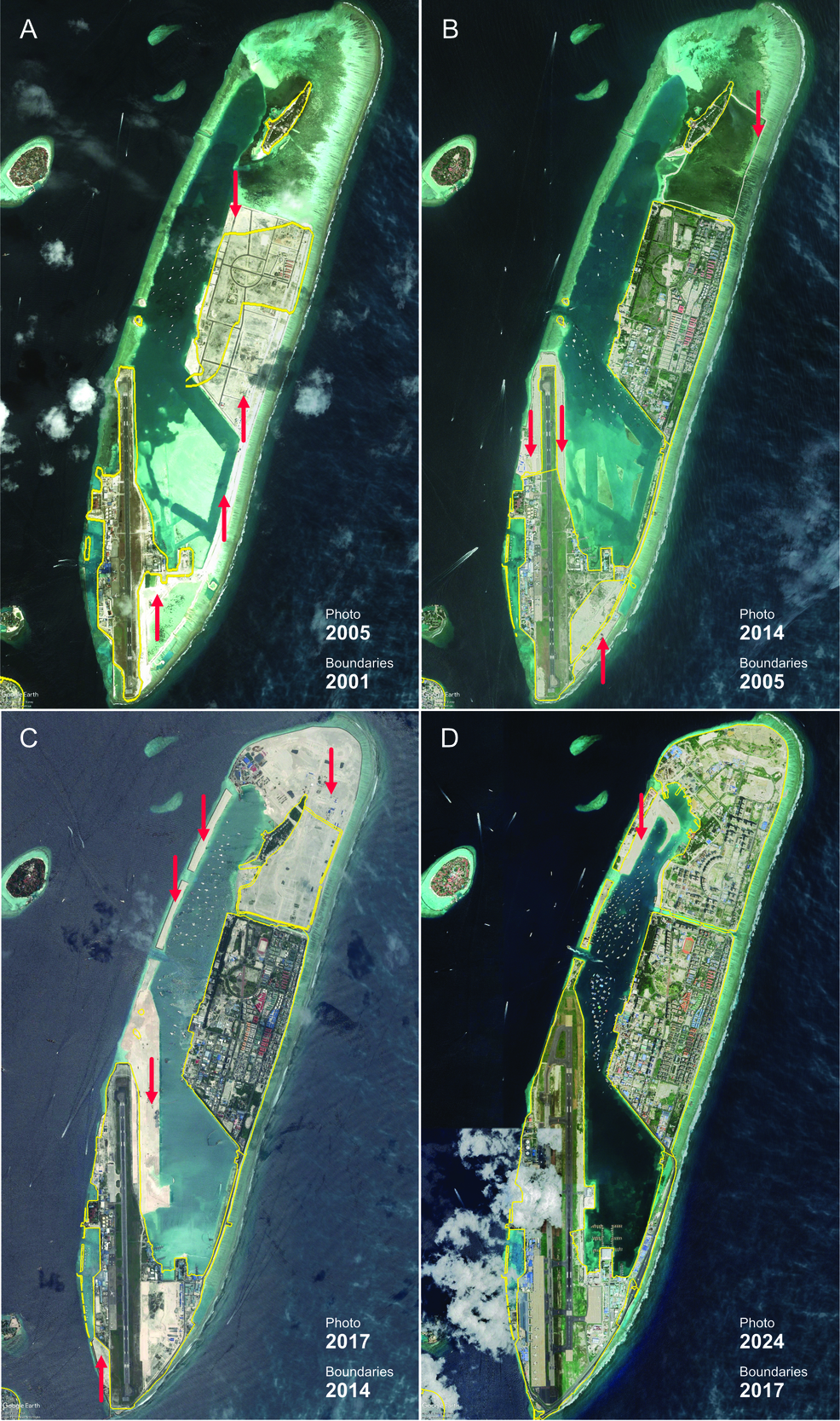
Respondents indicated how the practice of land reclamation in Maldives can be traced back to at least 1997 (see also Chase-Lubitz, 2024; see Fig. 2). Approximately 99% of Maldives’ total territorial area is ocean, with the remaining 1% comprising about 1,200 islands, collectively covering an area of approximately 300 km². These islands are atolls, surrounding shallow lagoons. From a land reclamation perspective, respondents stated that these lagoons offer two key advantages. First, they can be comparatively easily reclaimed after the construction of artificial barriers, notwithstanding the environmental changes that reclamation induces. Second, they serve as a source of sand for the actual reclamation process, again notwithstanding the environmental impact.
Within this context, past work indicates that artificial islands and improved coastal structures have proven helpful in preventing some wave damage (Brown et al., 2020), even if temporarily. These islands are deemed to be inherently unstable, changing their size and position on reef platforms depending on short-term and seasonal changes in wind, waves, and currents. The islands’ reported instability, combined with high population density, has led to the proliferation of engineering structures to prevent erosion and allow boat access (Brown et al., 2020). In many cases, the introduction of fixed engineering structures has exacerbated island erosion and reduced reef productivity due to the use of inappropriate materials in construction and inappropriate construction methods. Designs have often suffered from a lack of information on natural coastal processes, particularly data on waves and sea currents, including seasonal changes in monsoon winds that reverse waves, currents, and sediment transport (Kench et al., 2003).
Earlier techniques mentioned by respondents, such as coral mining and dumping to enlarge islands such as Malé, have significantly degraded the islands’ natural geomorphological responses, leading to increased flood risk and costly mitigation measures, such as building sea walls (statements corroborated by Naylor, 2015). These traditional methods were said by respondents to be reactive and focused on rapid land expansion without fully accounting for the dynamic geomorphic processes on the islands. Modern projects such as Hulhumalé, according to respondents, represent a significant shift, integrating advanced engineering with ‘sustainability’ and ‘smart urban planning’. Hulhumalé, built near Malé by pumping up seafloor sand, was designed to address sea-level rise while creating a new urban environment with employment and educational opportunities (Sakamoto et al., 2022, 2025).
Current approaches are explained by respondents as emphasizing consistency with natural coastal processes to avoid exacerbating erosion, which was a common shortcoming of earlier methods. Research on reef island dynamics has provided the basis for designs that protect the integrity of geomorphic processes and promote long-term stability (Kench, 2012). In addition, scientific and technological developments have made it possible to better project and model shoreline behaviour and so to optimize construction materials and techniques. For example, studies emphasize the need for engineering structures to adapt to seasonal waves and currents to minimize negative environmental impacts (Kench et al., 2003).
One of the projects focused on “sustainable” island reclamation is a joint venture between the Massachusetts Institute of Technology (MIT) Self-Assembly Lab and the Maldivian organization Invena. They are attempting to reverse the process of erosion by designing underwater structures that allow for the natural accumulation of material (Gunya, 2024). This project is still in the early stages of research and is far from reaching a fully operational level.
While there are advantages from land reclamation for addressing housing challenges and supporting livelihoods in Maldives, respondents’ concerns persist regarding its potential environmental consequences. For example, the Environmental Impact Assessment (EIA) for the Addu Development Project, a 95-minute flight south of Malé, identifies numerous associated impacts, including damage to marine fauna, coral reefs, and protected areas, as well as impacts on fisheries and other resources (MNPHI, 2022). The reclamation process is overseen by the Maldives Environmental Protection Agency (EPA) weekly, implementing measures including sediment containment bunds, active silt screen control, coral relocation, and others (MNPHI, 2024). Nevertheless, some studies contend that this level of supervision is inadequate and that current projects are causing irreparable harm (Chase-Lubitz, 2024).
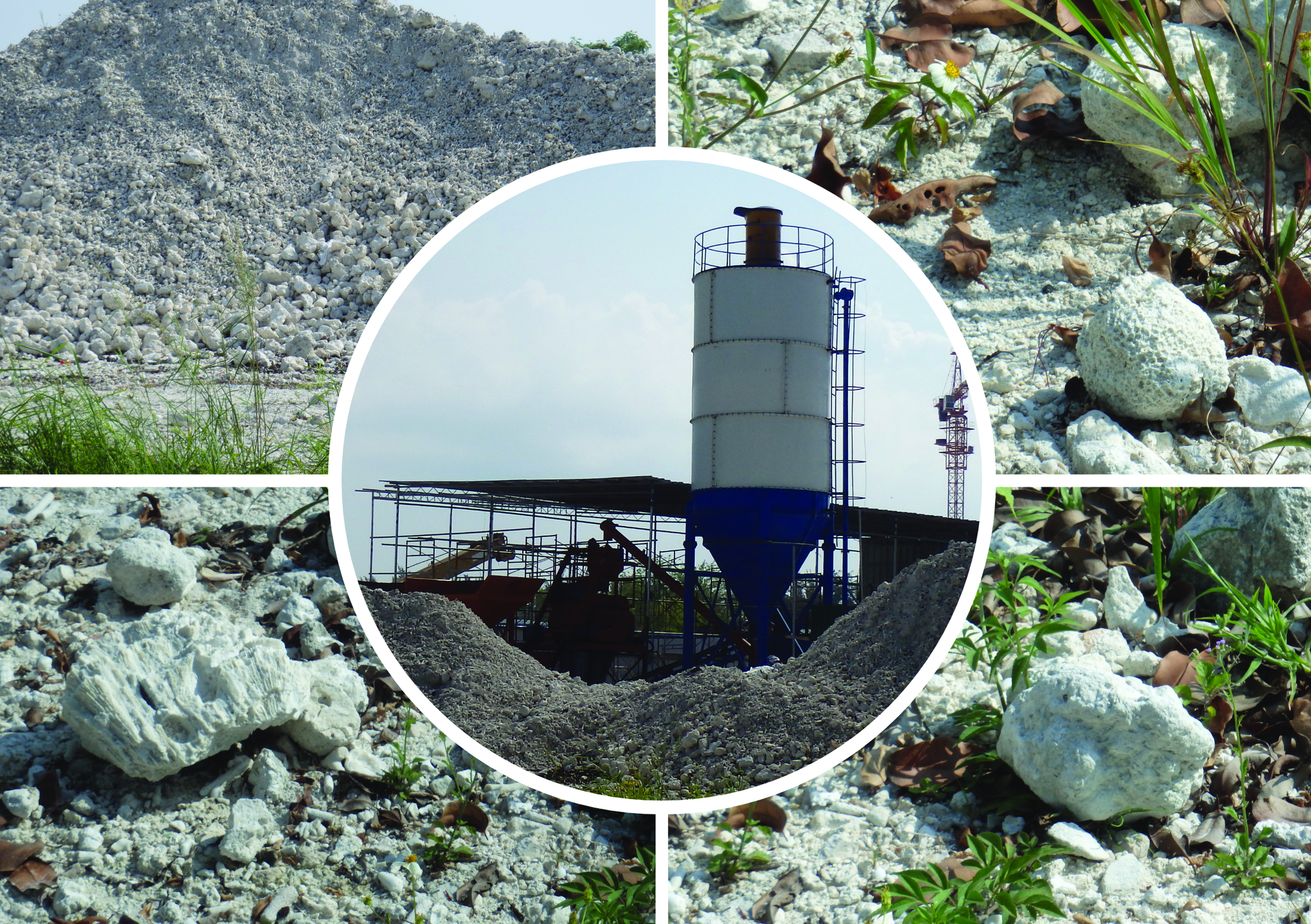
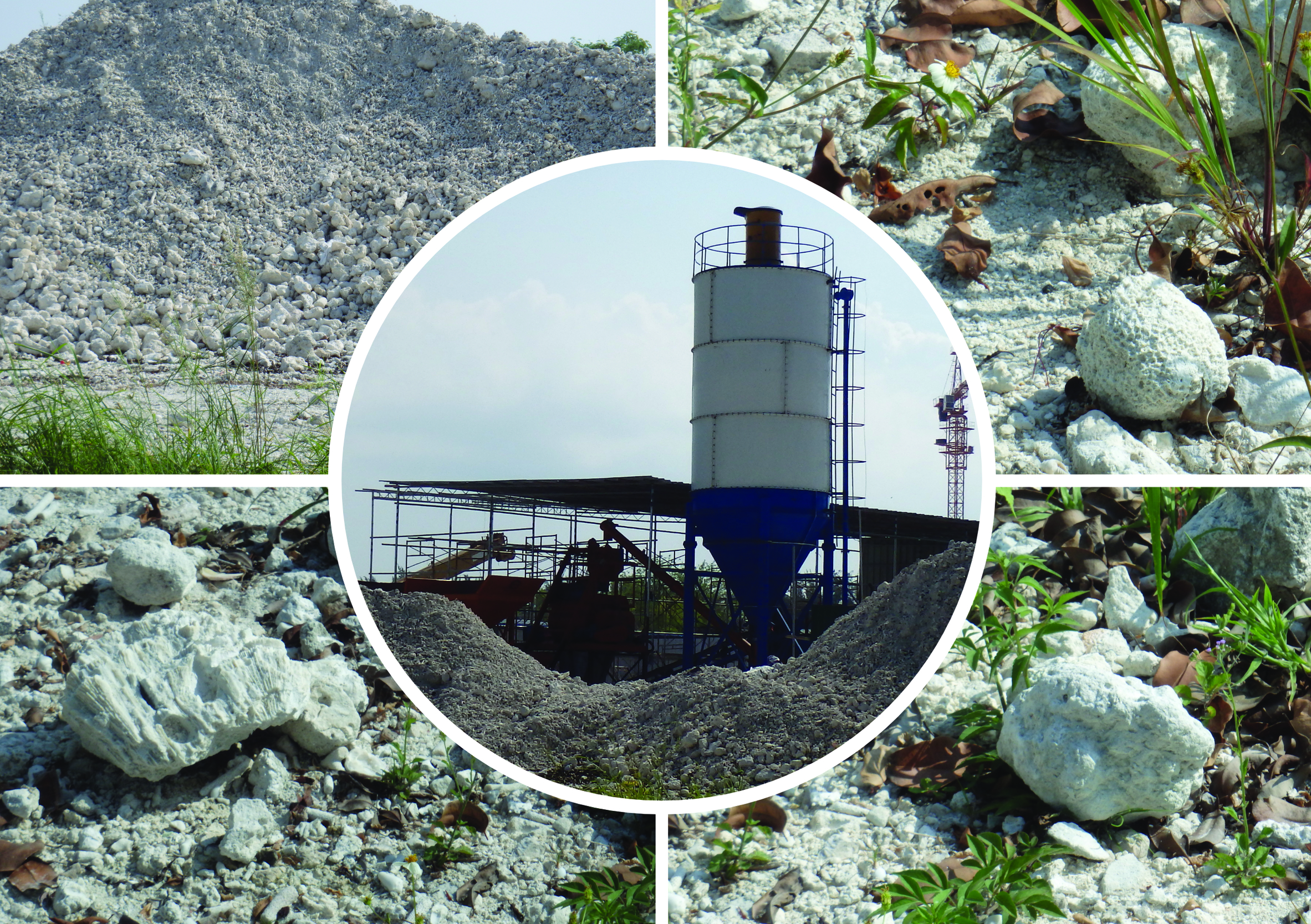
Limitations and drawbacks of new artificial islands were highlighted by the respondents as high cost, coral destruction, altering ocean wave and current patterns, and requiring material from somewhere, so likely imported. Coral destruction has been criticized, especially by representatives of the non-profit sector. One top public official defended this strategy as the only possible option, while another, a former top policy maker, denied building islands from local coral reefs, despite possible evidence to the contrary (Fig. 3).
Maldives was mentioned as having evolved robust policy frameworks and implemented landmark reclamation projects, with climate change adaptation stated as being at their core. Examples include the National Adaptation Programme of Action (MEEW, 2007), the Climate Smart Resilient Islands Initiative (CSRI, 2019), and the National Adaptation Plan (Green Climate Fund, 2022). Respondents indicated that the path forward requires stronger environmental governance, clear regulations specific to land reclamation, and practices that balance infrastructure needs with delicate coral-mangrove ecosystems.
There are generally no disputes about the necessity of reclamation to provide homes and jobs for Maldivians. Two opponents only emphasise that rushed reclamations have led to flooding and the destruction of reefs. Although Environmental Impact Assessments (EIAs) are officially required for land reclamation, their enforcement was described as weak, with reports of projects bypassing EIAs.
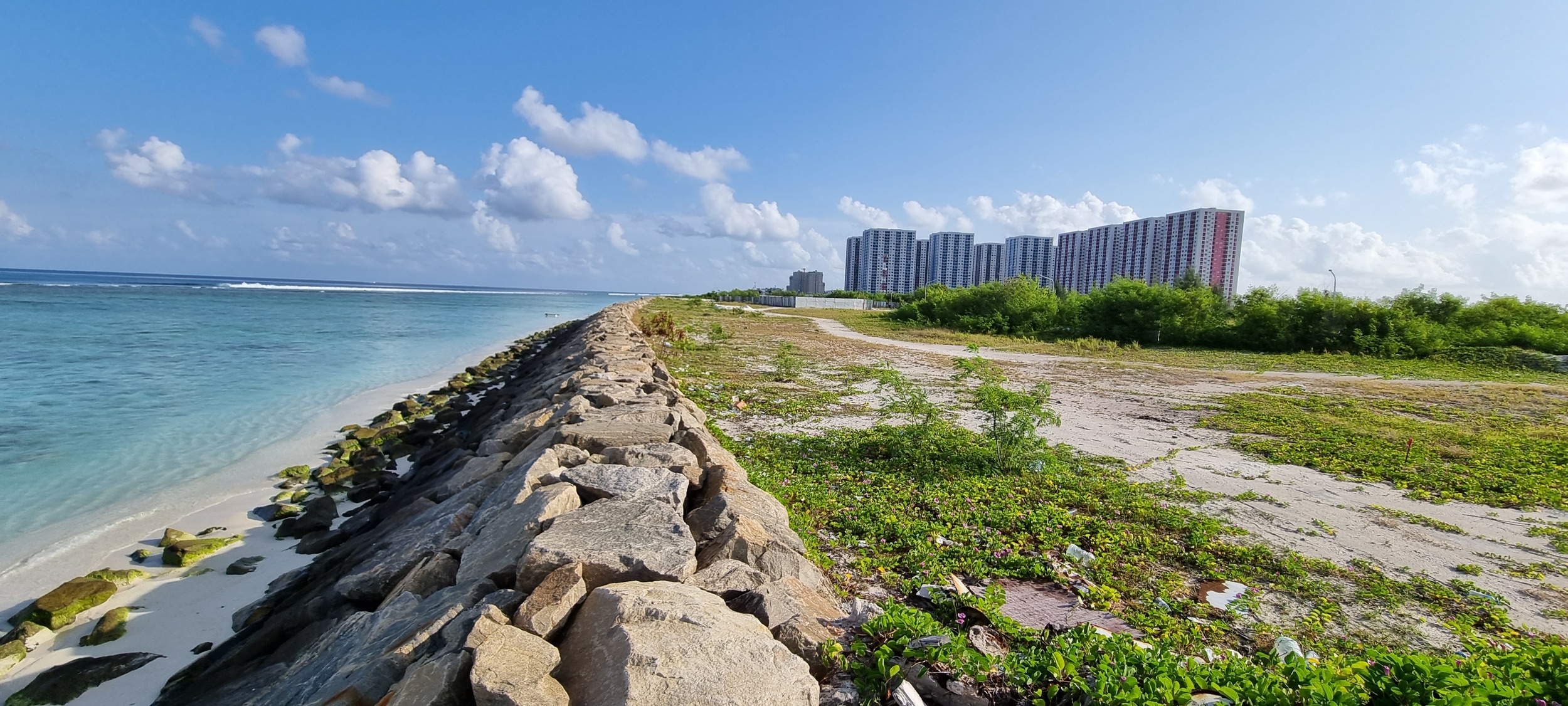
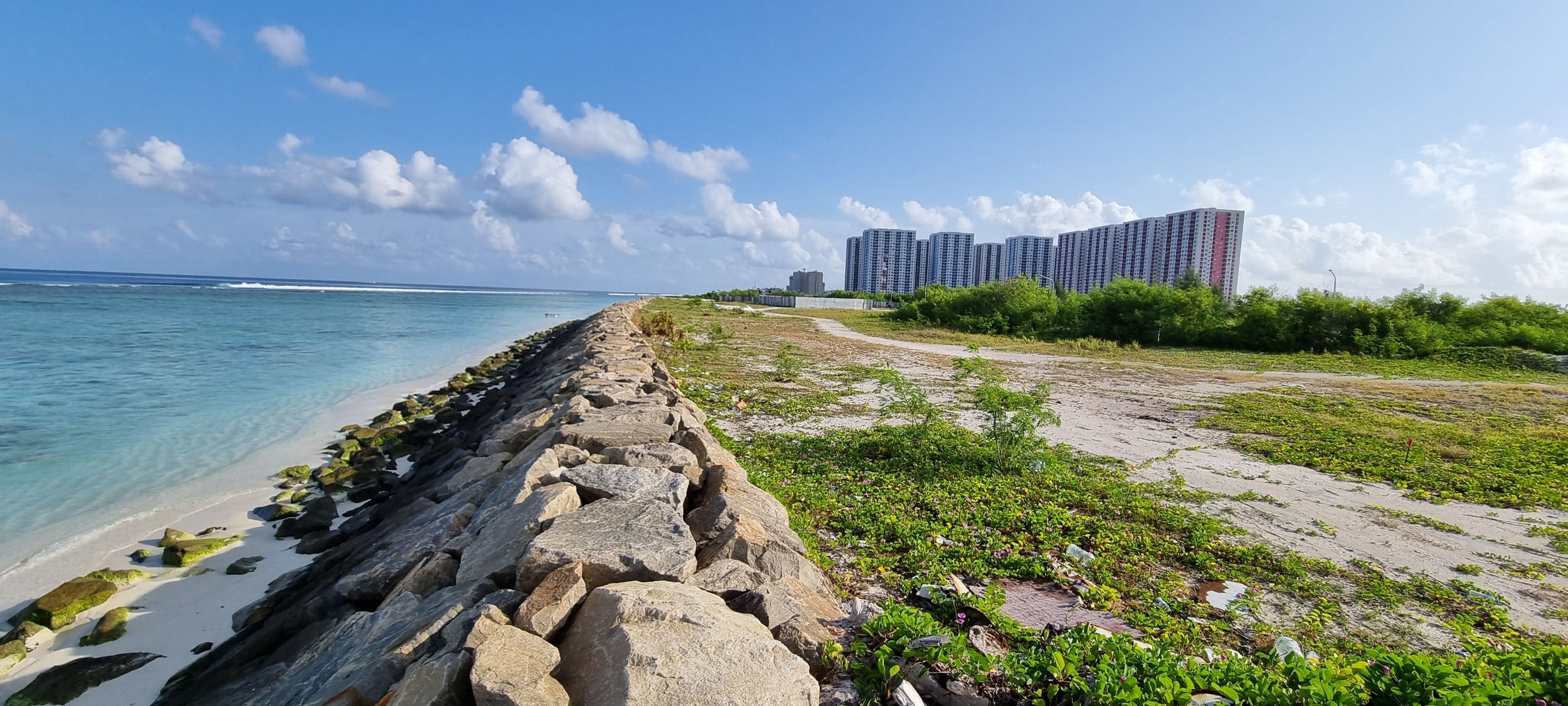
This adaptation strategy seems to be preferred by all respondents at the end, except for the two opponents mentioned above, because it offers Maldivians new opportunities for quality housing in the most populated areas, namely the capital Malé and surrounding islands, along with improved health care, education, and livelihood opportunities (Fig. 4). Currently in Maldives, according to the 2023 respondents, only a few experts from the non-profit sector are now seriously thinking about out-migration as an inevitable population strategy to survive, preferring instead to implement local adaptation measures.
Another successful adaptation measure that had to be implemented even earlier, according to the respondents, was the conversion of saline seawater into potable water (through double desalination) and utility water (through single desalination). Desalination plants were mentioned (without specifying the exact mechanism) as supplying the most populated areas, such as the capital, the Malé area. Reverse osmosis (using a membrane and a source of pressure to purify water, meaning that it can be a desalination technique) was not mentioned by the respondents.
Based on the respondents, this Maldivian strategy—notwithstanding the country’s financial opportunities due to its well-developed, high-end tourism industry, while keeping in mind the impacts of the COVID-19 pandemic—offers non-migration pathways via local climate change adaptation. Maldives shows that leaders in other countries could potentially implement local adaptation policies and practices desired by the population. This islander approach could be transferable to other coastal areas, including other low-lying islands as well as megacities and deltas.
The interviews over time document a shift from assuming mass migration due to climate change to a preference for staying in the country by adapting, especially through building artificial islands, without downplaying the negative consequences. Low-lying islands facing the impacts of climate change should not assume that forced migration is inevitable because islanders can and, as the respondents show, do make every effort to adapt locally instead of going abroad.
Acting Now for Maldives’ (and other Low-lying Islands’) Future
The longitudinal evidence presented here offers steps forward for research and policy beyond common assumptions, headlines, and discussions about migration from low-lying islands. First and paramount is to continue learning from islanders regarding their views and interests about their future. Too often, viewpoints and assumptions are imposed on islanders, especially about climate change impacts and responses, without considering the perspectives of islanders and those from island studies. A key example was the New Zealand government’s presumption in 2017 that Pacific Islanders would want the possibility of climate change refugee status, with the idea being swiftly scuttled by Pacific Islanders (Dempster & Ober, 2020). A similar situation then emerged in Germany (Nash, 2024).
For the work here, leaders were interviewed longitudinally, showing that knowledge and viewpoints changed. They might change again, especially as new leaders emerge, demonstrating the need for continuing interviews similar to those reported here. Longitudinal interviews with Maldivians who are not leaders, including with expatriate Maldivians around the world, would be useful for understanding how the wider population considers these issues. It would further help to document similarities and differences among different subpopulations and sectors within Maldives (see also Lama, 2018; Simonelli, 2016a, 2016b) as well as interest in other approaches, such as “aquatic architecture” (Moosa et al., 2020), which refers to designing infrastructure on and in the water. It is already operational in Maldives for tourist villas, so it could be considered for Maldivian residences.
Second is investigating awareness of relevant phrasing and policies. As often described for climate migration (e.g., Nicholson & Mayer, 2023), the term “refugee” has a specific definition in international law (UNHCR, 1951/1967). It is currently not possible to be accorded refugee status for climate, climate change, or environmental reasons. Any discussion presuming refugees due to climate or climate change is not in line with how people legally can be and are assessed for refugee status. Knowing the awareness of Maldivians, especially their leaders, of such topics would help to bridge research-policy gaps and support evidence-based policies (e.g., Hinkel et al., 2023; Lama, 2018).
Third, plenty of options currently exist for people from low-lying islands, such as Maldives, to continue living and thriving in their countries, irrespective of human-caused climate change. Scenarios nevertheless exist of ocean changes (notably sea-level rise, ocean acidification, rising sea surface temperatures, changing ecosystems, and altered storminess) which might ruin Maldivian atolls and force mass migration, over the coming decades (Perry & Morgan, 2017) and centuries (Clark et al., 2016). These scenarios ought to be discussed, and plans developed, even while being far from inevitable.
Simultaneously and within all these topics, migration mechanisms in possible destinations could continue to reflect some Maldivians’ desire to migrate. The reasons are usual and well-formed within island studies for explaining migration as a characteristic of the human condition, such as livelihoods, ambitions, health, education, family reunification, adventure, and fun (Joseph, 2021; King, 2009; Speelman et al., 2017). Many destination countries seek to support some migrants, without undermining the countries of origin, and with cognizance of populist anti-migrant sentiments that influence elections. Simultaneously, many other Maldivians prefer to stay, seeking any opportunity to remain home.
These nuances and our evidence show that Maldives should most likely not need to and not want to move the entire country during this century due to the negative impacts of climate change. If that occurs, then this consequence is more a lack of evidence-based planning and policies now for in situ adaptation than due to climate change’s physical impacts.