
1. Introduction
Climate change and the rising number of natural disasters are making it even clearer how fragile livelihoods that depend on natural resources are, especially in coastal areas and small islands. Vulnerability not only reflects the level of exposure to environmental stress but also the ability of individuals or groups to anticipate, cope with, and recover from increasing ecological and economic pressures (Liu et al., 2024). Three main components interact to shape livelihood vulnerability: exposure to risk, sensitivity to impact, and adaptive capacity (Ghebreselassie et al., 2020).
Coastal and small island communities tend to have high levels of exposure to temperature changes, rainfall variability, and disasters such as floods and droughts due to their limited and isolated geographical characteristics (Islam et al., 2025; McNamara et al., 2018; Suadi et al., 2022; Subedi et al., 2024). Dependence on climate-sensitive sectors such as fisheries increases vulnerability, particularly limited access to basic services like education and healthcare (Damodar et al., 2021; Kumari et al., 2023; Tezar & Setiadi, 2024). On the other hand, adaptive capacity serves as an indicator of reduced vulnerability, influenced by access to information, education, finance, and social networks (Yu et al., 2024).
Women involved in the fisheries sector, particularly in coastal and small island regions, face layered vulnerabilities stemming from socio-economic factors and ecological pressures. Women play a significant role in various links of the fisheries value chain, but this contribution is often overlooked in official policies and data (Harper et al., 2020). In many countries, including coastal communities, women’s economic contributions are not fairly recognized, leading to their marginalization in decision-making processes that directly impact household well-being (Harper, 2021; Solano et al., 2021). Limited access to education, training, and resources makes women increasingly structurally vulnerable (Bradford & Katikiro, 2019). Gender inequality not only diminishes women’s economic and social status but also intensifies the effects of climate change on the viability of their livelihoods (Rohe et al., 2018).
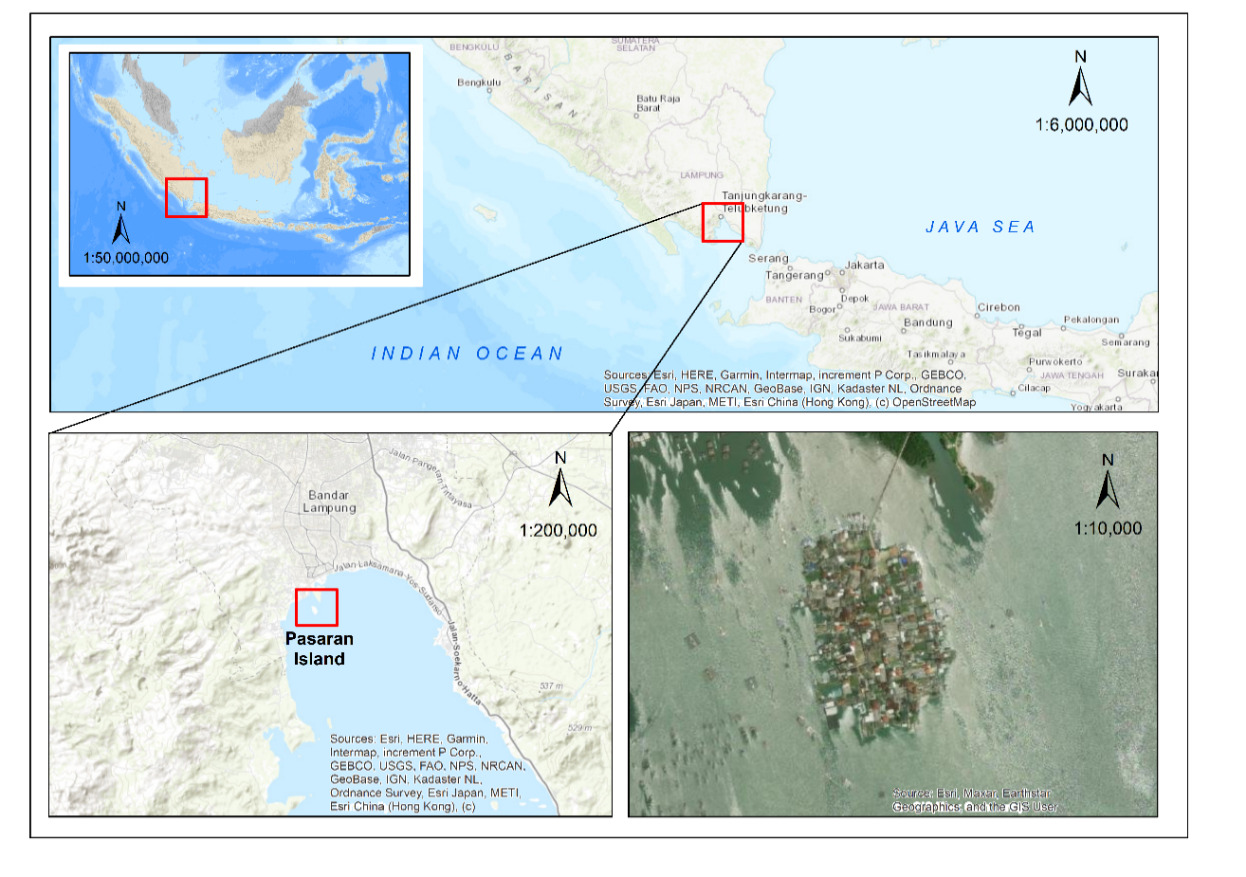
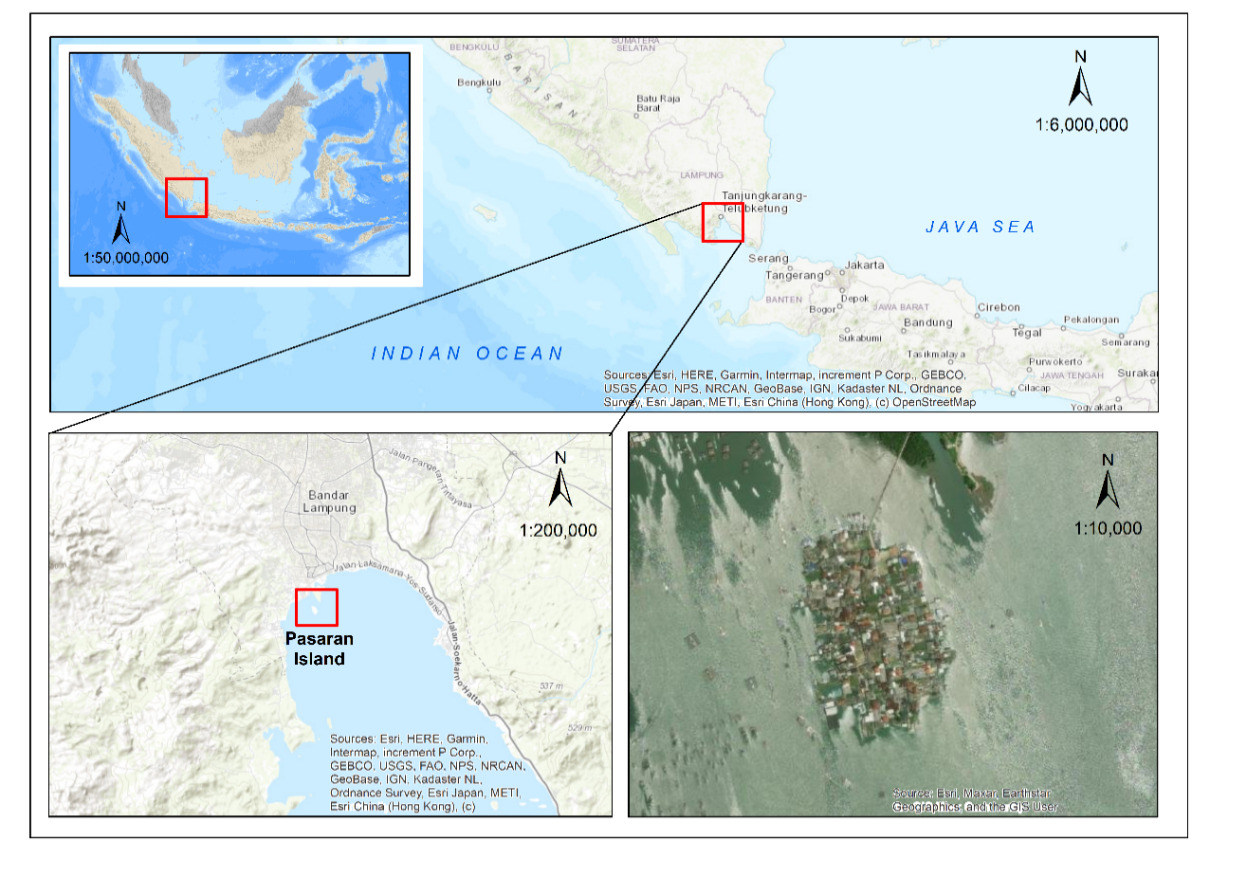
Pasaran Island is a small island, 13 hectares in size, located in Lampung Bay and inhabited by 1,308 people. Since 1975, the island has developed into a center of economic activity based on processing anchovies, which are a commodity for the local community, with women being key players in this activity. As much as 60% of the total land area of Pasaran Island is used for anchovy drying activities. The quality of anchovies from this island is considered superior because the processing method maintains the freshness of the raw materials through direct boiling on the boat after catching. The majority of households on Pasaran Island make the anchovy processing sector their main livelihood, with women’s involvement in the post-harvest process, from sorting, drying, and distributing fishery products. The economic productivity of Pasaran Island is also supported by the Modern Fisherman Village policy launched by the Ministry of Marine Affairs and Fisheries on February 7, 2024, with the aim of increasing the productivity and welfare of fishermen.
Environmental degradation, particularly annual tidal floods, poses a threat to Pasaran Island’s productivity. The tidal flood event that occurred in May 2022 was the largest in the last decade, disrupting community activities, damaging household assets, and degrading environmental quality. This condition increases the vulnerability of communities, particularly women who are directly involved in processing seafood. Therefore, this research aims to examine the perceptions, vulnerability levels, and livelihood strategies of women processing anchovies in the face of tidal flooding on small islands like Pasaran Island.
2. Methodology
The study was undertaken in Pasaran Island (Figure 1), Lampung Province, Indonesia. It was selected on the basis of exposure to tidal flooding and high participation of women in the business of anchovy processing. Information was gathered during November and December 2024 using a mixed-method design where quantitative and qualitative approaches were employed to determine perceptions, vulnerability, and adaptive livelihood practices of women.
A detailed inquiry with both closed and open-ended questions was conducted with a census approach on all 48 women working on the processing of anchovies on the island. Tidal flooding perception was assessed with a five-point Likert scale ranging from “strongly disagree (1)” to “strongly agree (5).” Next, a distribution analysis of proportions was conducted to obtain a percentage overview for each variable.
P = (FN)×100%
Description:
P = Percentage value
F = Sum of each selected answer
N = Number of respondents
Index value = ((%P1×1)+(%P2×2)+(%P3×3)+(%P4×4)+(%P5×5))N
Description:
P1 = Percentage of responses with a score of 1
P2 = Percentage of responses with a score of 2
P3 = Percentage of responses with a score of 3
P4 = Percentage of responses with a score of 4
P5 = Percentage of responses with a score of 5
N = Number of response scales
Index values of Low, Medium, and High were assigned for index values, which were further grouped into three varying perception levels: low (20.00%–46.67%), medium (46.68%–73.34%), and high (73.35%–100%).
The vulnerability of women’s livelihoods to anchovy processing to tidal flooding was assessed using the Livelihood Vulnerability Index (LVI) approach proposed by the Intergovernmental Panel on Climate Change (LVI-IPCC) (Hahn et al., 2009). The LVI-IPCC contains three components: exposure, sensitivity, and adaptive capacity. Every element is then classified into a number of sub-elements: exposure (comprising tidal flooding and climate variability), sensitivity (addressing health, food security, and access to water), and adaptive capacity (including socio-demographic profiles, livelihood strategies, and social networks). All the sub-elements were standardized based on the Min-Max normalization technique for comparability across indicators.
Indexs = S−SminSmax − Smin
Description:
= original sub-component value
= minimum value for each sub-component
= maximum value for each sub-component
After standardization, the values of each sub-component were averaged using the following equation to calculate each main component.
M=∑ni=1Indexsin
Description:
M = principal component value
= the value of the sub-component indexed by i
n = number of sub-components
Higher values of the main component (M) indicate greater vulnerability. Once the main components were calculated, their values were averaged using the following equation to determine the final LVI score.
LVI=∑ni=1WMi.Mi∑ni=1WMi
Description:
LVI = livelihood vulnerability index
= number of sub-components in each principal component i that contribute to LVI
= principal component i
The calculation involves combining the categories of exposure, sensitivity, and adaptive capacity indices. In this method, the main components are integrated according to the categories of each respective index. Each index value was calculated using the following equation:
CF = ∑ni=1WMi.Mi∑ni=1WMi
CF = IPCC-defined vulnerability index (exposure, sensitivity, or adaptive capacity)
= weight of each main component
= indexed principal component i
n = number of principal components in each causal factor
Furthermore, each factor that has been calculated is combined using the following equation.
LVI−IPCC = (e− a)∗s
Description:
= LVI using the IPCC vulnerability framework
= exposure score calculation
a = calculated adaptive capacity score
s = sensitivity score calculation
Its outcome is segregated into three categories of vulnerability: not vulnerable (-1 to -0.4), moderate/vulnerable (-0.4 to 0.3), and highly vulnerable (0.3 to 1).
The analysis was conducted using the Sustainable Livelihoods Framework (SLF) devised by the Department for International Development (DFID, 1999). SLF classifies livelihood assets under five categories: physical, financial, human, social, and natural capital. Each indicator has been scored with a value from 1 to 3 and normalized with the help of Min-Max techniques. Thematic interviews complemented the survey in the identification of livelihood strategies categorized into three types drawn from Scoones (1998): intensification/extensification, diversification, and migration.
3. Results
3.1. Theme 1: Demographic profile of respondents
All respondents involved in this study were in the productive age group (15-64 years) and were involved in anchovy processing activities as their main source of income. Based on their background, none of the respondents are native Lampung people; they originate from the North Coast (Pantura) region of Java, such as Indramayu, Cirebon, and Kebumen, as well as the Bugis tribe. Despite having lived on Pasaran Island for a long time, cultural identities such as language, customs, and habits from their place of origin are still preserved. From an educational background perspective, 41.67% of respondents only completed education up to the elementary school level, while a small percentage reached secondary or higher education. Economically, 56.25% of respondents have incomes below the Bandar Lampung City Minimum Wage (IDR 3,103,631), according to the Lampung Province Central Bureau of Statistics (2024).
3.2. Theme 2: Women anchovy processors’ perceptions of tidal flooding
The results of measuring the perception of women anchovy processors regarding tidal flooding are expressed as the average perception index. The average perception index value for female anchovy processors is presented in Table 1.
The perception of women anchovy processors regarding the causes of coastal flooding falls into the high category. As many as 54.17% stated that they agree that coastal flooding is caused by the rise and fall of seawater influenced by the moon’s gravity. Additionally, 47.92% attributed the occurrence of coastal flooding to land subsidence, and 37.50% of respondents stated that environmental degradation, such as the reduction in mangrove forest area and increased environmental pollution, also exacerbated the risk of coastal flooding. Coastal flooding has impacts on various aspects of life. Some respondents (45.83%) stated that coastal flooding threatens the lives of people on Pasaran Island. A total of 58.33% of respondents said that coastal flooding causes disruption to transportation access to the city and temporarily limits access to public facilities outside the island. In terms of economic aspects, 54.17% of women anchovy processors stated that tidal flooding resulted in damage to community property, including electronic devices and piles of salt used as an ingredient in processing anchovies. However, 43.75% of respondents disagreed that tidal flooding hindered economic activities, especially anchovy processing. This perspective is reflected in the following respondent statements.
As long as it’s fish season, the fish are there. Tidal flooding does not disturb or stop economic activity. Like now, whether there is or isn’t tidal flooding, it doesn’t matter. The fish have been empty for the past three months. But when the fish are plentiful, even when the tidal floods come, it doesn’t matter. We still dry the fish. (RD, 42 years old)
Public health is also affected by tidal flooding; 50% of women who process anchovies agree that tidal flooding causes skin diseases, itching, or diarrhea among the people of Pasaran Island.
A total of 56.25% of women processing anchovies stated their willingness to accept the risks of damage and impact caused by tidal flooding. 47.92% of respondents demonstrate their readiness by taking preventive actions and stating that they are familiar with the evacuation routes. Additionally, 54.17% of respondents evacuated independently with family members during coastal flooding, and 58.33% stated they had knowledge of disaster management and actions to take during coastal flooding.
Perceptions of tidal flood management indicate that 85.42% of respondents agree that cooperation is an important social capital in managing tidal floods. As many as 75% of anchovy processing women consider tidal flood management a community responsibility, while 70.83% state that tidal flood management is the government’s responsibility. The importance of coordination in managing tidal flooding is also recognized by 83.33% of respondents, who stated the need for a joint forum to mitigate the risks of tidal flooding, and 85.42% stated that previous tidal flooding served as a lesson for the community to implement disaster risk reduction. Although collective awareness is quite high, 45.83% of respondents stated that there are inherited traditions or customs practiced by the community in dealing with tidal flooding.
3.3. Theme 3: Livelihood vulnerability of women anchovy processors
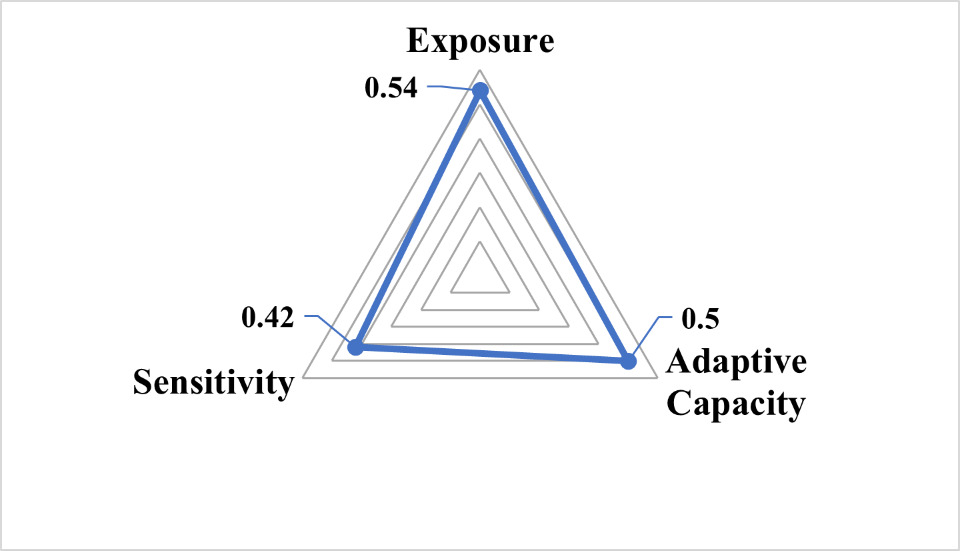
The analysis results indicate that the LVI-IPCC value for female households processing anchovies is 0.02, which falls into the medium/vulnerable category. The exposure index value is the component that contributes the most (0.54), followed by adaptive capacity (0.5) and sensitivity (0.42). The LVI-IPCC values are visualized in Figure 2.
_diagra.png)
The exposure index value of 0.54 indicates a relatively high level of exposure to tidal flood risk. The adaptive capacity index value of 0.5 describes the household’s ability to adjust when facing exposure. Meanwhile, the sensitivity index value of 0.42 reflects the extent to which the system can be affected by disruptions in health, food, and water aspects.
3.4. Theme 4: Household livelihood strategies of women anchovy processors
Households of women anchovy processors have five types of livelihood assets, including physical capital (0.88), natural capital (0.39), social capital (0.55), human capital (0.66), and financial capital (0.25). The highest utilization of livelihood capital is found in physical capital (0.88), which includes ownership and access to transportation, communication tools, processing facilities, land, and housing. Other livelihood capital shows varying values, with the lowest value in financial capital.
Based on the analysis of livelihood strategies, there are three types: extensification, diversification, and migration. The distribution of strategy types is presented in Table 2.
The extensification strategy was implemented by 16.66% of respondents through the procurement of goods, specifically dried anchovies, from outside the island, such as Tanggamus, East Lampung, and South Lampung, for subsequent resale. Meanwhile, 50% of female-headed households implemented a diversification strategy by processing anchovies through various alternative economic activities involving other family members. Forms of diversification strategies include selling food from the front porch, opening a grocery store, and selling food on the go. A total of 4.17% of households implemented a migration strategy by sending family members, such as husbands or children, to work outside Lampung Province. Remittances sent monthly contribute to meeting basic needs and the economic sustainability of households. As many as 29.17% chose to wait until the anchovy catch conditions stabilized again.
If it’s not fish season, we just wait until the situation returns to normal. Because I’m not painstaking, as a sea person, I have a habit of getting anything and selling it immediately to get a lot. If you start a small business, sometimes you are not patient (RST, 54 years old).
4. Discussion
Small islands are socio-ecological spaces that are vulnerable due to geographical isolation, limited land area, and high dependence on natural ecosystems (Henri et al., 2024; Pathirana, 2024). This condition makes small island communities highly vulnerable to the impacts of climate change and coastal disasters such as sea level rise, coastal erosion, and extreme weather events (Hilmi et al., 2025; Lessy et al., 2025). This vulnerability is increased by restricted access to essential services, like clean water, healthcare, and food security, which diminishes the adaptive capability of island people in addressing environmental stressors (Tandrayen-Ragoobur et al., 2024). Within the framework of the small island’s structural susceptibility, community perceptions of coastal disasters significantly influence responses, adaptations, and livelihood decisions.
The study showed that most women processing anchovies in Pasaran Island perceive tidal flooding as a natural event caused by the movement of sea tides influenced directly by lunar attraction. This is a very sound perception of tidal flooding, although still confined only to natural factors, and it has not been associated with climate change or environmental degradation. This finding aligns with the findings stating that women tend to have a deeper understanding of flood events than men, which also influences preparedness and response behavior in the face of disasters (Ching et al., 2023; Cvetković et al., 2018). However, a limited understanding of climate change and environmental degradation could potentially prevent the integration of local knowledge with the global climate change narrative, which may limit adaptive capacity in the long run.
The perception of women who process anchovies, linking the high tide flooding event to the dynamics of the tides, aligns with the characteristics of high tide flooding in coastal areas. Coastal flooding on Pasaran Island is caused by a combination of astronomical factors and the region’s geographical conditions. This phenomenon occurs during the new moon or full moon phases, coinciding with the perigee phase, when the moon is at its closest distance to earth and exerts maximum gravitational force, triggering a rise in sea level. This pattern is consistent with the findings of Djamaluddin et al. (2023), which show that the occurrence of coastal flooding in northern Java, such as Jakarta and Surabaya, is influenced by the new moon, full moon, and perigee phases. The consistency between the understanding of female fish processors and this scientific explanation indicates that repeated experiences in dealing with tidal floods shape practical local knowledge. Similar findings were reported in small island communities like Fuvahmulah in the Maldives, indicating that direct experience of impacts shapes risk perceptions and adaptation strategies at the household level (David et al., 2021). Cross-community coastal studies in Pacific countries also indicate that experiential knowledge is fundamental in adaptive decision-making in the face of floods and climate variability (Narayan et al., 2020).
Repeated experiences with coastal flooding have led women to develop practical knowledge about the impacts and adaptation strategies implemented at the household level. But they see tidal flooding’s impact as moderate, meaning it’s now part of coastal life. This condition differs from the findings of Nakiyemba et al. (2025) in Butaleja, Uganda, where women have a high level of concern about floods and consider them a serious threat that disrupts economic activities and household safety. This difference confirms that risk perception is not only influenced by the intensity of the hazard but also by adaptation experiences, lifestyles, and adaptive capacity in managing daily risks.
In terms of economic aspects, tidal floods, according to women fish processors on Pasaran Island, did not have a significant impact on their main livelihood activities because processing activities continued even though drying areas and settlements were flooded. This finding differs from several previous studies that showed tidal flooding can disrupt transportation and accessibility, impacting the local economy (Hauer et al., 2023; Mitchell et al., 2023). However, the economic impact was still felt in the form of damage to household physical assets, such as electronic devices and production materials like salt storage. Local practice-based adaptation strategies addressed this impact, such as raising the salt storage area and placing electronic devices in wooden arrangements to prevent flooding. This strategy allows women who process anchovies to maintain their livelihoods without shifting their primary source of income. This adaptation pattern differs from the case on the coast of Semarang, which caused damage to homes and required expensive renovations. Faced with this condition, many fishermen have switched from fishing activities to green mussel cultivation, which is considered more stable and sustainable (Amin & Rijanta, 2019). These differences indicate that the economic response to coastal flooding is influenced by the level of physical damage, adaptive capacity, and women’s involvement in fish processing.
The social impact of tidal flooding is reflected in limited mobility due to flooded road access, which hinders daily activities, including going to the market and public facilities. This condition is exacerbated by low levels of education, which limit job opportunities outside the fisheries sector, forcing anchovy processors to remain dependent on coastal livelihoods that are vulnerable to production fluctuations and climate impacts. This dependence underscores the role of the fisheries sector as a “safety net” for marginalized groups when livelihood alternatives are limited (Béné, 2003). However, the post-disaster situation also leads to social dynamics characterized by increased solidarity and collective action, such as mutual cooperation (gotong royong) for environmental recovery and economic activities, which demonstrates that social cohesion is a fundamental foundation for the social resilience of small island communities in facing environmental disturbances (Bondarev, 2023).
The Livelihood Vulnerability Index – Intergovernmental Panel of Climate Change (LVI-IPCC) calculation categorizes the vulnerability level of female anchovy processors’ households as moderate or vulnerable. The combination of disaster risk exposure, livelihood system sensitivity, and limited household adaptive capacity forms this vulnerability. Repeated exposure to coastal flooding and extreme weather events, combined with high sensitivity, exacerbates vulnerability and risk due to geographical exposure and livelihoods dependent on coastal resources, highlighting the risks of socio-ecological vulnerability. Nevertheless, we can minimize the level of sensitivity by strengthening adaptive capacity, which includes optimizing the utilization of social, economic, and institutional assets. Increased access to basic infrastructure, healthcare, education, and financial services can significantly reduce vulnerability and enhance household resilience in small island nations (Hilmi et al., 2025; Tandrayen-Ragoobur et al., 2024).
Further analysis indicates that the primary factor significantly contributing to the vulnerability of female anchovy processors’ livelihoods is exposure, encompassing the principal subcomponents of tidal flooding and climate variability. Pasaran Island is a small island with limited space, close to the sea, and dependent on coastal resources, which makes it more vulnerable to environmental risks (Saha et al., 2024; Shukla et al., 2025). This pattern is similar to findings in coastal communities in Vietnam and the Sundarbans delta, which indicate that exposure is a major determinant of livelihood vulnerability even when adaptive capacity is not completely weak (Nguyen et al., 2023; Thi Phuong et al., 2023). However, the value of adaptive capacity is not significantly different from the value of exposure, indicating that women processing anchovies are still able to adapt to the risks they face. The Modern Fisherman Village Program contributes positively to strengthening adaptive capacity. This program provides skills training, access to marine and fisheries information, and encourages women’s participation in processing groups. Empowerment not only enhances individual skills but also strengthens social and institutional networks as a form of community resilience. This finding aligns with studies in coastal communities in Bangladesh, which show that government programs and community-based adaptive governance are able to strengthen social resilience even though exposure to climate hazards remains high (Choudhury et al., 2024).
The vulnerability of women on small islands like Pasaran Island is the result of interactions between various factors, such as socioeconomic status, geography, and unequal gender relations. Limited resources and minimal participation in decision-making tend to disproportionately affect women (Tran & Downes, 2023). Studies in small Pacific islands and coastal regions show that women’s responsibilities in maintaining household food security, water management, and care work increase their adaptation burden to floods and climate variability (Dickin et al., 2021; Kilroy et al., 2025). Thus, empowering women and implementing gender-sensitive climate adaptation strategies can be relevant policy recommendations.
Many women, just like on Pasaran Island, participate in the processing and marketing of fishery products, demonstrating their important role in the family economy and maintaining family food security, even though they are still undervalued (Pedroza-Gutiérrez & Hapke, 2022). However, the majority of female anchovy processing households on Pasaran Island demonstrate their contribution to reducing income instability from the fisheries sector through adaptive efforts and job diversification. This kind of diversification strategy aligns with findings from various coastal and small island communities, which show that female-headed households with more diverse livelihoods tend to have better capacity to cope with environmental and economic shocks (Eriksson et al., 2020). This diversification is directed toward the trade and service sectors, such as selling food, opening stalls, renting out physical assets, catching crabs, and working as laborers. Pratiwi et al. (2023) emphasized that potential job diversification options for coastal communities include the trade and service sectors. This strategy is an effort implemented by women who process anchovies to reduce vulnerability and improve household welfare.
The strategy of extensification through sourcing raw materials from outside the island can theoretically serve as a production buffer mechanism when local resources are limited, as demonstrated in studies of small island food systems experiencing supply disruptions due to environmental and external crises (Davila et al., 2021; Farrell et al., 2020). However, in the context of Pasaran Island, women processing anchovies relatively seldom apply this strategy because they perceive that it reduces product quality, increases transportation costs, and weakens market acceptance, which has been based on trust in the superiority of local products. This finding aligns with the small island literature, which confirms that dependence on external supplies is often accompanied by a decline in quality and rising prices, while also fueling consumer preference for local products as a symbol of reliability and community identity (Guell et al., 2022).
Some female households that process anchovies are reluctant to switch to other jobs because alternative income is considered lower and requires high precision. In the context of small islands like Pasaran Island, this condition is influenced by spatial economic limitations that restrict livelihood options outside the fisheries sector. Low levels of formal education and specific skills in fish processing limit women’s access to economically viable non-fishing jobs. Studies in coastal and small island areas show that the region’s isolation, the lack of local economic diversification, and limited access to cross-sectoral training encourage women to persist in the fishing activities they have mastered, despite facing climate risks and income uncertainty (Labayo, 2024; Ocampo & Binondo, 2022; Suh & Nyiawung, 2025).
Overall, the vulnerability of anchovy processing women on Pasaran Island is the result of a multidimensional interaction between environmental, socioeconomic, and gender factors. Although various forms of sustainable livelihood strategies have been implemented in response to vulnerability, limitations in education, access to information, and skills outside the fisheries sector still restrict their effectiveness in strengthening adaptive capacity. However, limitations in education, access to information, and skills outside the fisheries sector still restrict the effectiveness of this strategy in strengthening adaptive capacity. Vulnerability conditions in the moderate category require targeted interventions through women’s empowerment, livelihood asset enhancement, and climate literacy strengthening. Implementing inclusive and gender-sensitive adaptation strategies is an effort to reduce and strengthen sustainable livelihoods in small islands vulnerable to the impacts of climate change.
5. Conclusion
Women processing anchovies on Pasaran Island have a moderate perception of the impact of tidal flooding and interpret this phenomenon as part of the dynamics of sea level ebb and flow influenced by lunar gravity. Tidal floods are often considered disruptive to crossing access to the city. Nevertheless, women processing anchovies demonstrated a fairly good understanding of flood mitigation measures and household preparedness. Social capital and learning from previous disaster experiences serve as the foundation for risk management at the community level. The vulnerability of anchovy processing women falls into the vulnerable category, with the most dominant exposure value encompassing the main components of tidal flooding and climate variability. The high exposure reflects the structural vulnerability of small island regions that rely on coastal resources, although adaptive capacity is able to withstand broader impacts. As for the livelihood strategies employed to cope with these conditions, they include extensification, diversification, and temporary migration, while some other households did not implement any specific strategies and chose to persevere until conditions returned to normal. This variation in strategies indicates that limitations in education, skills, and access to resources still pose constraints in strengthening adaptive capacity. Thus, strengthening adaptive capacity through gender-sensitive women’s empowerment, developing non-fishing skills, and expanding access to financing and information sources are strategic steps to reduce the vulnerability of women’s livelihoods in small island regions.
Acknowledgement
This research was partially funded by Collaboration Research in the Faculty of Agriculture Universitas Gadjah Mada, contract number 4097/UN1/FPN/KU/KU.02.05/2025.